
Gold’s got brains now as sorters learn to think, spot sulphides, smash constraints, boost recovery and double throughput with AI-powered precision

, , , , , , , , , , , , ,
, , , , ,
,
Sensor-based sorting is no longer just a niche preconcentration step - it’s fast becoming a critical pillar of intelligent gold processing.
In a recent TOMRA Mining webinar titled Optimizing Gold Operations: Sensor-Based Sorting for Smart Mining, the company showcased how it’s evolving beyond traditional ore sorting with real-time AI tools and smarter sensors.
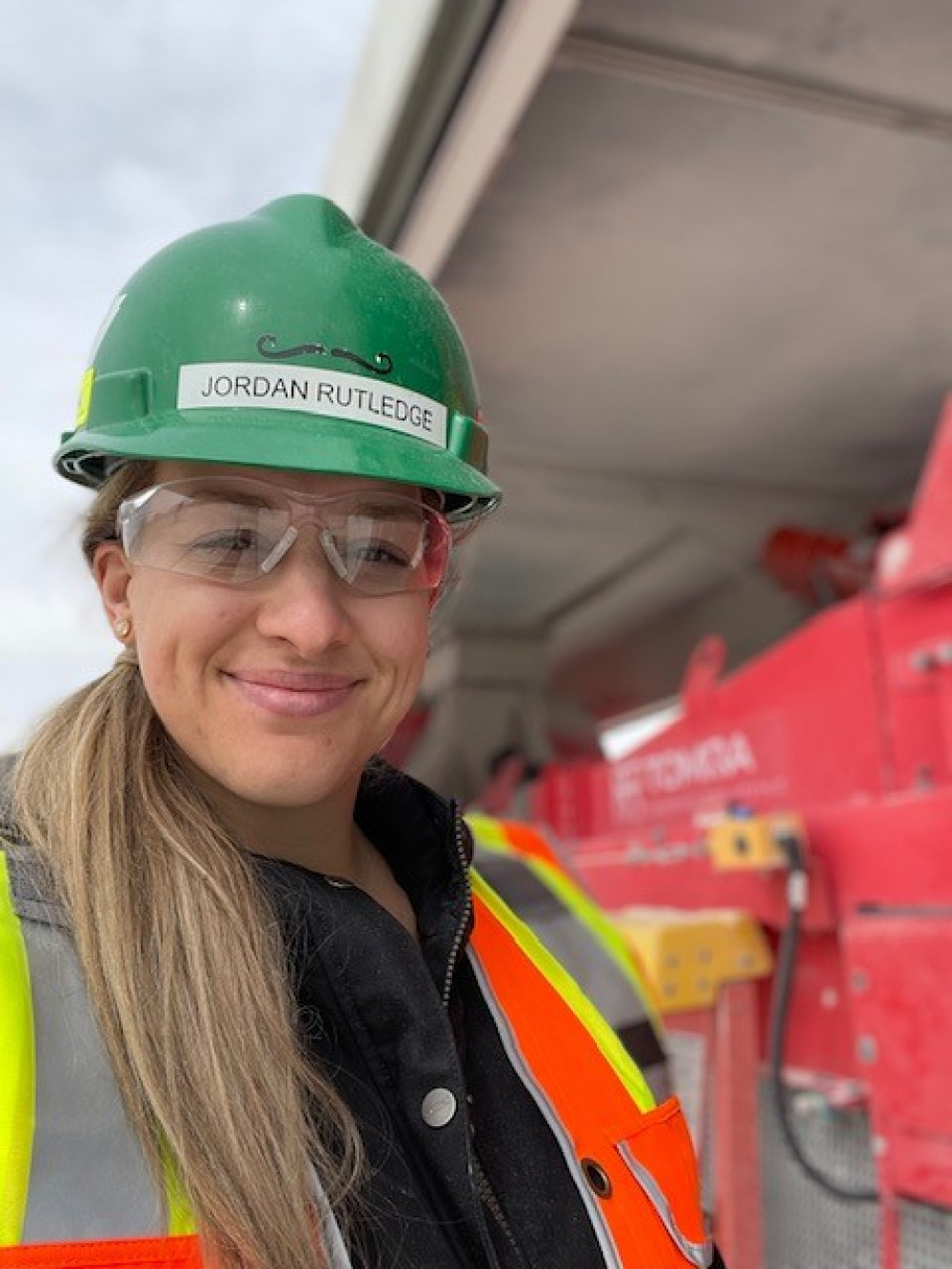
The session featured practical insights from three of TOMRA’s specialists: Jordan Rutledge, Area Sales Manager based in Perth; Chris Corcoran, Test Centre Manager in Sydney; and Gavin Rech, Technical And Sales Manager for Australia.
Across an hour of live discussion, video demonstrations and a deep dive into AI-driven breakthroughs, the team delivered a clear message: the next wave of productivity gains in gold mining will be unlocked through intelligent sensor-based sorting, especially when it’s underpinned by artificial intelligence.
From French fries to fine gold
As Jordan explained in her opening remarks, TOMRA’s sensor sorting technologies span industries far beyond mining - from blueberries and plastics to McDonald's french fries. But in mining, the company is laser-focused on sensor-based upgrades that deliver on both performance and practicality.
“We have more than 250 sorters operating globally in mining applications,” Jordan said.
“A big part of that is in industrial minerals and diamonds, but increasingly we’re seeing exciting adoption in metals, especially gold.”
What sets TOMRA apart is its dual-platform approach: chute-based systems for surface detection sensors like laser, colour and infrared; and belt-based systems for deep-penetrating sensors like X-ray transmission (XRT). The choice depends on what you’re looking for - quartz on the surface or sulphides within.
Seeing beneath the surface
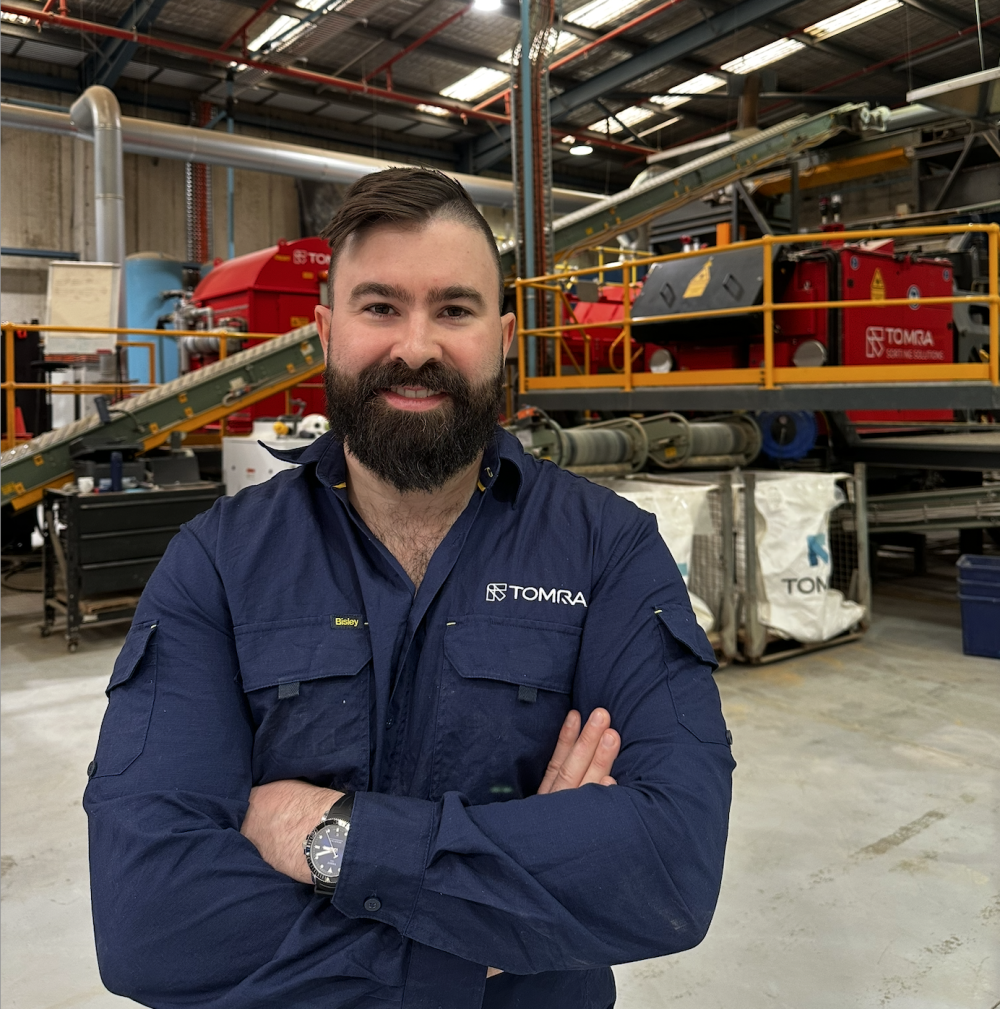
Chris took viewers through TOMRA’s Sydney-based test centre to showcase real ore sorting in action using full-scale industrial equipment. The first demo focused on a sulphide-associated gold ore processed via XRT sorting.
“This material contains gold hosted in pyrite,” Chris explained. “As the rocks pass under the X-ray beam, we detect differences in atomic density. The sulphides attenuate more of the X-rays and show up as darker spots, which we classify as product.”
Rocks identified as high-density (sulphide-rich) are ejected with air jets and sent down a product chute, while lighter waste rock falls into a separate stream. Visual inspection of the sorted piles revealed what Chris called “the outcome we’re looking for” - a product stream rich in shiny, yellow pyritic sulphides and a waste stream largely devoid of them.
Shining a light on quartz-hosted gold
The second demo focused on quartz-associated gold, using TOMRA’s laser sorting technology. In this case, the sorter identifies quartz by its distinct laser scatter profile as rocks fall through a chute in free fall.
“To make this work, the surface has to be clean,” Chris said. “So we use a wet washing screen to remove dirt or dried mud - anything that could interfere with the laser system’s view.”
Once sorted, the difference was striking. The product stream was almost entirely quartz, while the waste stream had none - a visual testament to the precision of surface-based sorting.
Jordan emphasised the importance of feed preparation and liberation.
“Sorting isn’t for every ore,” she cautioned. “If the gold is too finely disseminated or there’s no liberation, it won’t work. We need to liberate before we separate.”
Image-based intelligence with Obtain and Contain
Gavin then shifted the discussion to what’s arguably TOMRA’s biggest recent breakthrough: integrating artificial intelligence to tackle two persistent challenges: declustering and classification.
With traditional systems, overlapping rocks on the belt were interpreted as a single object. TOMRA’s Obtain™ software uses AI to differentiate between touching rocks, increasing belt occupancy from around 15 percent to over 30 percent. That effectively doubles the throughput.
“We used to rely on image-processing tricks like erosion and flooding filters,” Gavin said. “But machines struggle where humans see intuitively. Now, we train the system using thousands of rock images to teach it what individual particles look like.”
The result? Higher throughput without sacrificing accuracy and the ability to run sorters harder, faster and more efficiently.
Meanwhile, Contain™ takes aim at the microscopic. Trained on tens of thousands of XRT images, the AI can now spot extremely fine-grained inclusions - such as gold-bearing sulphides or arsenopyrite - within individual rocks.
“With Contain, we’re not just identifying rocks - we’re targeting internal mineralogy,” Gavin said. “This allows us to make smarter, more selective sorting decisions based on the fine internal features of the material.”
Together, Obtain and Contain represent a powerful combination: one for boosting capacity, the other for boosting accuracy. According to Gavin, they’re already delivering results in the field and can be added to existing TOMRA XRT sorters via a simple software upgrade, provided the hardware is compatible.

Lessons from the field
To bring the conversation back to the real world, Gavin highlighted several TOMRA installations around the globe. From Vertex Gold in New South Wales to an AngloGold Ashanti site in Brazil, TOMRA sorters are processing gold ores in extreme environments - from −20°C in Alaska to +50°C in Saudi Arabia.
“In Brazil, they’re using both XRT and laser sorters in tandem,” Gavin said. “They’re learning about the specific associations of their gold - whether it’s in quartz or sulphides - and then applying the right sensor in the right place.”
At Vertex, the site reprocesses mill waste to produce high-grade product using TOMRA’s laser system. “It’s a remote site with high processing costs,” Gavin explained. “But the high-grade gold in the quartz makes sorting very effective.”
How much gold are we saving?
During the Q&A, Chris addressed the most anticipated question: what kind of recovery can miners expect?
“It depends on the ore, but for the demos we showed - sulphide and quartz - we were getting gold recoveries in the high 90s,” he said. “In both cases, we reduced mass by 70 to 80 percent. That’s the beauty of good liberation and clean association - you can get strong upgrades with minimal loss.”
He added that one of the worst scenarios for sorting is when every rock has a little bit of gold.
“That’s not what we want. We want clear contrast - gold or no gold - so we can make a clean separation.”
What’s next?
As gold miners increasingly look for ways to reduce energy, water and reagent consumption, sensor-based sorting is poised to play a central role in sustainable processing. With AI now enhancing both capacity and precision, the once ‘nice-to-have’ technology is quickly becoming essential.
“Sorting is no longer just about reducing downstream load,” Jordan concluded. “It’s about improving recovery, managing costs and making your operation more efficient - especially when gold is locked in challenging mineral associations.”
With tools like Obtain and Contain, TOMRA is helping miners not just see more, but do more, with every rock that passes down the belt.