
WA lake mud gets high-tech makeover powering alumina push with pilot plant and plans to light up LEDs batteries and semiconductors around the world

, , , , ,
, ,
, ,
It might not sound like a futuristic mineral play: scrape up some wet lakebed mud, truck it to Fremantle, and fire up a shed full of pipes and valves. But that’s exactly the strategy now setting the stage for what could become one of Western Australia’s most important new critical minerals operations—one aimed at delivering High Purity Alumina (HPA) to a booming global market.
Impact Minerals is the name behind the push, and if things go to plan, they’ll soon be one of only two companies in Australia with the ability to produce commercial-scale HPA. The secret? A savvy acquisition, a fully kitted-out pilot plant, and a lake that’s quietly holding an ultra-refined punch of alumina-rich evaporite just beneath the surface.
Wet Mud, Dry Returns
Speaking at the 2025 RIU Sydney Resources Round-up, Impact’s managing director Dr Mike Jones pulled no punches.
“We’re going to dig up some wet mud in Western Australia and ship it down to a shed in Fremantle,” Jones told the room. “From that, we’ll produce the wafer-thin sapphire substrates that sit behind 1.8 million LEDs on structures like the Las Vegas Dome.”
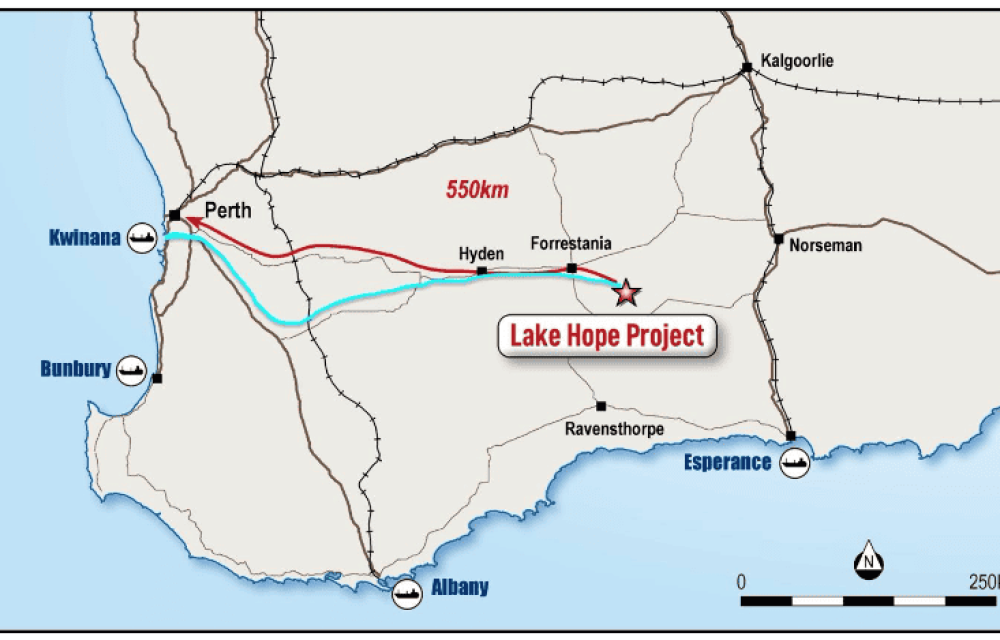
The operation centres on the Lake Hope Project, located about 500 kilometres east of Perth. Just two metres below the surface lies material capable of producing 10,000 tonnes of HPA annually—enough for at least 50 years of supply. Thanks to the ultra-fine nature of the evaporite material, no on-site beneficiation is required. It’s a scrape-and-truck setup, with environmental and heritage approvals already well underway.
From Dormant Asset to Fast-Tracked Production
The real kicker, however, is Impact’s recent acquisition of assets from a now-defunct competitor in the HPA space. The purchase includes a nearly finished 25 tonne per annum pilot plant, a top-tier high purity lab (one of only three in WA), and a scalable process flow that can be modularised and expanded without the typical eye-watering capital costs.
“This acquisition has collapsed our development timeline by at least two years,” Jones said. “We’re now the only company apart from Alpha HPA with the real capacity to produce commercial quantities of HPA within the next 24 months.”
Engineering Meets Market Smarts
Behind the plant and lab is a team with serious mettle. From former Alcoa engineers to a commercial lead ex-Tianqi Lithium, the group knows both the chemistry and the commercial realities of industrial minerals. Add to that a research partnership with Edith Cowan University focused on membrane filtration for impurity removal—plus federal government backing—and the company is leaning hard into a tech-enabled, ESG-aware strategy.
“The hardest thing in any high purity business is consistency,” Jones noted. “Without your own lab, without real-time assay control, you’re dead in the water. That’s what brought down a lot of others in this space.”
The Moat Is the Message
High Purity Alumina isn’t a massive market in volume terms, but it’s growing fast—especially with its roles in semiconductors, LED lighting, and lithium-ion battery separators. Most of the value sits in the 3N and 4N purity brackets (99.9–99.99 percent), where pricing ranges from $15,000 to $30,000 per tonne.
“There’s a supply gap coming,” said Jones. “We’ve built a position not just to fill it—but to defend it. As Warren Buffett would say, if you build a moat, you don’t need to fight the battle every time.”
With pilot plant commissioning due in late 2025 and off-take discussions planned for 2026, Impact has flagged potential scale-up not just in WA, but also in North America via a future NASDAQ play. The idea? Take the modular tech global—either through licensing or replicating compact plants for high-demand zones.
Wrangling the Rock, Refining the Future
For The Rock Wrangler crowd, this story isn’t just about geology—it’s about execution. Impact’s blend of clever exploration (drilled with rubber mallets and push tubes, no less), hard-earned process knowledge, and a firm grip on capital discipline is what makes this play worth watching.
A muddy lake, a defunct rival, and a million LEDs? That’s a recipe for one very shiny turnaround.