
Vehicle interactions and poor supervision keep hurting miners, NSW regulator says industry must fix fundamentals before relying on tech

, , , , , , , , , , , , ,
,
At the NSW Resources Regulator’s 33rd Mechanical Engineering Safety Seminar, Chief Inspector of Mines Anthony Margetts and Principal Inspector – Technical Russell Wood delivered a clear message: the industry must move beyond box-ticking and adopt smarter, outcomes-focused approaches to its most persistent hazards.
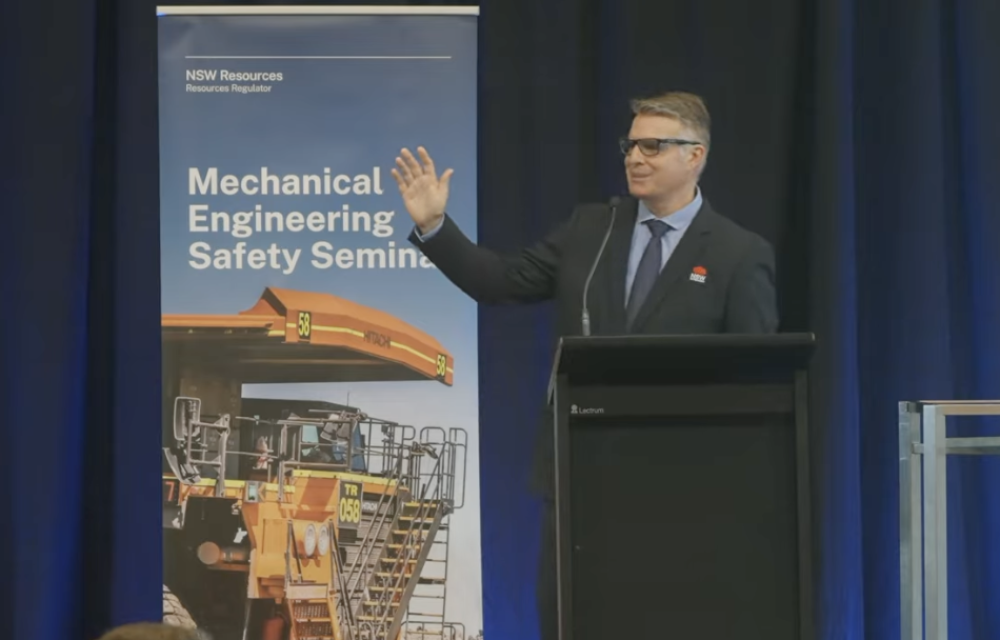
Anthony Margetts opened the seminar by outlining how the Regulator is repositioning itself to better serve industry.
“Our vision is to become an intelligence-driven and outcomes-focused regulator,” Anthony said. “That means making decisions based on the best available data, not just processes or outputs.”
He stressed that effective regulation depends on accurate information flowing from sites to the Regulator. “The more incidents you report, the more clearly you report them, and the more detail you provide, the better informed we are. If you hold back, we cannot allocate resources effectively. Most reports are really good, but occasionally we see people holding back – and that is incredibly frustrating.”
Anthony contrasted past practices with the new approach. Previously, success was often measured by the number of assessments conducted or notices issued. “Those outputs are meaningful, but what’s really meaningful are the outcomes – reductions in incidents and severity. That’s what we are here to achieve, and it’s what you are here to achieve as statutory officials.”
He flagged a stronger emphasis on strategic partnerships with industry and worker groups. Some hazards, such as vehicle interactions, cannot be solved by the Regulator alone. “There are issues where no matter how much we throw at it, we just haven’t turned the dial. That’s why we’re now building partnerships where it counts – to gain insight into the real problems and then work together on solutions.”
Anthony also outlined reforms in progress around plant registration and activity licensing. The intent is to reduce paperwork while raising standards. “We want to take resources out of the office and into the field, verifying activities on site rather than processing them behind a desk,” he said.
The Number One Hazard: Vehicle Interactions
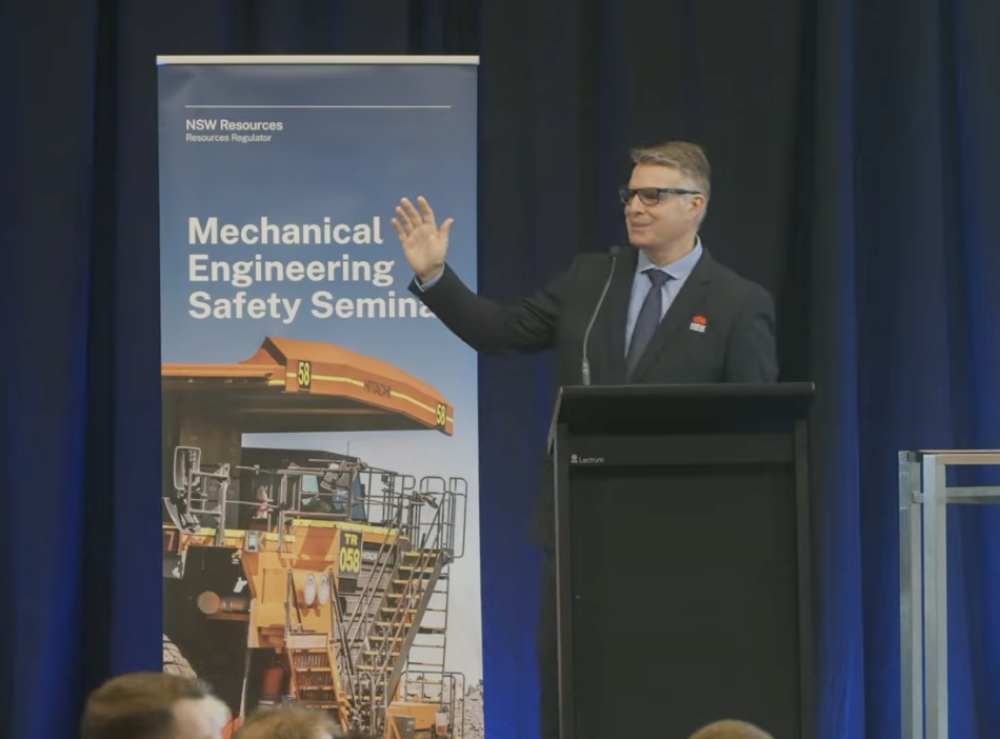
Anthony devoted much of his presentation to what he described as “the number one hazard in open cut mining and surface parts of underground mines” – vehicle and pedestrian interactions.
Despite a decade of industry effort, incidents and near misses continue to rise. “We’ve killed somebody in every sector. We’ve seen near hits that could easily have been fatalities. It is the number one priority for the Regulator right now. Unless we get this under control, we will keep killing people,” he said.
Anthony was blunt about the inadequacy of relying on toolbox talks, refresher training or risk assessments alone. “That’s the definition of insanity – doing the same thing again and again, expecting a different result. The data shows those approaches aren’t working. We need change.”
The centrepiece of that change is a new Technical Reference Guide (TRG), developed collaboratively with industry and aligned with EMESRT’s established framework on vehicle interactions. Anthony’s goal is for this TRG to become “the common framework and common language” across NSW mines.
Through a layered defence model, the TRG sets out controls from design and vehicle specification (layers one to seven) through to technology-based interventions (layers eight and nine).
Anthony cautioned against over-reliance on technology. “Technology is part of the solution, but it is not the solution. Too often, collision avoidance systems and proximity detection have failed to deliver. If you don’t get the fundamentals right – design, layout, vehicle specifications – no amount of technology will compensate.”
He used a football analogy to drive the point home. “Think of your main defensive line as those early layers. Technology is the fullback or goalkeeper. If you rely on it every time, you’re playing a dangerous game. The real work is in getting those first tackles right.”
For mechanical engineers, the call to action was clear. They have direct roles in specifying equipment, setting design standards, and ensuring operational controls are built into systems from the start. “You have a role across all layers of defence,” Anthony said. “This is not just the Regulator’s job – it’s everybody’s responsibility.”
Implementation will be firm. The Regulator plans to embed the TRG through forums, leadership engagement, and potentially future codification into legislation. “If you’re not doing it, you’ll be the odd one out. We want to see adoption so broad that it becomes industry standard, and if it performs well, we’ll look to lock it in through regulation,” Anthony said.
Supervision Under The Spotlight
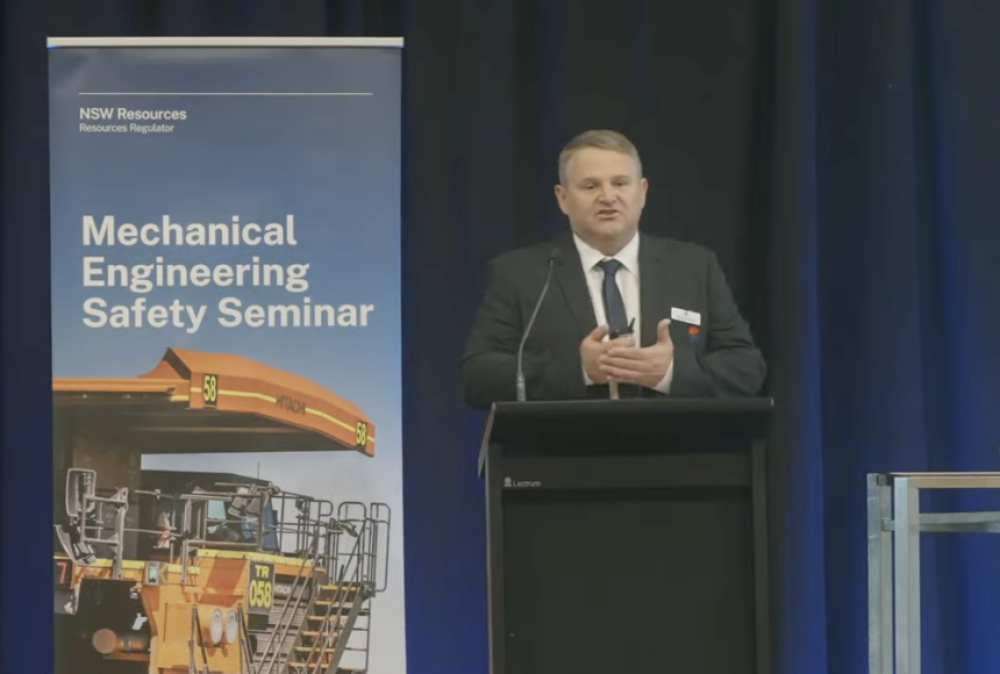
Where Anthony focused on strategic change, Russell Wood homed in on the day-to-day gaps that continue to injure workers.
Russell, who recently took on the role of Principal Inspector – Technical, pointed to positive trends: incident rates are slowly declining. But the picture is still concerning. “We are still hurting people. Escaped substances, entanglement with rotating parts, poor work environments – these remain our major issues,” he said.
One trend is particularly worrying: a rise in electrical shocks. While electricians feature prominently in the data, boilermakers are also being injured, often due to failures in isolation and poor work practices. Alarmingly, apprentices are over-represented. “This year alone we’ve already seen nearly as many electric shocks as the past four years combined. Two of those incidents involved apprentices,” Russell said.
Apprentice safety became the centre of his talk. “Apprentices are being shocked, exposed to pressure releases, and caught in rotating parts. It all comes down to supervision. Who is looking over their shoulder when they’re exposed to those energies?”
The Regulator will soon roll out a targeted program on apprentice supervision, examining whether mines have formal systems, whether tradespeople are trained and competent to supervise, and how competency is assessed. “Just because someone is a third-year apprentice doesn’t mean they can safely perform every task. Competency must be assessed by skill, not year level,” Russell said.
He highlighted a model recently introduced in the electrical sector by the Department of Fair Trading, which ties supervision standards to licensing. It defines levels of supervision – direct, general, broad – and sets apprentice-to-supervisor ratios accordingly. “If you’ve got a first-year apprentice on direct supervision, it’s one-to-one. A tradesman cannot supervise more than one person. That’s the kind of structure we need mines to be thinking about,” he said.
Tighter Standards And Compliance Pressures
Russell also pointed to regulatory changes already on the horizon. SafeWork NSW has cut workplace exposure limits for carbon monoxide by 33 percent and for nitrogen dioxide by 92 percent, effective from December 2026. “This will have a major impact, particularly for underground operations. Increased ventilation may create knock-on issues – higher fan pressures, more dust, and greater risk of spontaneous combustion,” he said.
Results from the Regulator’s most recent high-visibility campaign also underline where sites are falling short. Inspectors made 144 unannounced visits, issuing six prohibition notices, 168 improvement notices, and over 7,000 advisory notices.
“The biggest compliance failure we found was guarding – interaction with rotating parts. Maintenance of controls, ensuring people simply can’t put their hand somewhere dangerous, is still not where it needs to be,” Russell said.
Industry Must Step Up
Taken together, the two presentations showed a Regulator both raising its game and demanding industry do the same. Anthony emphasised a move away from outputs and towards genuine outcomes, with a spotlight on vehicle interactions as the most pressing hazard. Russell drilled down to show how inadequate supervision and basic failures in guarding continue to hurt workers, especially apprentices.
Both highlighted a shift in regulatory posture: less tolerance for poor reporting, exemptions without strong justification, or superficial compliance. The Regulator is positioning itself as more collaborative, but also more assertive.
Anthony’s closing words captured the stakes: “We run these forums to save lives. Every discussion on principal hazards and critical controls matters, because principal hazards can kill you and your workmates. Use the next two days well, take something back to your site, and make a difference. That might just save a life.”