
Why smart miners test before they guess how sharper sampling and better modelling help avoid costly surprises and unlock hidden ore value


, , , , , , , , , , , , , , , , ,
,
At the sharp end of metallurgical decision-making, where feasibility meets financial risk, one recurring theme echoes loudest: if you don’t know your orebody, you don’t know your project.
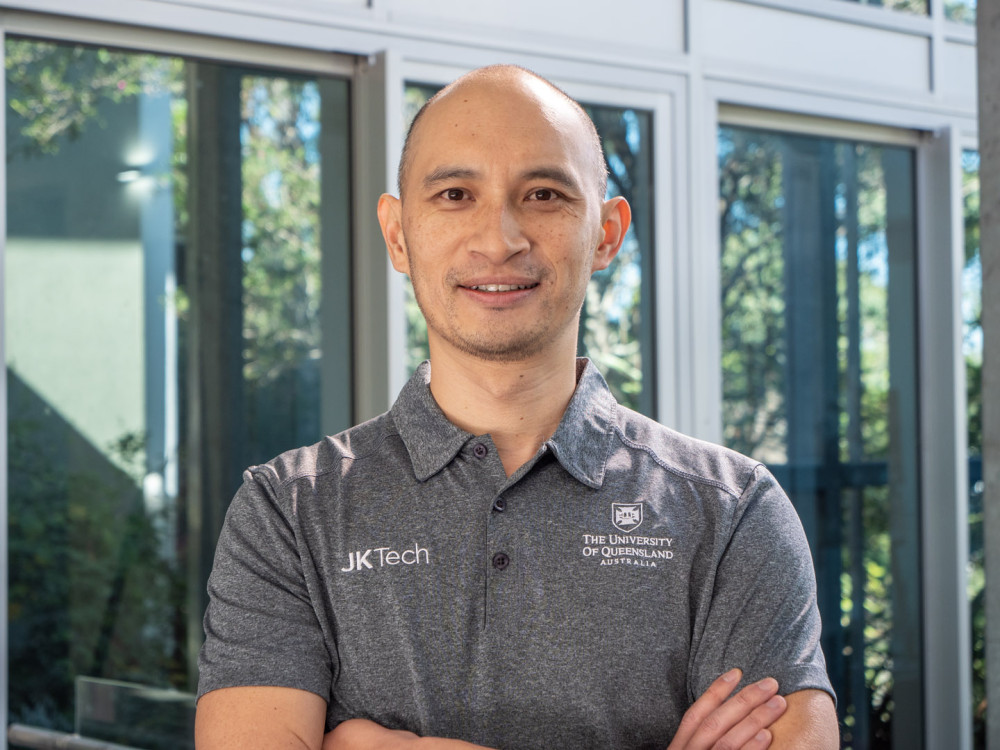
That’s the message from Bevin Wong, operations manager at JKTech, who speaks candidly to The Rock Wrangler about the risks posed by poor sampling, underfunded test programs, and misplaced trust in AI-led solutions without foundational data.
“The biggest challenge we see at the feasibility stage is companies simply not knowing what metallurgical tests to perform,” says Bevin. “There are a few bankable options, like the JK Drop Weight Test and SMC Test®, but often, the right path depends heavily on ore and mineral type. That’s where early consultation with metallurgists - not just geologists - becomes critical.”
A costly gamble on guesswork
According to Bevin, the tendency to treat testwork as a box-ticking exercise - rather than a strategic tool - can lead to decisions that haunt operations long after commissioning.
“Restricted budgets are a major issue. Everyone understands that testwork needs funding, but we still see projects designed off the back of just a handful of samples,” he says. “If you miss a harder ore zone during testing, that can crash your throughput later, with serious impacts on production. The upfront cost of more testwork is tiny compared to what that mistake could cost downstream.”
The disconnect, Bevin explains, is often structural. Metallurgical samples are typically selected by geologists, who are skilled at reading the rock - but may not fully grasp the mass requirements or continuity needs of downstream testwork.
“It should always be a joint effort between the geologist and the metallurgist,” he says. “The geologist understands the geology and where the samples are coming from. The metallurgist knows what kind of tests to run and how much material is needed. If they’re not working together, you risk generating composite samples that dilute the signal and don’t represent true deposit variability.”
An evolving toolbox
JKTech, the technology transfer company of The University of Queensland, has long been at the forefront of metallurgical testing innovation. While its flagship tests - the JK Drop Weight Test and SMC Test® - remain industry standards for comminution circuit design, the company has continued to expand and refine its offering to meet evolving industry needs.
One such development is the JK Bond Ball Mill (JKBBM) test, a streamlined alternative to the traditional Bond Work Index test originally developed by Fred Bond in the mid-20th century.
“The Bond Ball Mill Work Index is widely used, but we saw huge variability in results when we ran a round-robin quality control program across different labs,” says Bevin. “That’s why we developed the JKBBM. It uses less sample mass, it’s faster and cheaper, and most importantly, it delivers consistent, reproducible results.”
Another rising star in the company’s arsenal is the development and implementation of a rapid method to estimate the A*b parameter using smaller samples. This test is particularly useful in geometallurgical studies, where it can be applied to RC drilling samples that already have geochemical and mineralogical data attached.
“It’s about creating a powerful dataset for early-stage decision-making,” says Bevin. “The test gives you direction, then the SMC Test® or JK Drop Weight Test can take you the rest of the way for plant design and scale-up.”
Model behaviour
Testing is only part of the equation. JKTech’s other major contribution to the industry lies in its simulation tools - namely JKSimMet and JKSimFloat, which are widely used to model and optimise crushing, grinding, and flotation circuits.
“These simulation tools are integrated with our testwork methodology. That’s what gives them real power,” Bevin explains. “They’re not just off-the-shelf packages - they’re built on decades of empirical data and operational experience. The industry trusts the models.”
Today, those models are being embedded not just in desktop flowsheet design, but also within mine planning, process control systems, and real-time optimisation software platforms.
“It’s all about closing the loop between ore characteristics, plant design, and operating performance,” he says.
Beyond throughput: the rise of Geomet
While traditional metallurgical testwork remains vital for circuit design, Bevin sees a growing shift toward geometallurgy as a broader philosophy - one that ties geological, chemical, mineralogical, and metallurgical data together from the earliest stages of a project.
“Geomet is about de-risking. It’s not just about predicting throughput and recovery - it’s about understanding variability across the deposit so you can plan accordingly,” he says. “And it shouldn’t stop at metallurgy. We’re now applying the same approach across the value chain - drill and blast, geotech, environmental factors like acid mine drainage. That integrated view unlocks value everywhere.”
JKTech, with its deep ties to The University of Queensland’s Sustainable Minerals Institute, is uniquely positioned to deliver that holistic approach, drawing on a wide range of specialist expertise and research.
The AI caveat
In an era of increasing enthusiasm for digital twins, smart sensors, and AI-driven optimisation, Bevin offers a timely note of caution: you can’t optimise what you don’t understand.
“Lately, everyone wants to use AI to improve processes - but if you don’t know what ore is coming into the plant at any given time, then what are you optimising?” he asks. “AI needs the right kind of data to be effective. If your ore characterisation is weak, the algorithms won’t save you.”
Instead, Bevin argues for a return to fundamentals: getting the right samples, doing the right tests, and continuously characterising ore during operations.
“The best plants never stop testing. That way, they don’t get surprised,” he says. “And when you’re not constantly fire-fighting throughput problems, your metallurgists can actually focus on real optimisation.”
Building capability
A key part of JKTech’s mission is industry education. The company runs practical training courses for clients - ranging from graduate metallurgists to seasoned plant operators - designed to transfer knowledge and embed best practices.
“We still support undergrads and researchers at UQ, but a lot of our focus now is on professional training,” says Bevin. “One of our most popular courses is Comparative Statistics and Experimental Design. You’d be surprised how many metallurgists want to get better at stats - it’s critical to their work.”
The goal, he says, is not just to deliver results, but to build capability within the organisations JKTech serves.
“We want to empower our clients. That’s why we don’t just provide test data - we provide the context and training to use it effectively,” he says.
A mindset shift
Ultimately, Bevin’s message is simple: treat testwork not as a cost centre, but as a strategic enabler - one that can reduce risk, boost performance, and unlock latent value in even the most complex orebodies.
“Sampling, testing, modelling - it’s not just science, it’s smart business,” he says. “You don’t want to be sitting in the control room wondering why your throughput’s down. You want to know ahead of time, and plan for it. That’s what we help our clients do.”
And in an industry under increasing pressure to do more with less, that kind of foresight might just be the most valuable resource of all.