
AI joins the tailings crew turning data chaos into clarity for TSF engineers chasing smarter, safer and faster decisions on and off the embankment

, , , , , , , , , , , , , , , ,
,
What do Formula 1 racing and tailings storage have in common? More than you’d think - especially when AI joins the engineering crew.
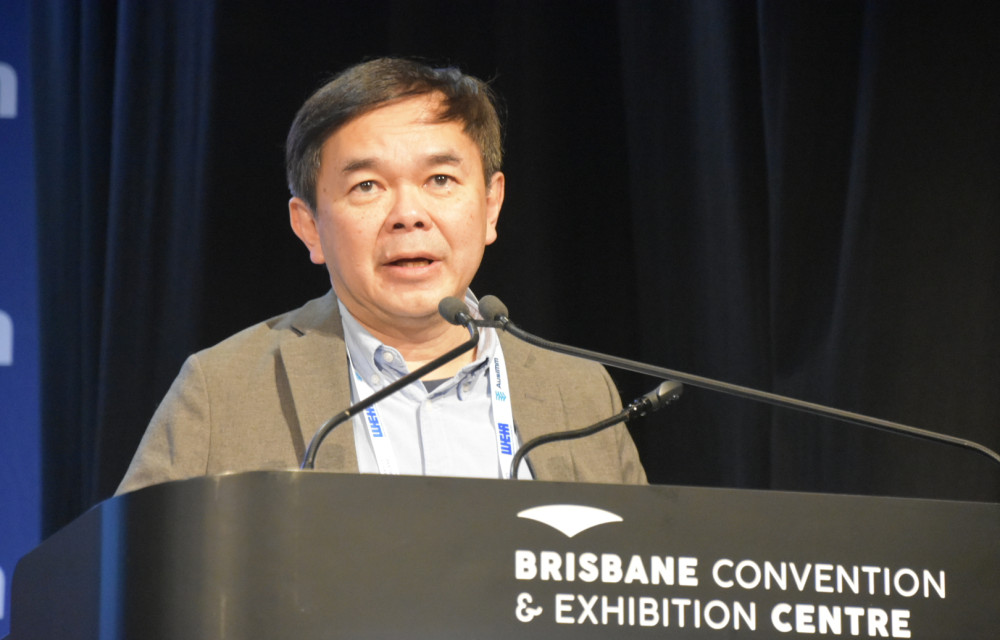
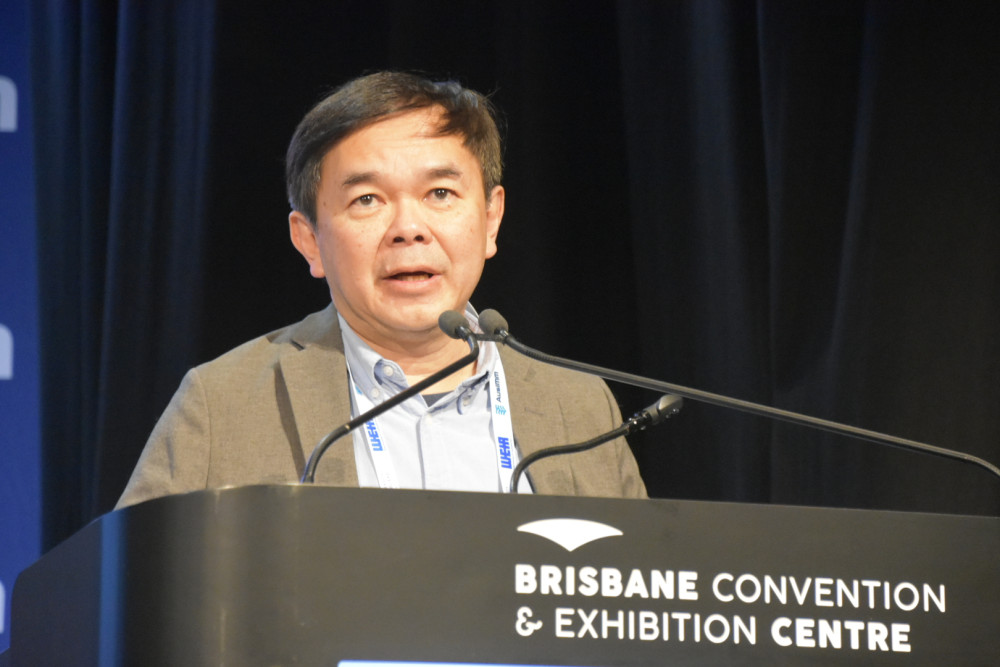
At this year’s Life of Mine | Mine Waste and Tailings 2025 Conference in Brisbane, principal geotechnical engineer Stephen Darmawan delivered a standout presentation that connected two worlds not often linked in mining circles: Formula 1 racing and tailings storage facilities (TSFs). In doing so, he introduced TailingsIQ, a prototype software platform that applies artificial intelligence (AI) to one of mining’s most data-heavy and risk-sensitive challenges.
Stephen’s paper, TailingsIQ - An AI-enhanced tool for improving tailings storage facility oversight, lays out the rationale, architecture, and application of a tool designed to transform the way engineers access and interpret TSF data. What sets TailingsIQ apart is not only its technical architecture, but its user-focused design. It was developed by engineers, for engineers, and it seeks to bring the kind of real-time intelligence found on a Formula 1 pit wall into the tailings management space.
“TailingsIQ was developed by geotechnical engineers and software developers who understand the realities of site-based monitoring,” Stephen explained. “It’s designed to make sense of complexity, not add to it.”
The race analogy: From Grand Prix to ground truth
Stephen began his talk with a reference to Oscar Piastri’s recent success at the Belgian Grand Prix, noting how even world-class drivers depend on real-time support from the pit wall. In F1, cars generate over a million data points per second, all of which feed into a system that allows drivers to make split-second decisions backed by live intelligence.
“Drivers like Oscar Piastri are not racing alone,” Stephen said. “They are part of a team that includes engineers monitoring everything from tyre pressure to track temperature. This team-based, intelligence-augmented model is exactly what we need in tailings.”
TSF operators face an analogous situation. Modern sites generate enormous volumes of data from piezometers, inclinometers, rainfall gauges, geotechnical reports, InSAR monitoring, inspection logs, and laboratory testing. These sources often exist in silos, stored across multiple platforms and spreadsheets. For engineers, the challenge isn’t the lack of data, but the difficulty in bringing it together to form a coherent picture.
“Too often, we’re working reactively,” Stephen said. “Critical insights are buried in files or hidden in patterns that only emerge with significant time investment. TailingsIQ was developed to change that.”
Solving the data fragmentation problem
At the core of TailingsIQ is a focus on cross-data synthesis - a capability that uses AI to ingest, interpret, and connect disparate data sets. The system can extract information from both structured sources, like sensor logs and spreadsheets, and unstructured documents, like PDFs and inspection notes.
“Think of a scenario where you want to understand how rainfall over the past week has impacted pore pressures in a specific embankment sector,” Stephen said. “With TailingsIQ, you can ask that question in plain English. The system then fetches and correlates rainfall data, piezometer readings, and inspection records to generate an answer.”
This functionality is enabled by an AI assistant trained specifically for the tailings context. Unlike generic chatbots, the assistant understands mining-specific language and engineering concepts. It can recognise terms like CPT, VWP, slope factor of safety, and design freeboard.
“You don’t need to be a data scientist or AI specialist,” Stephen added. “We designed it so a geotechnical engineer or responsible tailings facility engineer (RTFE) can use it right out of the box.”
Human-in-the-loop: Engineering oversight remains essential
A key principle underpinning TailingsIQ’s architecture is the human-in-the-loop (HITL) model. The system augments human decision-making but does not attempt to replace it.
“We are not building autopilot for tailings,” Stephen said. “We are building a co-pilot.”
Every AI-generated output includes full traceability to source data. For example, if the system reports a deviation in a pore pressure trend, it will also provide the underlying data, historical comparisons, and related inspection entries. This transparency allows engineers to audit the AI’s conclusions, verify accuracy, and apply their professional judgement.
“This is especially important when using AI in safety-critical environments,” Stephen explained. “There must be accountability. The system provides intelligence, but people make decisions.”
The system also incorporates user feedback to continuously refine its responses. Engineers can rate answers and flag issues for re-evaluation, creating a learning loop that strengthens reliability over time.
Real-time insights with intuitive dashboards
One of the more tangible benefits of TailingsIQ is the user interface. The platform includes custom dashboards tailored to TSF management. These dashboards integrate real-time sensor data with visual overlays, alerts, and compliance indicators.
“You can see piezometer status, rainfall trends, GIS TM compliance metrics, and inspection schedules all in one place,” Stephen said. “It’s not just data for data’s sake - it’s situational awareness.”
For example, the platform can issue automated alerts when a trigger threshold is exceeded, but it goes further by correlating the event with recent activities such as embankment raises, or drainage works.
“Instead of a red flag with no context, you get an explanation,” he said. “That helps avoid false alarms and supports more informed responses.”
Integration, scalability and the role of AWS
TailingsIQ was developed using high-performance computing infrastructure supported by Amazon Web Services (AWS). The prototype integrates with Geotesta’s cloud-based monitoring system, Kungfu, and includes an API layer that allows connection to other systems such as document repositories and remote sensing platforms.
The platform’s architecture is modular and designed to scale. While the current prototype focuses on a single facility, the goal is to enable deployment across portfolios.
“Whether you’re managing one TSF or ten, TailingsIQ can help you standardise processes and surface critical insights quickly,” Stephen said.
An optional expert system module also provides engineering support tools such as slope stability assessment prompts, factor-of-safety interpretations, and automatic report generation.
Practical value for compliance and reporting
Another major benefit of TailingsIQ is its potential to streamline compliance with frameworks like the Global Industry Standard on Tailings Management (GISTM). The system can track and map data inputs against GISTM criteria, making it easier to demonstrate alignment during audits.
“Compliance verification shouldn’t be a last-minute scramble,” Stephen noted. “With TailingsIQ, you can see where you stand every day.”
This capability also supports internal governance. Accountable executives, EoRs, and regulators can be given access to tailored views of the data, enabling more transparent and timely oversight.
Looking ahead: From prototype to platform
While still in development, TailingsIQ is already attracting attention from industry stakeholders. Stephen is actively seeking collaborators and trial partners to expand the system’s functionality and validate its use across a broader range of site conditions.
“We believe the future of tailings oversight lies in the collaboration between human expertise and advanced AI,” he said. “That’s why we’re building not just a product, but a platform that evolves with the industry.”
The project is being developed iteratively, with new features and integrations expected in upcoming releases. Areas of future focus include image processing, AI-assisted inspections, and integration with 3D modelling environments.
“We welcome input from asset owners, consulting firms, and regulators,” Stephen said. “We’re keen to ensure TailingsIQ meets real-world needs.”
Conclusion: Toward a smarter TSF future
TailingsIQ is more than an efficiency tool. It represents a shift in how the mining sector approaches data, risk, and decision-making. By turning disjointed data into real-time intelligence, it supports a more proactive, transparent, and resilient approach to tailings management.
As Stephen concluded, “The best engineers make decisions with clarity and speed. TailingsIQ is designed to give them both and to ensure we’re not just reacting to risk but getting ahead of it.”
In an industry under growing scrutiny, and facing increasing complexity, tools like TailingsIQ may prove indispensable, not just for managing data, but for protecting lives, reputations, and the environment.