
AI takes on drill core logging as exploration teams trade Excel chaos for smarter data systems that speed up discovery and boost confidence

, , , , , , , , , , , ,
,
For years, exploration teams have wrestled with data chaos in the field. Now, an emerging wave of tools - and even artificial intelligence - are reshaping how geoscientific data is captured, validated, and used to accelerate discovery.
Will Vallat, owner and software developer at GeoSpark Consulting Inc., has spent nearly two decades building data management systems tailored to the realities of exploration. Speaking to The Rock Wrangler, Will explains why the industry’s reliance on spreadsheets is running out of road, how hybrid cloud systems and quality control routines are lifting confidence, and why AI may soon automate one of the most time-consuming tasks in geology.
From paper logs to integrated systems
Will has seen firsthand the shift from paper and Excel-based logging toward modern relational databases. “Many of our clients have grown from junior exploration companies into producing mines, and the initial move is often from decades-old spreadsheets to a structured database,” he says.
That step alone, he explains, brings enormous benefits. Confidence in resource estimates improves as incoming data is consistent and validated. Investors see reduced risk, errors are caught early, and press releases can be turned around faster. “Development of properties is generally accelerated more quickly when the underlying data is robust and properly quality-checked,” Will notes.

Why Excel no longer cuts it
One of the clearest messages Will delivers is that exploration teams cannot rely on outdated methods. “People think they can get by with Excel and load it into a database later,” he says. “This invariably leads to errors, versioning issues, and extra cost.”
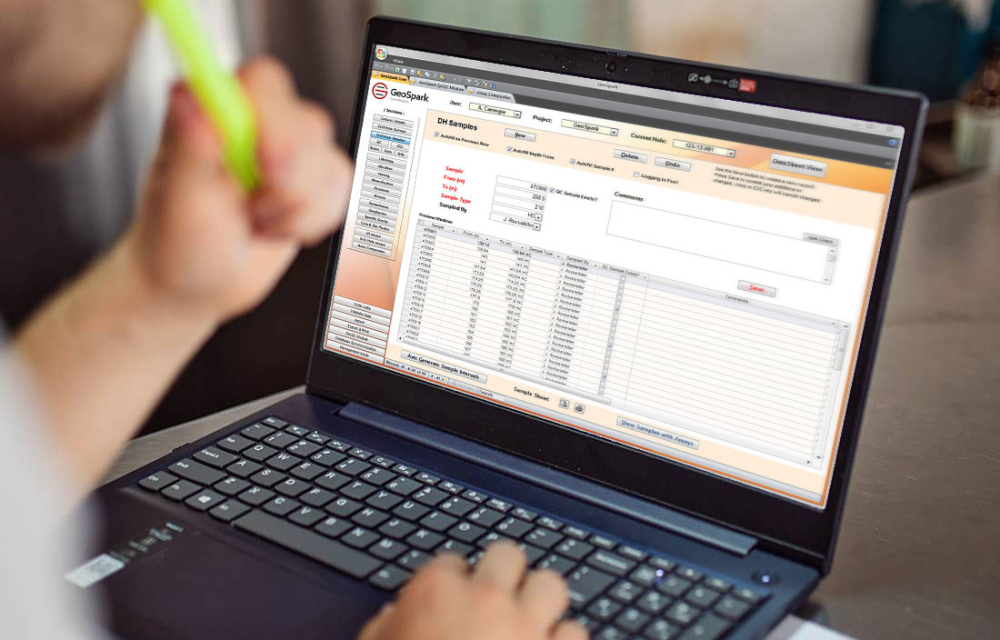
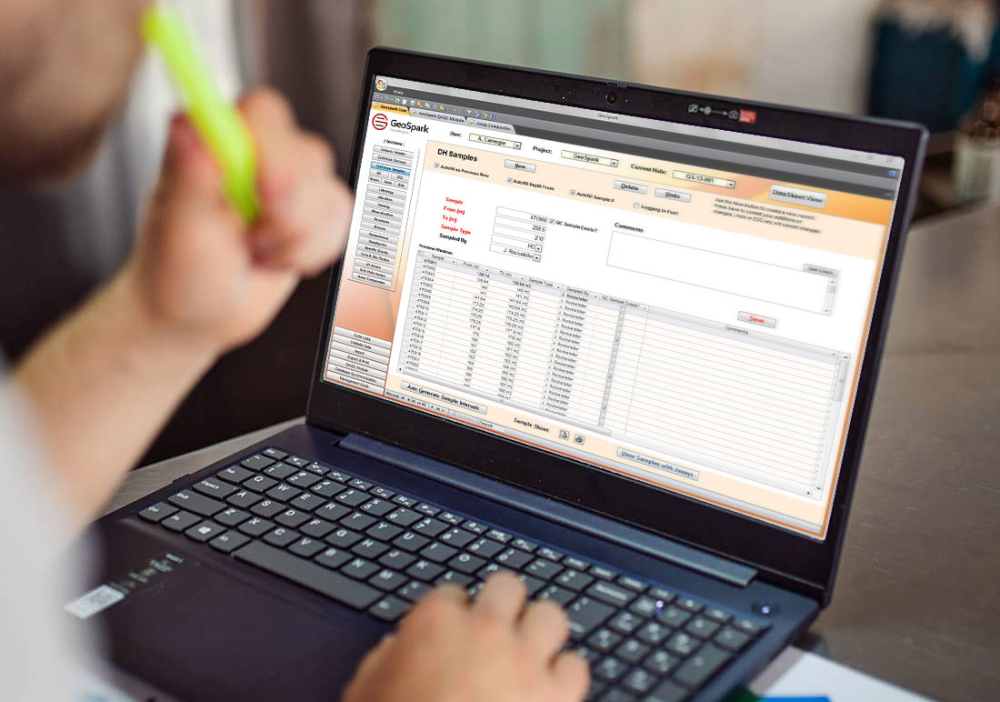
Modern systems offer validation constraints that spreadsheets simply cannot. For example, drill logs entered in GeoSpark’s software are checked in real time: lithology codes must be correct, hole depths must make sense, and overlapping intervals are flagged before they cause downstream problems.
But technology alone is not enough. Will emphasises the need for discipline: “Without strict procedures and a dedicated database manager, things usually descend into chaos. You need one person - two at most on big projects - responsible for reviewing, combining, and validating the data as it builds up.”
Hybrid cloud becomes standard
Cloud connectivity is becoming the backbone of exploration workflows, allowing teams to update and access data in near real time. Yet, as Will points out, connectivity in the field is not always guaranteed.
“Cloud hosting is a boon where network access exists, but not every site has reliable internet. That’s why we offer a hybrid model - users can log data offline and then sync it when they have connectivity,” he says.
Satellite internet providers like Starlink are rapidly shifting this equation, making continuous cloud workflows feasible in remote regions. “Starlink has alleviated many of these issues, pushing cloud connectivity to the forefront,” Will adds.
Quality control built into the workflow
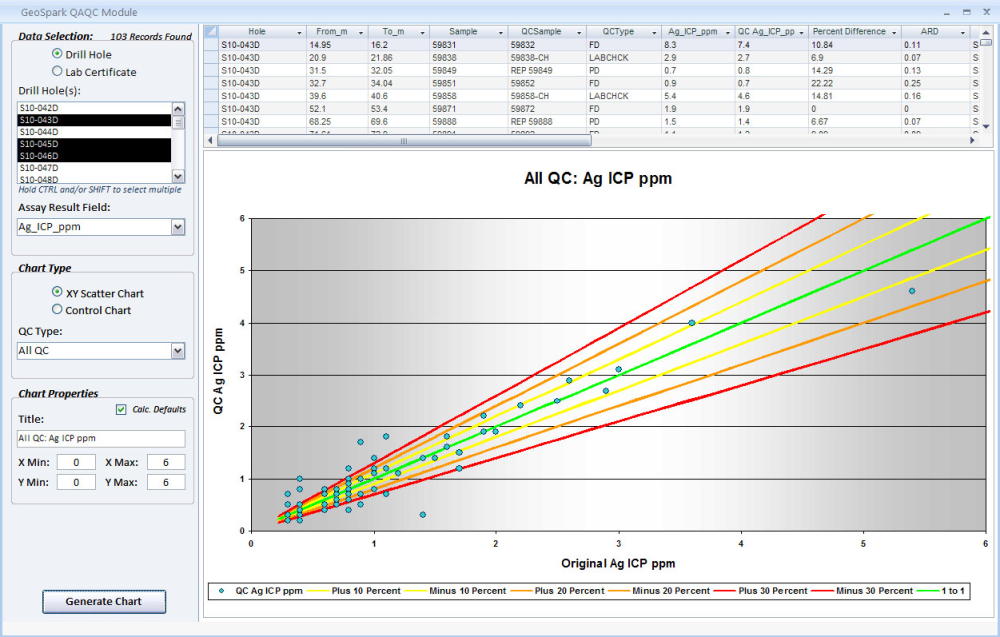
Confidence in assay results is fundamental to exploration success. Will highlights how embedding quality assurance and quality control (QA/QC) within the database ensures problems are caught early.
“Our QAQC module allows assay results to be imported and immediately analysed with a dozen charting and statistical methods,” he explains. Field duplicates or control sample anomalies are flagged instantly, prompting reruns before the exploration cycle moves on.
“It’s much easier to do this as it happens, rather than at the end of a program when people have moved on, information is no longer fresh, and budgets are tight,” Will says.
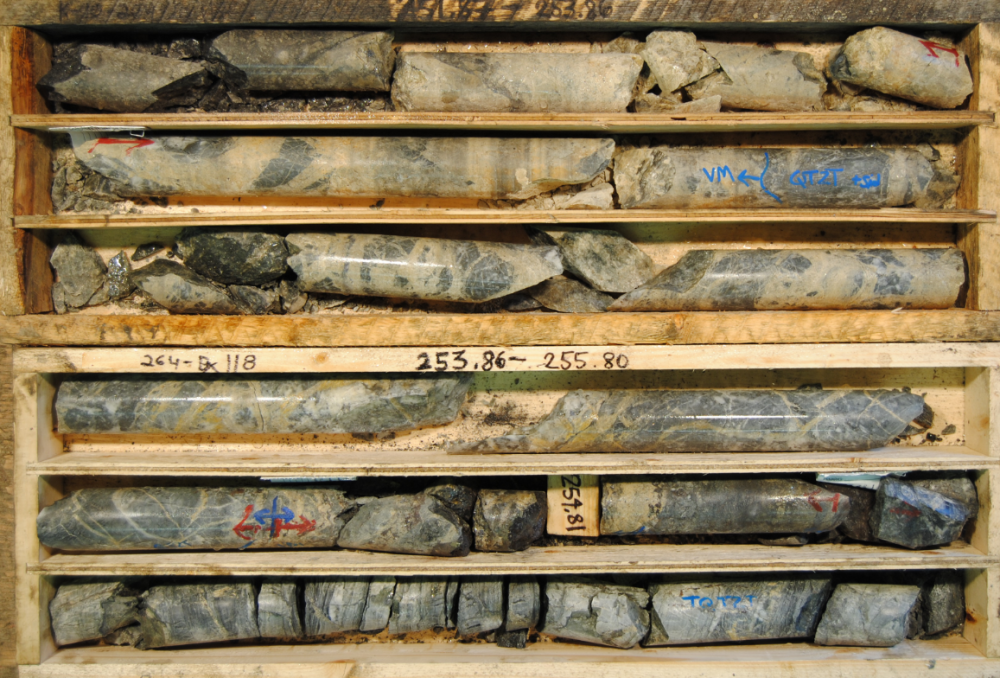
Drill core trays ready for analysis: AI tools are being trialled to automatically recognise and classify rock types from imagery.
The AI frontier: logging drill core photos
Perhaps the most intriguing development Will points to is the role artificial intelligence could play in core logging.
“AI may be a disruptor - using it to visually recognise drill core photos and automatically determine composition,” he says. While still in its infancy, the approach could dramatically speed up the logging process. Geologists would remain central, but their role would shift from manual data entry to quality control, checking the machine’s output.
This trend is part of a broader digitalisation of exploration, where new technology augments geoscientists rather than replaces them. “It may prove to be a valuable time and cost saver,” Will notes, especially given the scale of core logging required on large projects.
Tailoring systems to each deposit
No two deposits are identical, and no single “out of the box” solution works everywhere. Will stresses the importance of customisation.
“GeoSpark Core has grown organically over 18 years, but we consistently adapt it to the specific needs of each client and deposit type,” he explains. Commodities, logging styles, and protocols vary widely, and flexibility is critical.
This agile approach, Will argues, is what makes software adoption successful. Systems need to fit around geologists, not force geologists to bend to rigid templates.
Case studies: moving from chaos to clarity
Although he declines to name specific clients, Will says the impact of structured data management is universal. “Every company that employs GeoSpark has improved their data management and productivity,” he says.
Sometimes this means a junior exploration company upgrading from paper and spreadsheets. Other times, it involves a mid-tier or major miner stepping away from an expensive, overcomplicated enterprise system toward something more streamlined and cost-effective.
In both cases, the outcome is the same: fewer errors, more confidence, and stronger foundations for decision-making.
Cultural change as much as technology
For Will, one of the biggest hurdles isn’t technical at all - it’s behavioural. Teams accustomed to informal logging processes or “free for all” data entry need to embrace new discipline.
“The software can enforce constraints, but it still requires procedures to be followed rigorously by everyone,” he says. When teams get it right, the payoff is significant: faster exploration cycles, higher-quality press releases, and stronger investor confidence.
Looking ahead
Over the next three to five years, Will sees cloud systems and AI reshaping exploration data workflows. Hybrid cloud models are becoming the norm, especially as satellite internet extends reliable connectivity to remote regions. QA/QC processes are being embedded deeper into databases, ensuring errors are caught as data arrives.
And AI-driven logging, while experimental today, may soon become part of standard practice. “Geologists won’t be replaced,” Will emphasises, “but their time will be freed up to interpret and validate rather than manually transcribe.”
Lasting connections through word of mouth
Interestingly, Will says much of GeoSpark’s growth has come not from marketing but from reputation. “We’ve been fortunate to make lasting connections that propel us forward based on word of mouth,” he reflects.
That grassroots endorsement reflects a wider truth: in mineral exploration, credibility is earned by solving real problems in the field. Whether it’s migrating off legacy spreadsheets, syncing data in the cloud, embedding QA/QC, or trialling AI for core logging, Will’s perspective underscores how data management is no longer a back-office issue but a frontline enabler of discovery.