
Beyond the price tag: panel says Australia’s edge in critical minerals lies in secure supply, ESG trust, and niches China can’t easily undercut

, , , , , , , , , , , , , , , , ,
, , ,
, , , ,
The future of Australia’s role in critical mineral supply chains may depend less on matching China’s scale and more on proving that secure, trusted supply with ESG credentials is worth paying for.
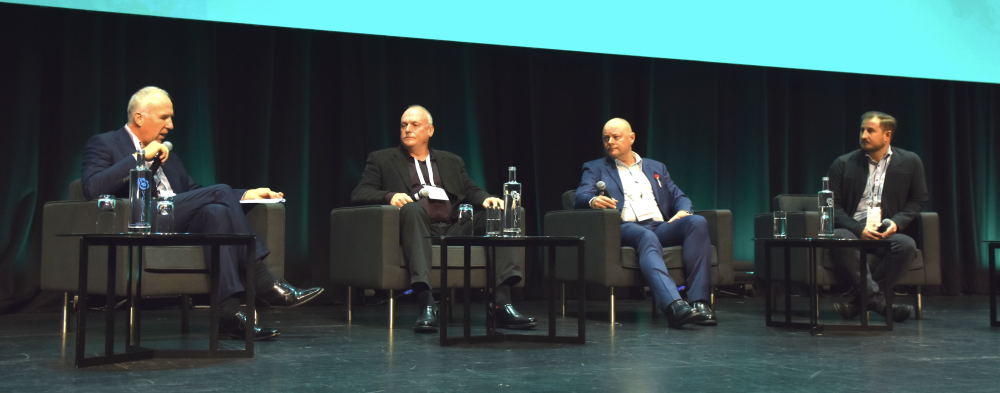
At AusIMM’s Critical Minerals Conference in Perth a panel session Challenges of Diversifying Critical Mineral Supply Chains brought together industry leaders and researchers to examine one of the most pressing questions facing Australia’s mining and processing sector: how can the country build resilient, profitable, and ethical supply chains in a world where China holds overwhelming dominance?
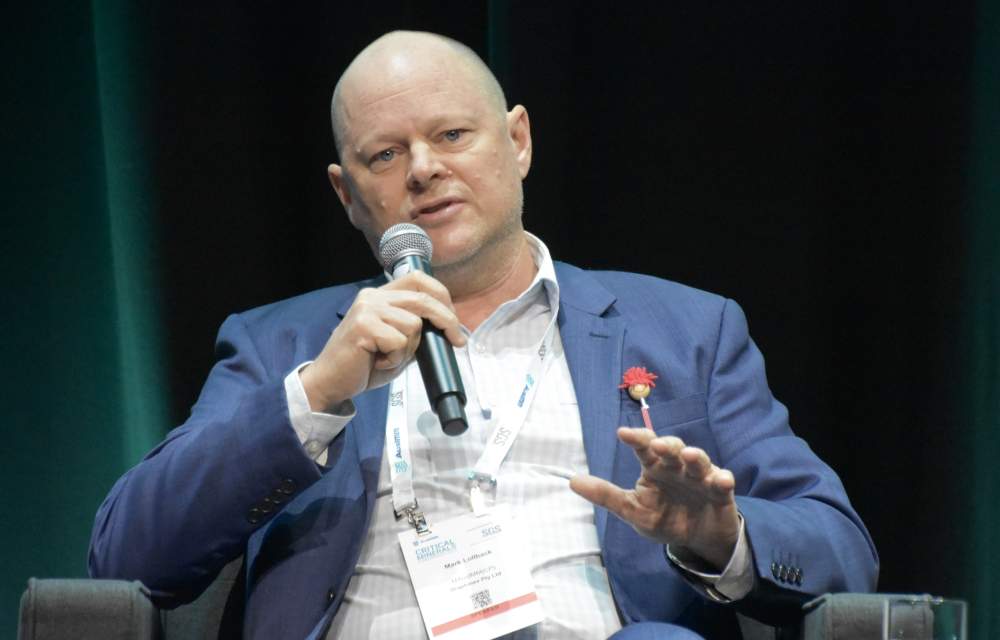
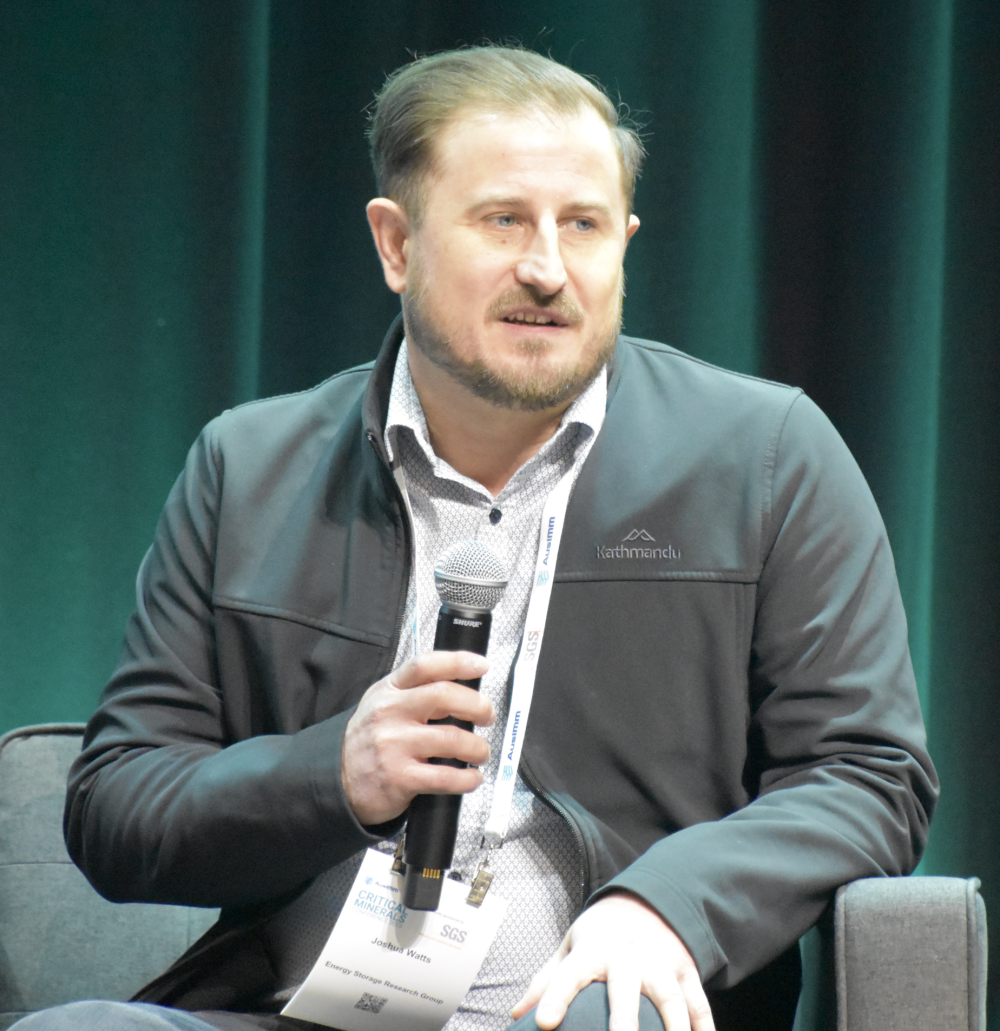
The discussion was facilitated by Quentin Hill, chief executive officer of the Advanced Materials and Battery Council (AMBC), and featured three panellists: Alan Langley, study manager at IGO; Mark Lollback, chief technical officer at Graphinex; and Professor Joshua Watts, director of the Energy Storage Research Group at QUT.
Quentin framed the challenge bluntly. “At the moment, China controls 85 percent of the active materials battery sector. That’s been achieved through decades of strategic investment, R&D, and subsidies. The question for us is how we diversify supply chains and make sure Australia captures the benefits of its resource base.”
Alan Langley: economics first
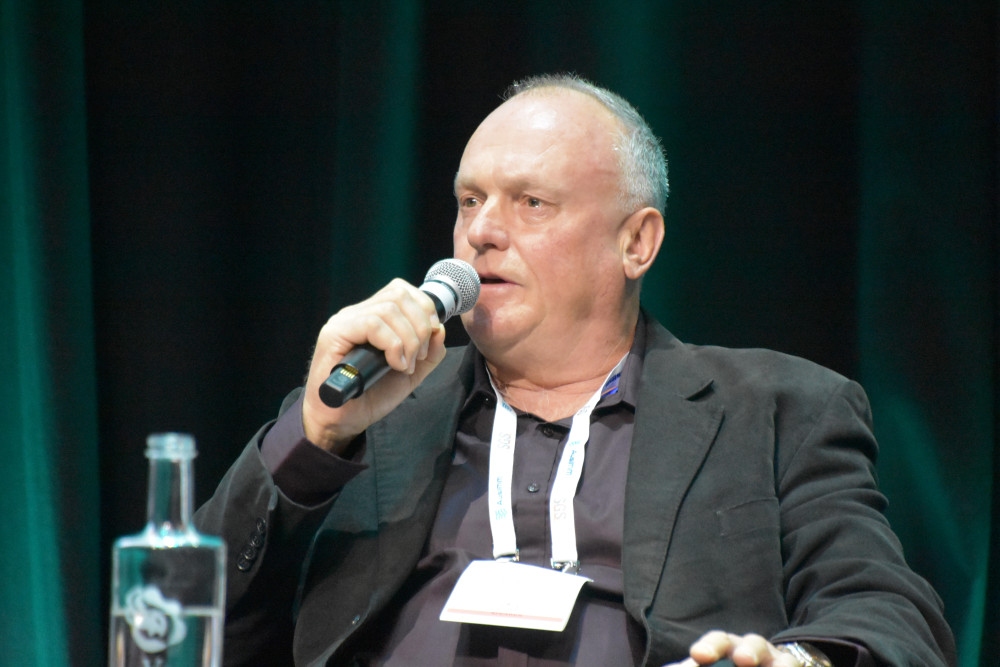
Alan, a metallurgist with more than four decades of global experience, brought a grounded perspective. His message was that the economics of downstream processing in Australia remain unforgiving.
On nickel, Alan pointed to the collapse of local refineries under pressure from Indonesia’s low-cost, high-volume output. “The smelters and refineries here simply couldn’t compete. Shareholders expect a return on investment, and when the economics no longer stack up, operations close,” he said.
Lithium, too, presents a challenge. “Your input cost in spodumene is a very significant component of refining into carbonate or hydroxide. When power costs are high, and you’re competing against Chinese refiners who operate at a fraction of those costs, it’s extremely difficult to justify downstream investment here,” Alan explained.
Alan’s conclusion was direct: “If we want to move further downstream in Australia, we need targeted government support. Without it, these projects will struggle to attract capital.”
Mark Lollback: graphite’s critical moment
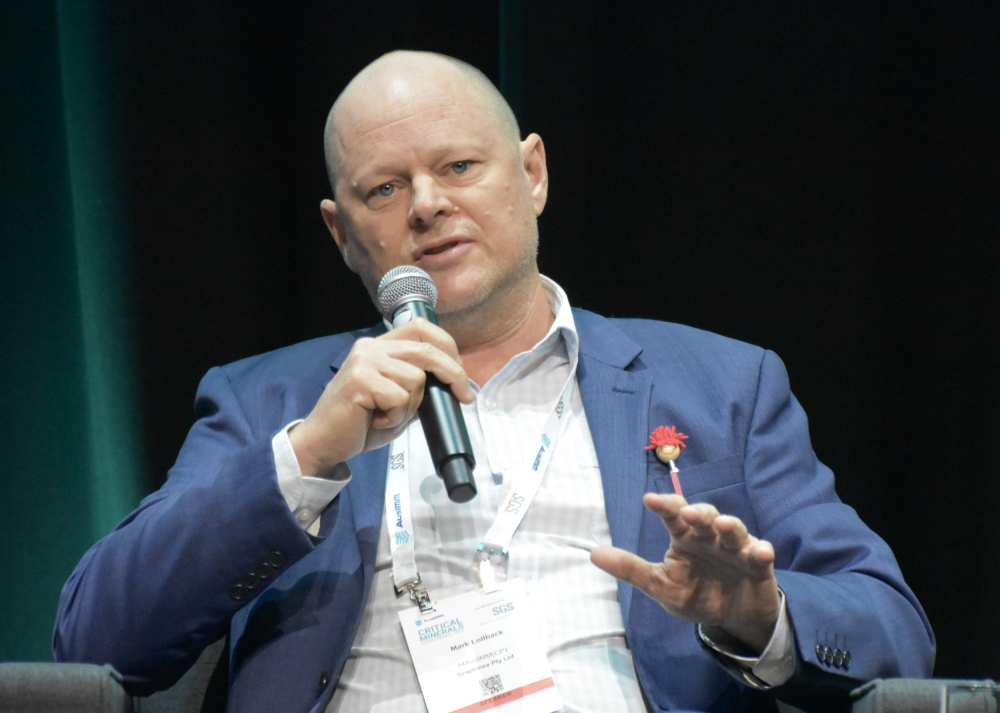
For Mark, the story of graphite crystallises both the risk and the opportunity of supply chain diversification. Graphite, he reminded the audience, is the only anode material used in lithium-ion batteries, with no substitute.
“Every phone, every EV, every laptop depends on graphite. Yet China currently controls 99 percent of global anode production,” Mark said. “Last year, Beijing introduced export restrictions on graphite. That sent every non-Chinese battery manufacturer scrambling.”
Graphinex, where Mark is chief technical officer, is advancing the Esmeralda Graphite Mine in North Queensland alongside plans for a downstream anode refinery in Townsville. “Our deposit is the third largest in the world and the only one in a tier-one jurisdiction. That matters. The largest is in Mozambique, the second is in Kazakhstan on the Russian border. Both come with risks investors are wary of.”
But for Mark, the real opportunity lies in moving beyond the “dig and ship” model. “If you sell graphite concentrate, you barely break even. But if you refine it into spherical purified graphite, you’re looking at a tenfold premium. That’s where the value is created.”
Battery makers, he added, are willing to pay for certainty. “If we can prove our graphite performs better, customers in the US, Japan, and Korea will pay the premium for secure supply. They want out of China’s shadow.”
Joshua Watts: national security and innovation
Joshua brought the researcher’s perspective, focusing on national security and the innovation pipeline. He argued that Australia’s role in global supply chains is about more than economics.
“We need to build secure supply chains not just to capture value, but to safeguard against disruptions,” he said. “COVID showed us how fragile supply chains are. If we’re serious about an 82 percent renewable target by 2032, we can’t depend entirely on overseas suppliers.”
Joshua emphasised the importance of research translation, particularly in testing and qualification. “You can’t just hand over a new material to a battery manufacturer and expect them to buy it. They’ll test it for 18 months to two years before considering an offtake agreement. Without accredited testing and qualification, you won’t even get through the door.”
He urged stronger links between research, industry, and government to bridge the gap between laboratory innovation and commercial deployment. “We have world-class research capability in Australia, but we need to scale up our ability to commercialise and validate products to global standards. That’s what investors and customers look for.”
Quentin Hill: connecting the ecosystem
As facilitator, Quentin repeatedly steered the conversation back to the big picture. He noted that supply chain diversification is not just a technical or commercial question, but a national strategic one.
“Accenture estimates that developing a battery industry ecosystem in Australia could be worth $55 billion and over 60,000 jobs,” Quentin said. “But to get there, we need alignment between miners, processors, manufacturers, researchers, and government.”
Quentin’s background as both a geologist and an advocate for green steel projects gave him a practical appreciation of how fragmented supply chains can undermine national ambitions. “We have the resources. We have the talent. What we need is to connect the pieces.”
China as the benchmark
One of the most striking threads of the discussion was the unavoidable comparison with China.
Alan described how Chinese firms accept generational timelines and state subsidies in exchange for dominance. “In the West, companies live quarter to quarter on shareholder expectations. In China, they think in decades.”
Mark pointed out structural advantages that are hard to ignore. “In Townsville, power costs us 18 cents per kilowatt-hour. In China, refiners operate at two or three cents. That’s five to six times cheaper before you even start.”
Joshua cautioned that competing head-on with China may not be the right approach. “The question shouldn’t be ‘why compete with China?’ but rather ‘where can Australia carve out niches where it can win?’ High-performance, high-trust markets like defence, mining, and advanced transport are examples where ESG credentials and secure supply matter as much as price.”
This shift in perspective - from trying to match China on scale and cost, to identifying where Australia can differentiate - was the session’s most resonant theme.
The role of government
All panellists agreed that government support will be essential.
Alan welcomed production tax credits but argued they would not change fundamentals. “They’re helpful, but they won’t by themselves make downstream processing competitive here.”
Mark credited Queensland and federal government grants with accelerating Graphinex’s feasibility work but warned governments will have to “pick winners.” “There are half a dozen graphite projects in Australia. They’re all competing for the same small pool of funds. Government can’t back them all.”
Joshua emphasised the need for long-term strategic vision. “Governments change, but the industry needs bipartisan commitment over decades. Without that, investment will always be fragile.”
Bottlenecks and opportunities
The panel identified systemic bottlenecks that Australia must address:
- High power costs compared to international competitors
- Long qualification times for new materials
- Limited downstream refining expertise, especially in areas like graphite purification
- Gaps in commercialisation and scaling of research outcomes
At the same time, they pointed to opportunities:
- Secure, non-Chinese graphite supply with premium pricing
- Targeted niches in defence, mining, and transport where ESG standards justify higher costs
- The chance to leverage Australia’s reputation for responsible development
Joshua captured the balance neatly: “We can’t do everything, and we shouldn’t. But we can do some things very well. That’s where we should focus.”
Conclusion: a pragmatic optimism
The session closed on a note of pragmatic optimism. Diversifying critical mineral supply chains will not be easy, nor will it happen quickly. But the panellists agreed that Australia has a genuine opportunity to build secure, trusted niches in global markets if it can align research, industry, and government.
The most interesting insight was that Australia’s path forward may not be about competing with China on its terms, but about reshaping the rules of engagement. Secure supply, transparent ESG standards, and reliable partnerships are assets customers are willing to pay for.
Or, as Mark put it, “If we can prove performance, people will pay for certainty.”