
MSHA report cites safety failures in fatal Illinois quarry blast
, , , , ,
, ,
,
The Unites States' Mine Safety and Health Administration (MSHA) has released its final report into a fatal blasting accident at Calhoun Quarry #1 in Jersey County, Illinois, citing multiple safety violations and enforcement actions.
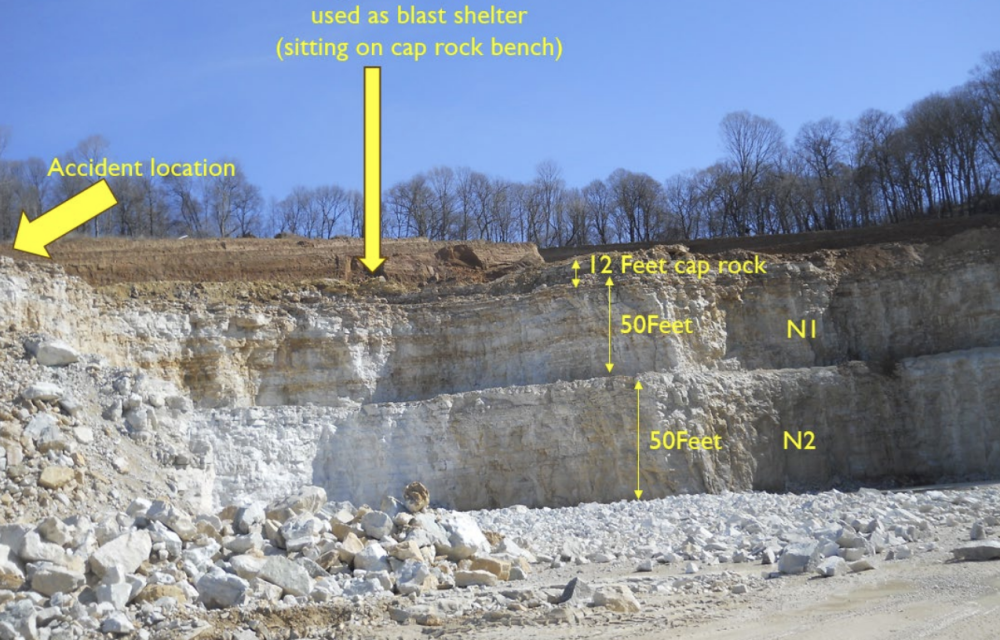
The investigation followed the death of Anthony Sievers, 67, owner and vice president of Calhoun Quarry Inc., who was struck by fly rock during a blast on 5 March 2025. MSHA determined the accident occurred because miners were not protected in a blast shelter, the blasting circuit was not tested before detonation, and blasting lines were in poor repair.
According to the report, the detonator box initially failed due to intermittent blasting line continuity. Investigators found spliced, corroded wires and non-weatherproof connectors that contributed to a misfire. In an attempt to work around the failure, the quarry used the electrical system of a Caterpillar front-end loader to fire the shot, leaving Sievers outside of proper shelter and exposed to fly rock.
MSHA found these practices represented aggravated conduct constituting more than ordinary negligence.
Enforcement actions
The report documents three major violations:
-
Failure to protect miners in a blast shelter (104(d)(1) citation).
-
Failure to test the blasting circuit prior to detonation (104(d)(1) order).
-
Failure to maintain blasting lines in good repair (104(d)(1) order).
Each was deemed an unwarrantable failure under federal standards. MSHA also issued a 103(k) order to secure the accident site immediately following the incident.
Corrective measures
In response, Calhoun Quarry Inc. has removed all explosives from its site and committed to contracting specialist blasting companies for future operations.
Context
The quarry, employing eight workers, had a clean safety record in 2024 with no lost-time incidents, compared with a national average of 0.92 for similar operations. The last MSHA inspection was completed one month prior to the accident.
The report was approved by Mary Jo Bishop, Acting District Manager of MSHA’s Vincennes District office, who concluded that the death was preventable had the mine followed established blasting safety standards.