
Free rare earths with every tonne, and other reasons Australia lost half the lithium market but kept all the money

, , , , , , , , , , , , , , , , , , , , ,
, , , , , , , , , , , ,
, , , , , , , , , ,
Australia's share of China's lithium concentrate imports has almost halved since 2022, but the interesting question is not who took it – it is why they are being paid so much less for it.
There is a chart in S&P Global's latest critical minerals webinar that could ruin a perfectly good Perth breakfast.
In 2022, Australia supplied roughly 93% of China's imported lithium concentrate. By 2025 that number was closer to 50%. Zimbabwe, a country that had been quietly mining lithium for the glass and ceramics trade since the 1950s, is now China's second largest seaborne supplier of spodumene.
Four Chinese-funded projects. Three years. A hole where half our market share used to be.
Then you look at the next chart, and the breakfast comes back.
The most expensive rounding error in mining
Zimbabwean concentrate sells at a discount of 30 to 40% to comparable Australian product. By April 2026, S&P Global Energy puts that gap at close to US$900 a tonne.
Some of it is grade. Zimbabwe's ore is what it is. But the rest of it deserves to be printed out and pinned above every sample prep bench in the country.
S&P's analysts call it mineral leakage. In plain terms: Zimbabwe is exporting rare earths and tin inside its lithium concentrate and not being paid a cent for them, because the geological mapping and the assay work are not good enough to establish that they are in there.
For a sense of proportion, S&P's May 2026 averages put spodumene concentrate at roughly US$1,000 a tonne. Samarium oxide came in around US$300,000. NdPr oxide around US$120,000. Tin around US$50,000.
Somebody is enjoying a very generous discount on rare earth oxides, and it is not Zimbabwe.
This is the single most important thing in the entire session, and it arrived without fanfare, sandwiched between a supply chart and a capex comparison.
It is one thing to be undercut on price by a new entrant. It is another thing entirely to fund your competitor's rare earth division by accident.
Which brings us to the uncomfortable compliment. Australia is losing volume share and keeping the money, and the reason we keep the money is not that our pits are prettier. It is that we know what came out of them, we can prove it, and the buyer knows we can prove it.
Our premium is a measurement premium. It is earned at the rig, at the sample prep bench, in the lab and in the reconciliation spreadsheet, which is to say in the four least photogenic places on any mine site.
The Congo wrote the new playbook, then misplaced the paperwork
The old fear of resource nationalism involved soldiers at the gate and a change of letterhead. That is not what is happening any more.
As S&P's Thea Fourie described it, African governments are not seizing assets. They are reaching for royalties, export caps, quotas and beneficiation mandates, and doing it under real fiscal pressure: Eurobond markets that closed after the post-pandemic rate spike, and donor aid pulled out from under health budgets running at two to 3% of GDP.
The Democratic Republic of Congo has shown just how much leverage that approach carries.
Cobalt output jumped 30% in 2024 while prices sank to a nine-year low, largely because everyone was chasing copper and the cobalt came along as a byproduct whether the market wanted it or not.
So the DRC banned exports in February 2025, extended the ban, then moved to a quota system in October, and let customers work through their own inventories.
It worked emphatically. S&P has refined cobalt up around 150%, and cobalt hydroxide, which is what the DRC actually ships, up more than threefold.
And then the administration happened.
One-third of allocated base quotas has gone unused. Producers were required to prepay royalties within 48 hours. The first pilot shipment took nearly two months to move after exports were formally allowed to resume. March brought delays over assay result discrepancies. In early July, an IT glitch blocked export declarations in the run-up to the 5 July deadline.
So a sovereign state proved it could move the global cobalt price with a policy announcement, and was then held up by a server.
For anyone with cobalt on a bill of materials, that is the real lesson. Price is now set by policy. Volume is now set by whether a government portal is working on a Tuesday.
Those are two different risk registers, and most procurement teams are only carrying one of them.
16 years, give or take
The most quotable number in the whole hour came almost as an aside. S&P's Alice Yu put the average journey from discovery to production at about 16 years, marginally shorter in Africa than elsewhere, with most of the delay sitting in the early stages: exploration, studies, permitting.
A refinery, by comparison, takes single-digit years to build.
Read that back slowly. You can build the plant faster than you can find something to put in it.
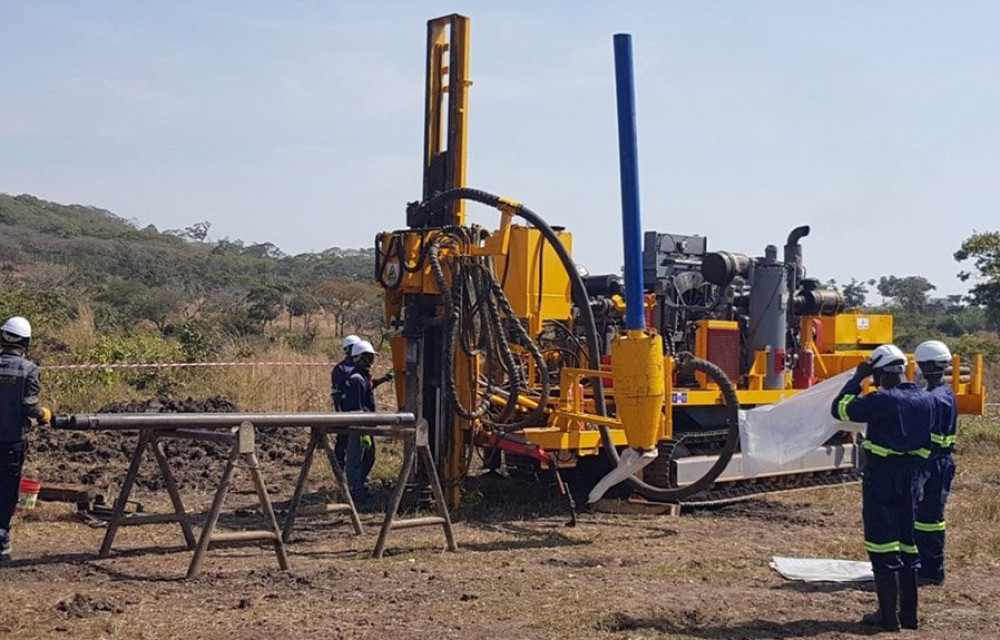
Exploration, not processing, is the binding constraint. S&P Global puts the average journey from discovery to production at roughly 16 years, with most of the delay incurred before a single tonne is mined. Image credit: [IMAGE CREDIT TO CONFIRM]
Every ribbon-cutting for downstream processing is, in effect, a bet placed on drilling that happened a decade and a half earlier by people who have long since moved on and possibly retired.
The industry talks about processing bottlenecks because processing is where the announcements are. The actual constraint is a drill rig, a geologist and a permitting queue.
If exploration budgets are the first thing trimmed in a soft market, we are not saving money. We are deferring the 2042 pipeline and hoping nobody notices until we are all safely somewhere else.
China sells the shovels, and the shovel factory
Here is the detail that deserved more airtime than it got. China dominates lithium refining, and it also manufactures much of the equipment used to do the refining.
Spodumene conversion technology sits on China’s restricted export transfer list, which means a refinery being built outside China can, in principle, be prevented from buying the kit it needs.
It is an elegant position: dominate the processing, supply the machinery required to compete with you, and retain the right to stop supplying it.
For context on what is at stake, S&P's own capex comparison puts TLEA's Kwinana project at roughly US$700 million, excluding beneficiation, sitting alongside refining builds in Finland, Germany, Morocco and the United States.
Anyone in WA carrying long-lead process equipment on a critical path should be treating single-source exposure as a live project risk rather than a slide in an ESG deck.
Chemistry does not read policy documents
The most useful corrective in the session was aimed squarely at the value-adding conversation, and it applies to Kwinana as much as to Kolwezi.
The DRC successfully compelled a copper processing build-out, and now exports copper cathode rather than concentrate. Same country, same policy intent, same ministry: cobalt is still going out the door as hydroxide, because processing beyond that point requires a far more complex reagent chain that is expensive and difficult to import into the DRC.
The difference is not political will. It is that the copper happens to be oxide ore and relatively straightforward to strip out.
Zimbabwe, meanwhile, is capping concentrate exports to force refinery construction, and its producers are looking at lithium sulphate: a semi-refined product needing lower capex and considerably more tolerant of impurities than battery-grade carbonate or hydroxide.
Not glamorous. Probably correct.
The lesson generalises. Downstream ambition is constrained by metallurgy, power, reagent logistics and skilled labour, in roughly that order. The periodic table is not currently accepting submissions from policy advisers.
Worth noting too that even where Africa holds the resource, the downstream may not follow it.
East Africa leads natural graphite project development outside China, but anode active material capacity is being built in North America and Asia excluding China, because battery-grade material is a precision electrochemical business that clusters around its customers, not its rocks.
Morocco is being positioned as the African exception, close enough to European battery and EV production to make the argument work.
The moat is boring, and that is exactly the problem
The commercial read for METS suppliers is more measured than the headlines suggest.
Africa attracted more critical minerals deals from the middle powers than any other region, but S&P is blunt that most remain exploratory: frameworks signed, no target project identified, no capital deployed. Treat it as pipeline, not order book.
The infrastructure is harder to argue with. The Lobito Corridor is well advanced with EU, US and African Development Bank backing. A 282km standard gauge extension into Burundi, supported by close to US$1.9 billion, is set to cut freight transit from 96 hours to 20.
And the constraints S&P identifies as blocking African refining, being power, reagent logistics, skilled labour, capital and technology, read uncomfortably like a WA METS product catalogue.
The opportunity is genuine. It is also smaller than it looks once you discount for payment terms, sovereign risk and the incumbency of Chinese suppliers who arrived in 2016 and never left.
But the sharper point for anyone reading this from a site office is closer to home.
Our competitive advantage over a fast, cheap, well-capitalised new entrant currently rests on chain of custody, calibrated instruments, competent sampling, honest reconciliation and resource characterisation good enough to know every payable in the concentrate.
None of that will ever appear on the cover of an annual report. All of it is the first thing to get quietly deprioritised when the budget tightens and someone asks why the lab costs what it costs.
Africa will close this gap. Mapping improves, labs get built, borders get policed, and the US$900 discount narrows every year that happens.
Losing half the volume share is survivable. Losing the premium is not.
Know what you dug up. It is the whole business.