
Nobody owns the problem, nobody buys the fix, why BHP and Thiess say mining tech stalls long before it reaches the procurement desk

, , , , , , , , , ,
,
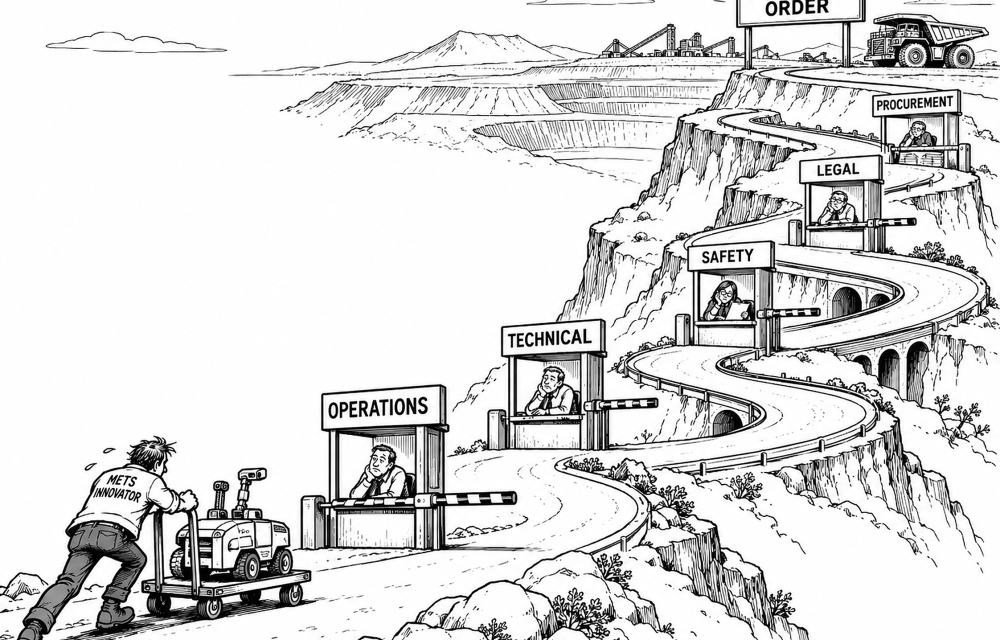
Ask a METS supplier why a promising technology stalled inside a major miner, and procurement is usually the first suspect, but ask the people running procurement, and the answer points somewhere else.
At an Austmine panel in Perth on 22 October, BHP’s Camila Cáceres and Thiess’s Daniel McLoughlin made the same case from different sides of the industry. Most deals do not die at the procurement desk. They die earlier, at the point where nobody on site owns the problem the product claims to solve.
Camila leads global innovation procurement at BHP. Daniel is procurement manager for Australia West at Thiess, with more than 20 years across procurement, supply chain and logistics. Austmine non-executive director Craig Lindsay-Rae moderated in front of about 90 attendees.
For suppliers, the message was blunt. For site leaders and procurement teams, it carried an equal obligation.
Beyond the purchase order
Both panellists described procurement moving from transactional buying to strategic value. Camila said the function now weighs social value, innovation and risk alongside sourcing, which makes it more complex to navigate.
Daniel framed it as total cost of ownership and operational outcomes such as reliability and sustainability. He was candid that the shift is uneven. Some large companies, he said, are still working out basic procurement practice.
Both rejected the gatekeeper label. Daniel described procurement as a facilitator, the first point of contact that connects a supplier with the people who can judge a solution.
“We’re going to try and give everyone the opportunity to make their case,” Daniel McLoughlin, Procurement Manager Australia West, Thiess, said.
Start with the owner
Asked where a new technology conversation begins at BHP, Camila’s answer was simple. It begins with the problem and who owns it.
A supplier who understands the pain points and context, and is talking to the asset that owns the problem, is already talking to the eventual buyer. That operational pull unlocks the rest.
With the operation behind a solution, she said, suppliers gain access to subject matter experts with decades of site experience. That matters most for vendors from outside mining, whom BHP is now more open to engaging.
Daniel described the same chain at Thiess. The operational team holds the problem and knows what a fix looks like. Technical specialists need confidence it will work. Behind them sits a wider group of cross-functional stakeholders who want a say.
He has seen approvals run to two pages of signatories, and tenders run 12 months with another six to award. At that pace, he said, competitors will move quicker.
Thiess has been working to bring procurement into opportunities earlier, so they are set up to deliver value for both parties rather than reviewed at the end.
Package the case
Daniel’s sharpest advice concerned the most common mistake. Suppliers approach him to sell without understanding what problem they are solving for Thiess.
He tries to give everyone a hearing. But if he cannot easily package a proposal for internal stakeholders, he cannot invest time in developing it.
“I really want to put the onus back on the supplier to come to me, package stuff, sell this for me, so I can sell it internally,” Daniel said.
He conceded it is a big ask. It also reflects a structural difference suppliers often miss. A contract miner is not an owner-operator.
Thiess has less back-office capacity for supplier development, and its contract lifecycles with customers are shorter. It cannot invest in a technology over 10 years without knowing where the next contract will apply it. Suppliers should expect a shorter horizon and more pressure to de-risk.
For suppliers whose approach to procurement is not landing, his advice was practical. Find other touchpoints in the business, get to site, understand the problem first hand, then bring a solution to the key procurement stakeholders.
Inside BHP’s pathway
Camila’s role sits at the front of BHP’s innovation process. Her team works alongside technical specialists who assess and de-risk technologies, while she makes sure the end result is commercially viable.
The pathway runs from research and lab testing through proofs of concept and off-site and on-site trials. Once a solution is ready to deploy, it transitions to BHP’s standard procurement teams. Her aim is a solution that is not only proven but competitive in their eyes.
The innovation process is more collaborative and iterative than standard procurement. It also weighs supplier maturity, particularly for smaller vendors, and whether there is a viable path to commercialisation.
A few years ago her team secured legal approval for a dedicated innovation contract. She said it recognises the work runs in phases, that both parties carry risk, and that an early-stage solution cannot be held to the standard of an established product.
It is built to fail fast and cheap, so both sides can redirect resources. Another BHP team is now looking at using the same contract.
On intellectual property, Camila said BHP encourages suppliers to retain their IP in most cases. BHP provides site access, innovation resources and mining knowledge, and pays suppliers to develop the product.
Daniel said Thiess is also open to commercial models that protect supplier IP, and has current partnerships with smaller businesses on that basis. Because it runs operations across a wide range of scales, a trial does not have to start at its largest open cut mines.
What trials must prove
The operation is BHP’s main innovation client, Camila said, so a trial has to give the operation confidence that a solution will work safely in a complex environment.
Often that is less about changing the technology than about trust. The operation needs to believe the supplier understands site conditions.
“If they can’t trust you, that you understand the complex operational environment ... that’s not going to progress,” Camila Cáceres, Lead Global Innovation Procurement, BHP, said.
For smaller and emerging METS companies, she framed a strategic choice. They can de-risk with BHP, or prove the technology with a smaller organisation first and arrive with the evidence. Either way, they need to understand BHP’s problem and how it measures value.
On contract terms, Daniel said governance requirements apply regardless of contract size. Scope and value still create some flexibility, so a trial can run on a narrower contract and be renegotiated if it progresses.
The feedback gap
The Q&A exposed the issue neither company has solved. An Austmine member asked whether miners share their priorities well enough for METS companies to aim their development, rather than build something a miner moved on from years ago.
Daniel said he did not see much of a feedback loop. Camila said BHP does not publish its roadmap, noting it engages about 10,000 vendors a year. Daniel put Thiess’s supplier base at about 2,500.
BHP’s closest mechanism is its Invent team portal. Suppliers submit a technology or idea, which is triaged into an innovation backlog for technical and leadership teams to review. Camila said the team is also improving how it shares those capabilities across BHP.
Craig then asked whether submitters could expect a response within a reasonable time. Camila said she was not sure they were getting one, and committed to asking internally the next day. Craig noted the lack of feedback is a real issue for Austmine members.
What it means
For METS suppliers, the sequence is clear. Find the problem and its owner on site. Build an operational champion. Quantify value in the customer’s terms, and hand procurement a case it can carry.
Know whether you are selling to an owner-operator or a contractor, because their risk horizons differ.
For site leaders, the obligation runs the other way. A technology with no clear problem owner rarely survives the approval chain, however good it is. Operations that want new technology adopted need to own the problem, define it, and stay engaged through the trial.
For procurement teams, Camila’s advice applied to both sides. If a technical discussion is under way and no procurement person is at the table, ask why. Late involvement is what creates the perception that procurement slows things down.
Both panellists also described efforts to bring micro and First Nations businesses into their supply chains. Camila said BHP is shifting from a focus on spend towards longer-term contracts. Daniel said Thiess already runs commercial models with Traditional Owner groups and other businesses.