
Before you scrap that haul truck tyre, check the casing, the cost per hour and the 10 tonnes of CO2 you might be throwing away with it

, , , , , , , , , , , ,
Repairing a giant mining tyre can do more than save replacement cost: for some Australian OTR tyres, it can also avoid up to 10 tonnes of calculated CO₂ while keeping a high-value asset in service. Kal Tire’s independently verified Maple Program is putting hard numbers around the operational, commercial and carbon value of giving suitable tyres another life.
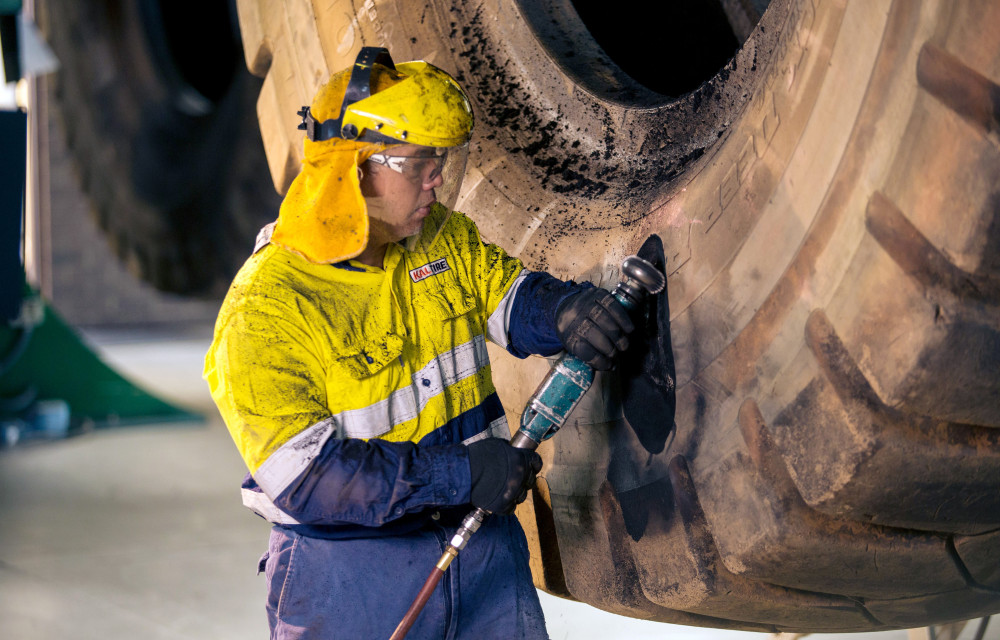
Before the carbon number comes the engineering call: selected OTR tyre damage can be repaired where the casing remains structurally sound and the economics stack up. Image: Kal Tire.
Few consumables on a mine site make quite the same impression as an off-the-road tyre.
They are enormous, expensive, difficult to move and, when something goes wrong, capable of punching a sizeable hole in both a maintenance schedule and a budget.
So there has never been anything particularly novel about trying to get more safe operating life from one.
What is changing is the number of ways mines can measure the value of doing it.
Kal Tire’s KalPRO Maple Program is putting lifecycle carbon calculations alongside the more familiar measures of tyre hours, repair costs and replacement expenditure. Following independent verification of the methodology behind the program, mine operators can now attach a more defensible carbon figure to decisions their tyre and maintenance teams have been making for decades.
For Australian operations, those numbers are starting to become significant.
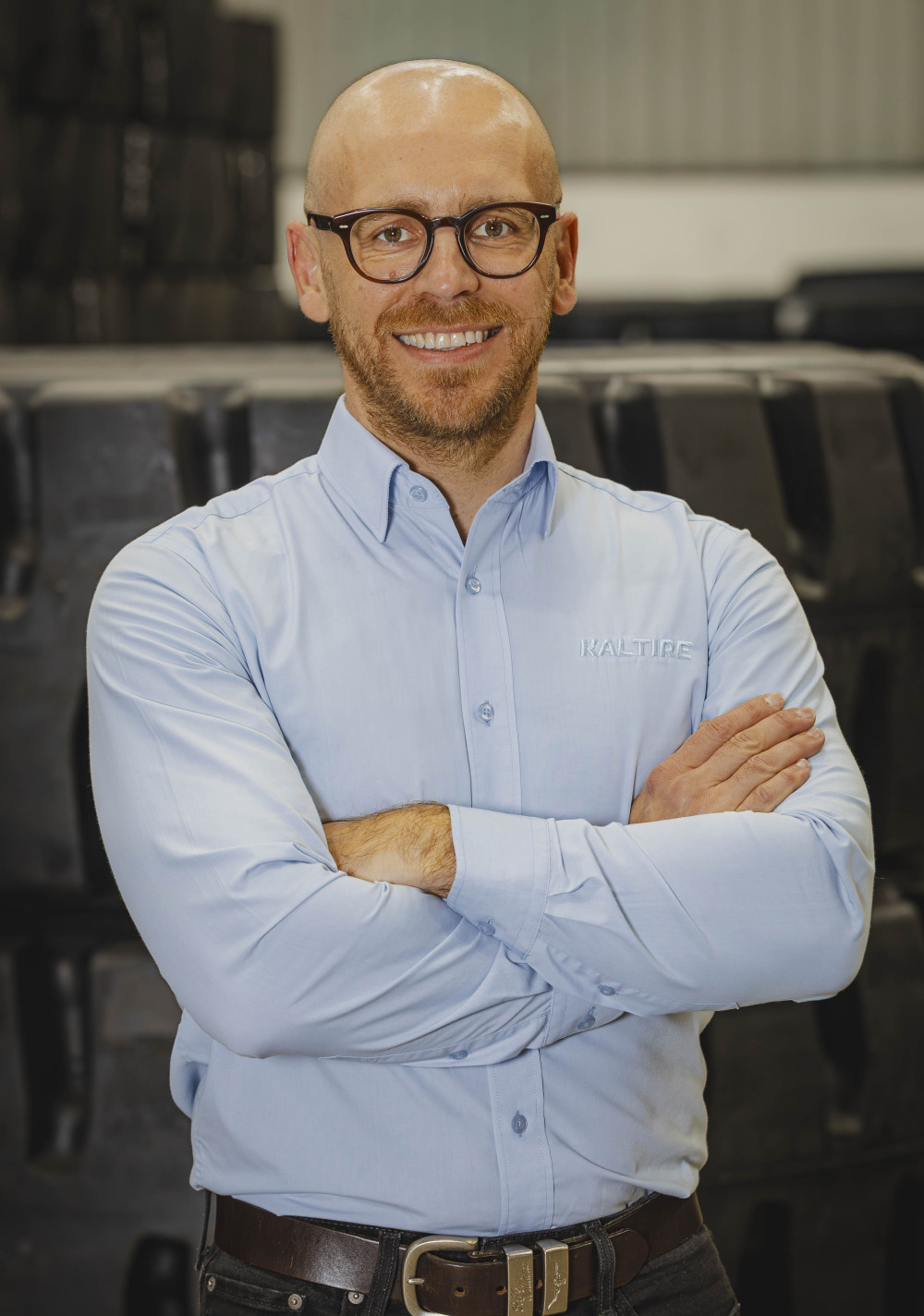
“In Australia, a conventional repair or KalPRO Ultra Repair on a 57 to 63 inch tyre can typically save up to 10 tonnes of CO2 per repair, depending on the size and location of the repair,” Caleb Pullella, Vice President, Australia, Kal Tire’s Mining Tire Group, told The Rock Wrangler.
That turns a fairly routine maintenance question into something broader.
Do we replace this tyre, or can we safely put it back to work?
Increasingly, the answer has implications for maintenance, procurement, logistics, waste and sustainability teams at the same time.
Putting another life to work
Kal Tire’s Maple Program methodology compares two scenarios over the same amount of delivered operating life.
The first involves using a new tyre and then replacing it with another new tyre. The second involves using a new tyre and extending its working life through repair or retreading.
That distinction matters.
It means Kal Tire is not simply comparing the emissions from a repair workshop with those involved in manufacturing an enormous new tyre. Both alternatives have to deliver equivalent tyre service before the emissions difference is calculated.
The methodology considers raw materials used to manufacture a replacement tyre, manufacturing energy, transport from the point of manufacture to the mine, and the materials and energy required to repair or retread an existing tyre. It also factors in the different logistics associated with sending a tyre for repair compared with transporting a new replacement to site.
Real-world operating data from Kal Tire’s TOMS (Tire & Operations Management System) is then used to compare average operating life by tyre size.
The methodology has been independently verified by SCS Global Services in accordance with ISO 14064-3:2019 and evaluated against ISO 14067:2018 for product carbon footprints.
For a mine manager, those standard numbers are probably less important than the principle behind them: the methodology used to calculate the claimed savings has been subjected to external scrutiny.
Australian mines are already putting numbers on it
The original Maple Program announcement contained an impressive global figure.
Around 70 mining customers across six regions reported more than 32,700 tonnes of calculated CO2 savings in 2025.
The subsequent Australian numbers make the story more relevant locally.
26 Australian mining customers participated in the program during 2025, collectively generating more than 400 tyre repairs.
At one Australian mining operation, more than 70 tyres were returned to service through repair rather than being removed from the operating cycle.
The calculated result was more than 800 tonnes of CO2 savings during the 2025 reporting period.
Caleb said the result showed how recovering additional tyre life can produce environmental benefits alongside the operational and economic value of retaining a usable casing.
Across participating Australian operations, the calculated saving reached approximately 3,148 tonnes of CO2, almost 10 percent of the global Maple Program total.
But for mining practitioners, the more useful number may still be the smallest one.
Up to 10 tonnes per repair.
It links the carbon calculation to an individual workshop decision and an individual high-value asset.
Carbon is only part of the equation
Nobody running a mine’s tyre program is likely to repair a giant haul-truck tyre merely to produce another sustainability metric.
It still has to make sense operationally.
And that is arguably where tyre life extension becomes more interesting than the carbon number alone.
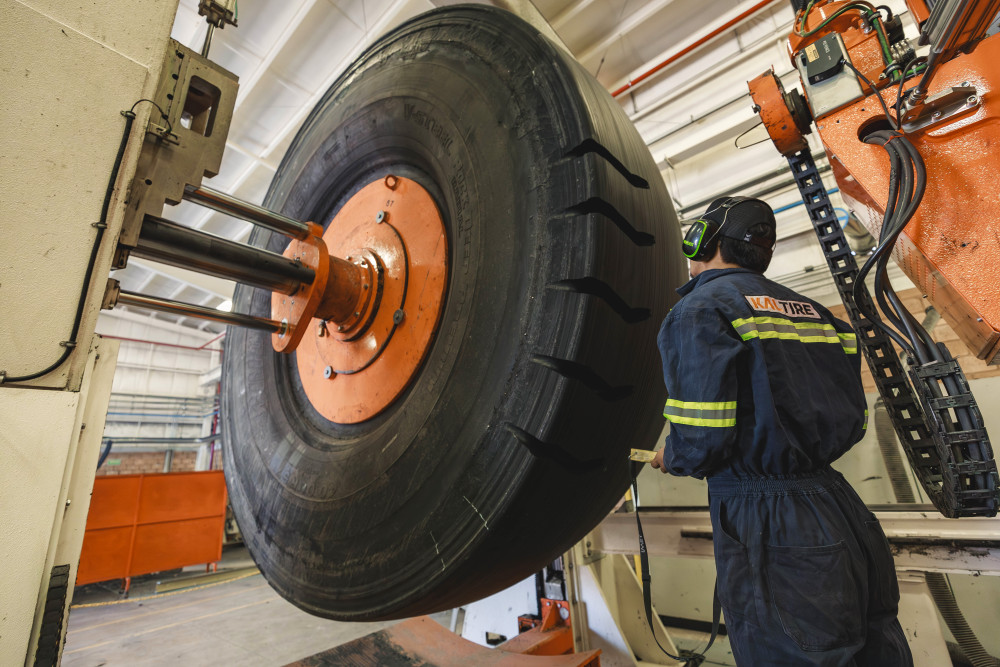
“A large commercial benefit is the additional operating hours recovered from a tyre that may otherwise have been scrapped,” Caleb said.
Kal Tire says repair programs have recovered hundreds of thousands of operating hours and avoided the purchase of dozens of replacement tyres. At major operations, that can translate into millions of dollars of avoided expenditure on new tyres.
There are secondary benefits as well.
Reducing the number of replacements required can lower freight expenditure, reduce the inventory operators need to keep on site and decrease the number of casings entering the scrap stream.
That makes tyre life extension every bit as relevant to procurement as it is to maintenance.
The value of a successful repair does not necessarily stop at the repair invoice.
It potentially changes replacement demand, stockholding requirements, freight exposure, waste volumes and ultimately the cost of keeping a haul truck moving.
For large OTR tyres, which represent substantial pieces of inventory in their own right, that can become a meaningful supply-chain decision.
Not every tyre deserves another life
There is an important qualification.
The lesson is not that every damaged tyre should be repaired.
There are clear structural, safety and economic limits.
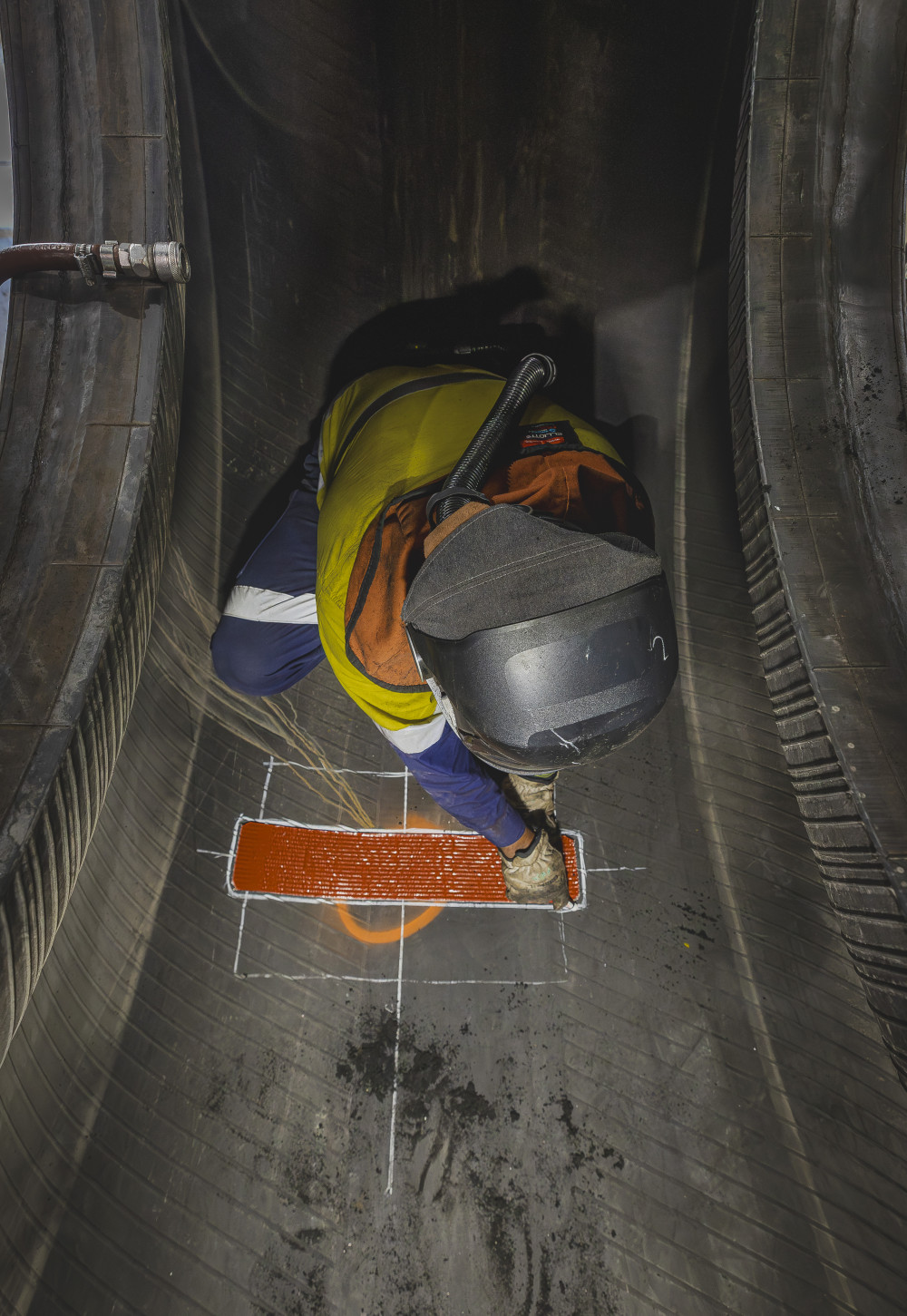
Kal Tire assesses tyres individually according to the type, location and severity of damage and the overall condition of the casing. Significant heat or separation damage, serious damage to critical structural areas, previous repair history or damage outside established repair limits can all rule out another life.
“There are clear safety, structural and economic limits to how far a mining tyre’s life can be extended,” Caleb said.
Economics provide another filter.
There needs to be sufficient potential operating life remaining to justify the repair expenditure.
“Ultimately, a tyre is only repaired when it can be done safely and is expected to provide worthwhile additional value for the customer,” he said.
That is perhaps the most important distinction in the whole exercise.
Life extension is not about keeping every tyre alive at all costs.
It is about identifying those casings that can safely and economically deliver useful additional work.
The carbon benefit follows from that decision. It does not override it.
When the tyre bay meets Scope 3
Where the Maple Program adds something relatively new is in connecting those workshop decisions with corporate emissions reporting.
Participating customers receive annual certificates showing their calculated CO2 savings. Kal Tire says customers are using the information in annual reports, sustainability disclosures and Scope 3 reporting, with some specifically identifying tyre life extension and the Maple Program as contributors to environmental performance.
That connection is likely to become increasingly relevant as miners scrutinise emissions generated throughout their supply chains.
Yet the attraction of this particular approach is that the sustainability outcome does not necessarily require an entirely new operational activity.
Mines already inspect tyres.
They already decide whether a casing is repairable.
They already monitor hours and cost per hour.
They already weigh the cost of recovery against the cost of replacement.
The additional step is being able to quantify another consequence of that decision.
A successful repair can recover productive hours.
It can defer replacement expenditure.
It can reduce freight and inventory pressure.
It can keep an enormous casing out of the waste stream for longer.
And, where the lifecycle numbers stack up, it can deliver a measurable carbon saving as well.
For an industry routinely confronted with multibillion-dollar decarbonisation pathways and transformational technology promises, there is something pleasingly practical about that.
Sometimes reducing mining’s footprint does not begin with buying another piece of equipment.
Sometimes it starts by taking a closer look at the one you were about to throw away.