
Flotation revolution lifts recovery rates, cuts energy use and boosts ESG wins with clever coarse particle tech and smart circuit thinking

, , , , , , , , , , ,
, , , , , , , ,
In a mining landscape increasingly defined by lower ore grades, ESG scrutiny, and complex feedstocks, recovery performance has never been more critical. Few understand this dynamic better than Dr Stanko Nikolic, Director of Technologies at Glencore Technology. With decades of operational insight and a strong innovation mandate, Dr Nikolic leads a team tasked with advancing metallurgical technologies that deliver measurable improvements in flotation, leaching, smelting, and beyond.
Speaking with The Rock Wrangler, Dr Nikolic offered a deep dive into how Glencore Technology is helping mining clients overcome recovery challenges through engineered solutions like the Jameson Cell and Albion Process™ while also exploring what's next in coarse flotation, process retrofits, and digital integration.
Beyond grinding finer
“The key recovery challenges haven't changed all that much over time,” Dr Nikolic begins.

“We’re still dealing with declining ore grades, but now there's the added pressure of ESG obligations - from energy efficiency to tailings stability - that mining companies are being held accountable for by both investors and society.”
Fifteen years ago, the go-to solution for boosting recovery was straightforward: grind finer to liberate more mineral. But that approach is becoming less viable.
“Finer grinding means more energy, more water, and finer tailings - which are harder to manage,” he explains. “We need to address recovery from a broader perspective, not just through more grinding.”
Rethinking flotation performance
Enter the Jameson Cell, a technology developed to challenge conventional flotation methods. While traditional tank cells operate like a chain of stirred reactors with a hit-or-miss chance of bubble-particle contact, the Jameson Cell takes a more deliberate approach.
“It uses a plunging jet to create a highly turbulent contact zone, where particle-bubble interaction happens at nearly 100 percent probability,” says Dr Nikolic. “That contact is maintained in a quiescent zone, allowing particles to remain attached and be floated out.”
This design makes the Jameson Cell especially effective at recovering both fine and coarse particles - something traditional flotation cells often struggle with. “You're covering a broader range of particle sizes, which is crucial for improving overall circuit recovery,” he notes.
Unlocking value from refractory ores
If flotation is one side of the recovery coin, leaching is the other. And in the realm of refractory or complex ores, Glencore Technology's Albion Process™ is proving itself as a versatile solution.
“The Albion Process™ isn't some mysterious black box,” Dr Nikolic says with a smile. “It's a fine grinding stage followed by an atmospheric oxidative leach. It's been applied successfully in both gold and base metal circuits.”
The genius of the process lies in its flexibility and modularity. It enables miners to bypass stringent product specs tied to offsite treatment, allowing higher in-house recovery rates.
“You can run your concentrator at higher recovery, produce a lower-grade product, and still capture value on-site through Albion,” he explains. “Some of our clients are even using it to treat recirculating loops in their plant, recovering value from what was essentially a waste stream.”
From iron ore to wastewater neutralisation
Traditionally associated with base metal sulphides and coal, Glencore Technology's flotation and leaching solutions are now venturing into new territory.
“We’re seeing strong uptake of the Jameson Cell in phosphates and especially iron ore,” says Dr Nikolic. “Removing silica and other impurities to enable green steel production is a growing application.”
Their leaching tech is also being repurposed for environmental applications. “One of our sites in northern Australia is using our leach reactors to neutralise wastewater. This a great example of cross-functional innovation.”
Low-disruption wins
Asked where in the flowsheet the biggest low-disruption recovery gains can be made, Dr Nikolic points to two areas: scalper flotation and scavenger circuits.
“Adding rougher or cleaner scalper Jameson Cells upfront can pull out a significant volume of floatable material quickly. That not only increases recovery but also frees up capacity downstream,” he explains.
On the back end, he adds, Jameson Cells in scavenger duty are reclaiming coarse and fine particles that conventional banks leave behind. “These can then be sent to regrind or cleaning, depending on particle size, giving the plant another recovery lift.”
Proof of performance: Fruta del Norte Gold Mine
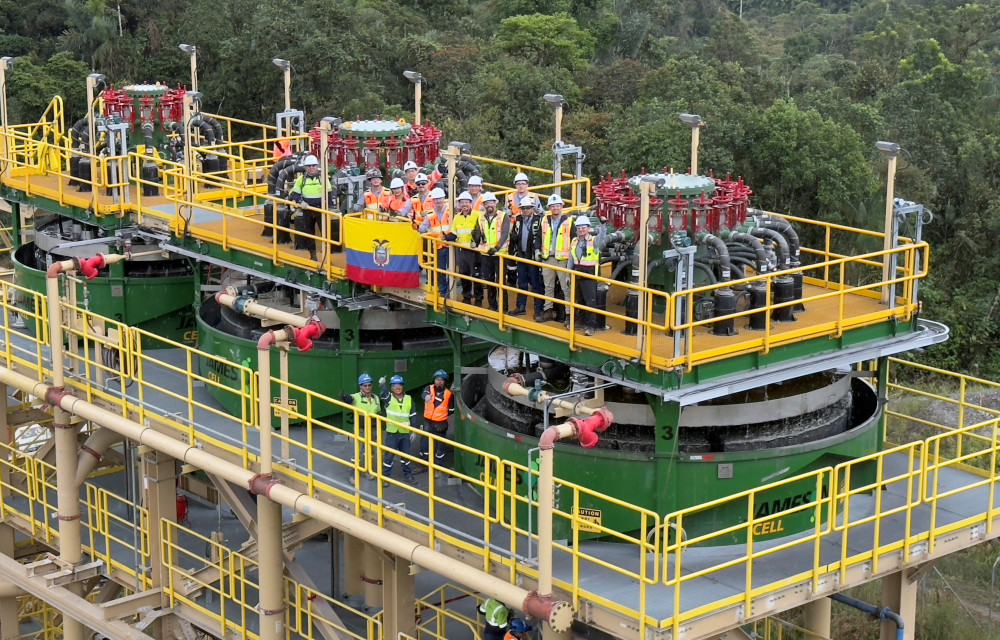
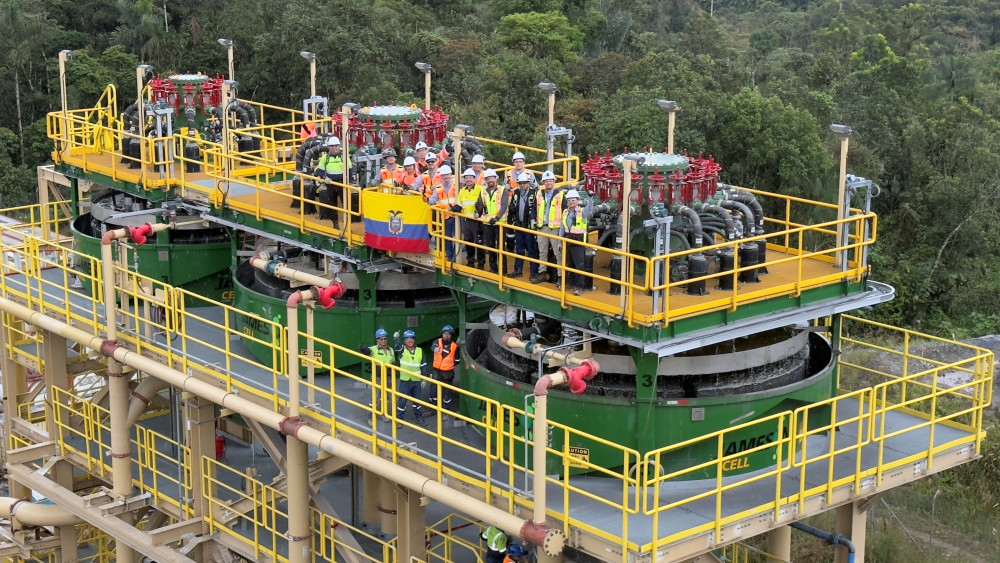
One standout success story is Lundin Gold's Fruta del Norte operation in Ecuador, where Glencore Technology recently commissioned three Jameson Cells.
“We installed a rougher scalper, a cleaner scalper, and a rougher scavenger,” Dr Nikolic recounts. “Before installation, their average gold recovery was 86%. Post-installation, that has increased above 90% across the concentrator.”
The result? A four percent boost in total plant recovery, with further improvements still being realised with further circuit optimisation. “We'll be presenting the full case study at the Procemin Geomet 2025 conference,” he says.
Supporting brownfields
Glencore Technology also supports brownfields operations with retrofit and optimisation strategies that don’t always require new hardware.
“Sometimes it's not about installing a new Jameson Cell,” Dr Nikolic reflects. “It's about sending our metallurgy experts to work with site teams and tune existing equipment. In the coal sector, that's made a huge difference for sites with aging infrastructure.”
Digital integration - AI with a solid foundation
Digital process control is another key enabler for recovery gains, but Dr Nikolic is clear: the fundamentals must come first.
“You can only optimise what you measure. Before you even think about AI or smart systems, you need the right sampling, measurement, and control infrastructure in place,” he says. “Once that foundation is there, the variability reduction you get through digital integration can deliver substantial recovery benefits.”

ESG by design and building efficiency into the flow sheet
Energy efficiency is not an afterthought for Glencore Technology. It's designed into their technologies from the start.
“The IsaMill was created to grind to three or four microns at MacArthur River, which required lower energy consumption than anything available at the time,” Dr Nikolic recalls. “That DNA still shapes how we develop technologies today.”
Compared to conventional flotation, the Jameson Cell offers up to 30 percent energy savings due to its simple pump-driven system. “But the real ESG win is taking that efficiency upstream,” he says, referencing ongoing R&D in ceramic media and IsaMill applications for primary grinding.
Coarse particle flotation gets real
Perhaps the most exciting development is Glencore Technology's pilot work in ultra-coarse particle flotation.
“We’re pushing the Jameson Cell into feeds that are much coarser than typical flotation circuits handle,” Dr Nikolic shares. “It’s about recovering more without grinding everything to dust which helps both recovery and tailings management.”
He says early pilot results have been “really promising,” and findings will be shared in early 2026. “It's a big deal for sites looking to get more out of their ores while lowering their environmental footprint.”
A recovery-first future
With technologies that blend metallurgical precision, energy efficiency, and flow sheet flexibility, Glencore Technology is firmly positioning itself as a recovery-focused innovator for the ESG era.
“Ultimately,” says Dr Nikolic, “we’re not just trying to improve recovery for its own sake. We’re helping miners extract more value from what they already have, in a way that’s responsible, efficient, and future-ready.”
That’s a message likely to resonate strongly with an industry facing tighter margins, tougher regulations, and rising expectations.