
How titanium is kicking lead to the curb, robots are stripping smarter than ever, and RFID tags are turning copper refining into a high-tech, low-waste powerhouse

, , , , , , , , , , , , , , , , , , ,
, , ,
, , ,
As global demand for high-purity copper climbs in step with electrification and renewable energy targets, attention is turning to the tankhouses that produce this critical metal. In a recent AusIMM Metallurgical Society Webinar, Andrew Spencer, metallurgist at Glencore Technology, gave a comprehensive overview of both the fundamentals and forward-facing innovations in copper electrowinning (EW) and electrorefining (ER). While challenges abound—from impurity management to workforce attrition—emerging technologies are offering tangible pathways toward higher efficiency, better cathode quality, and greater sustainability.
Of the many insights Andrew shared, one development stood out for its disruptive potential: the adoption of titanium anodes with mixed metal oxide (MMO) coatings in copper EW circuits.
Moving Beyond Lead: Titanium's Moment
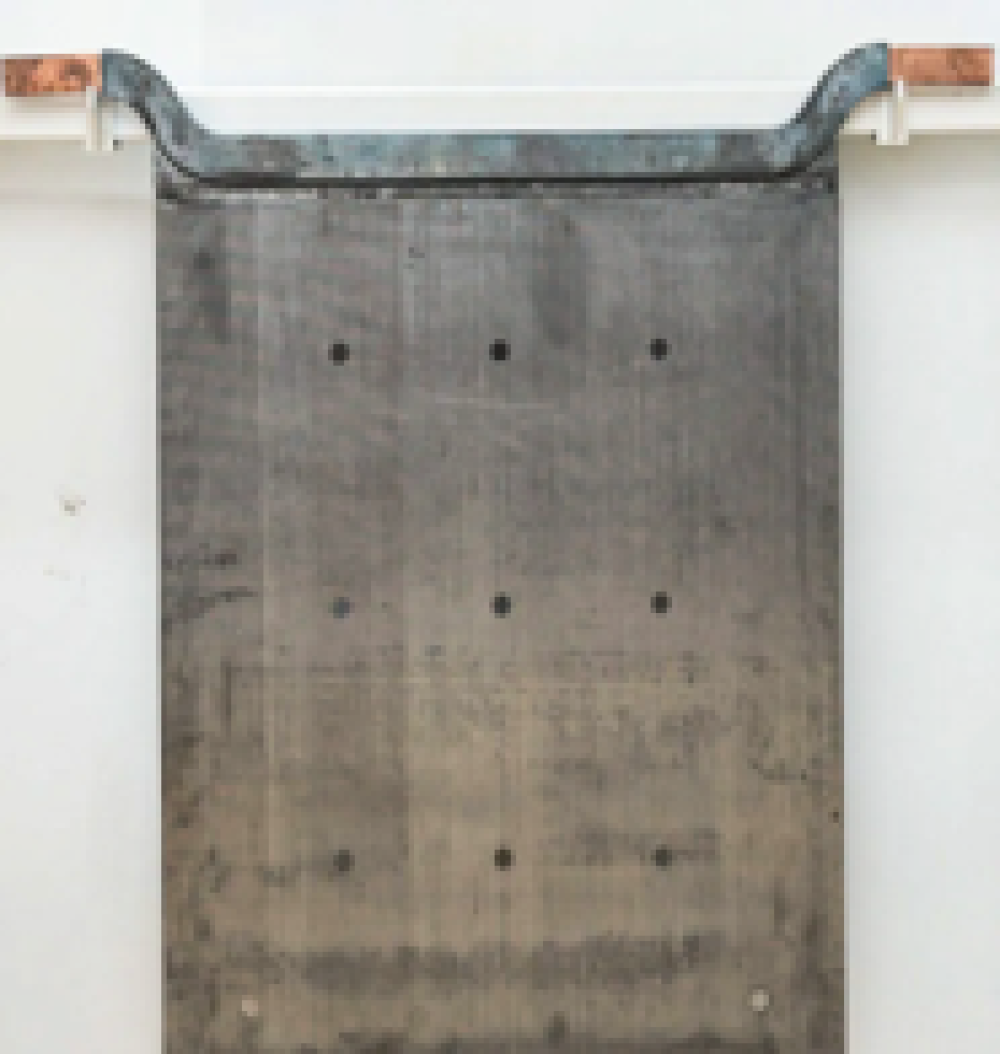
Traditionally, copper electrowinning cells use lead-based anodes—typically lead-calcium or lead-tin-calcium alloys. While well-established, these anodes present significant drawbacks, including energy inefficiency, lead contamination, and maintenance complexity. According to Andrew, titanium MMO anodes represent a major shift away from this paradigm.
“The titanium substrate is inert, meaning it’s not consumed during operation,” he explained. “Instead,
the MMO coating provides the catalytic surface for oxygen evolution. These coatings operate with lower overpotential than traditional lead oxide, which means you get a lower voltage and therefore a lower kilowatt-hour per tonne copper basis.”
The benefits are multifaceted. In addition to cutting energy costs, these anodes eliminate one of the most stubborn sources of cathode rejection in EW circuits: lead contamination.
“Using titanium anodes virtually eliminates lead contamination in copper cathode, which is one of the major reasons copper cathode from EW will fail LME grade standards,” Andrew noted.
The environmental and safety improvements are equally compelling.
“There’s no lead sludge formation in electrolyte, meaning no operator exposure to lead. When used properly, you get longer service life, more predictable performance and reduced maintenance.”
While the capital cost of titanium MMO anodes remains higher than their lead counterparts, Andrew argued that the long-term value is clear.
“Yes, upfront cost is higher, but it’s often offset by lower energy consumption, improved cathode quality, less downtime, and reduced compliance costs around lead handling.”

Smarter Hardware: Robotic Stripping and RFID-Tagged Cathodes
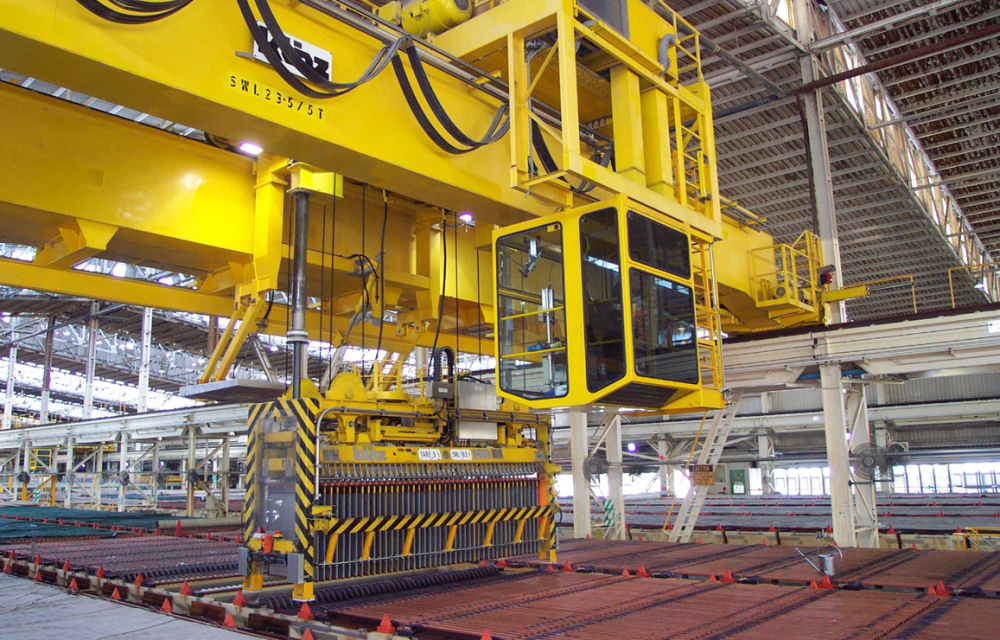
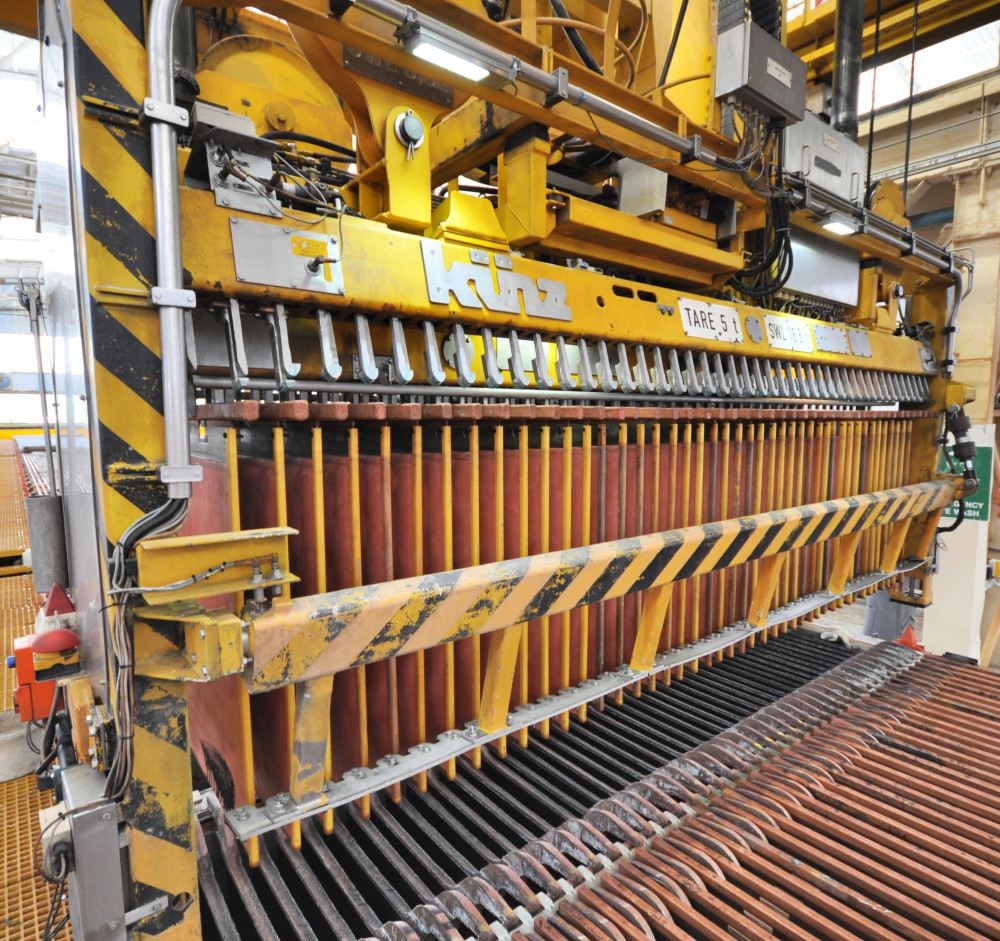
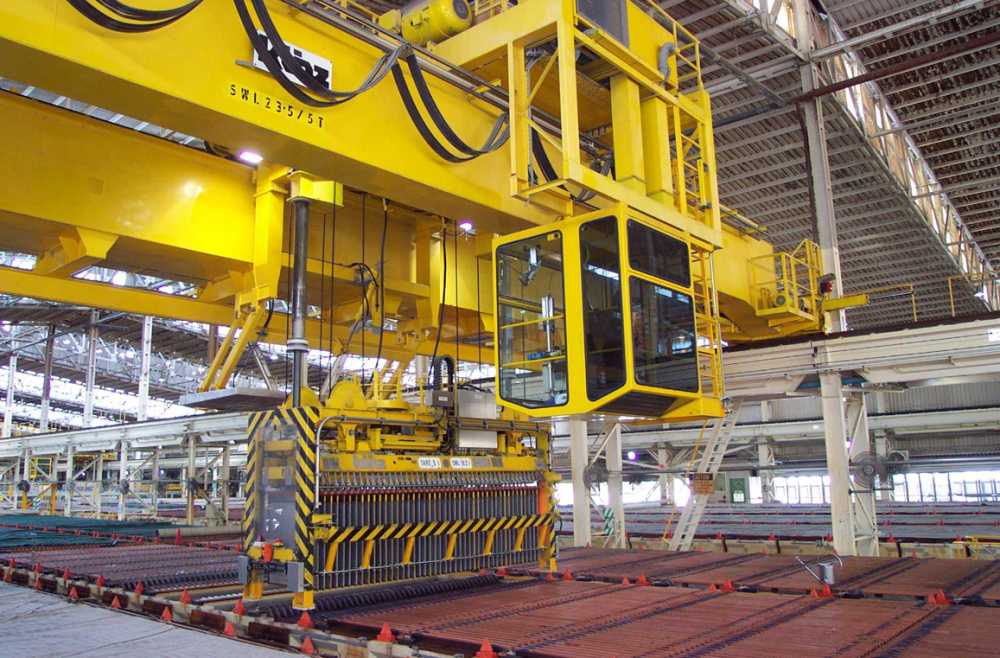
Technological innovation is also transforming cathode handling, a traditionally manual and often failure-prone process. Modern tankhouses are increasingly adopting robotic cathode stripping machines (CSMs), which Andrew described as game-changers for efficiency and safety.
“Older CSMs are typically linear machines, stripping one cathode at a time in a fixed sequence,” he explained. “But modern refineries, particularly high-throughput sites, are moving toward robotic CSMs, which are smarter, faster, more flexible, and easier to maintain.”
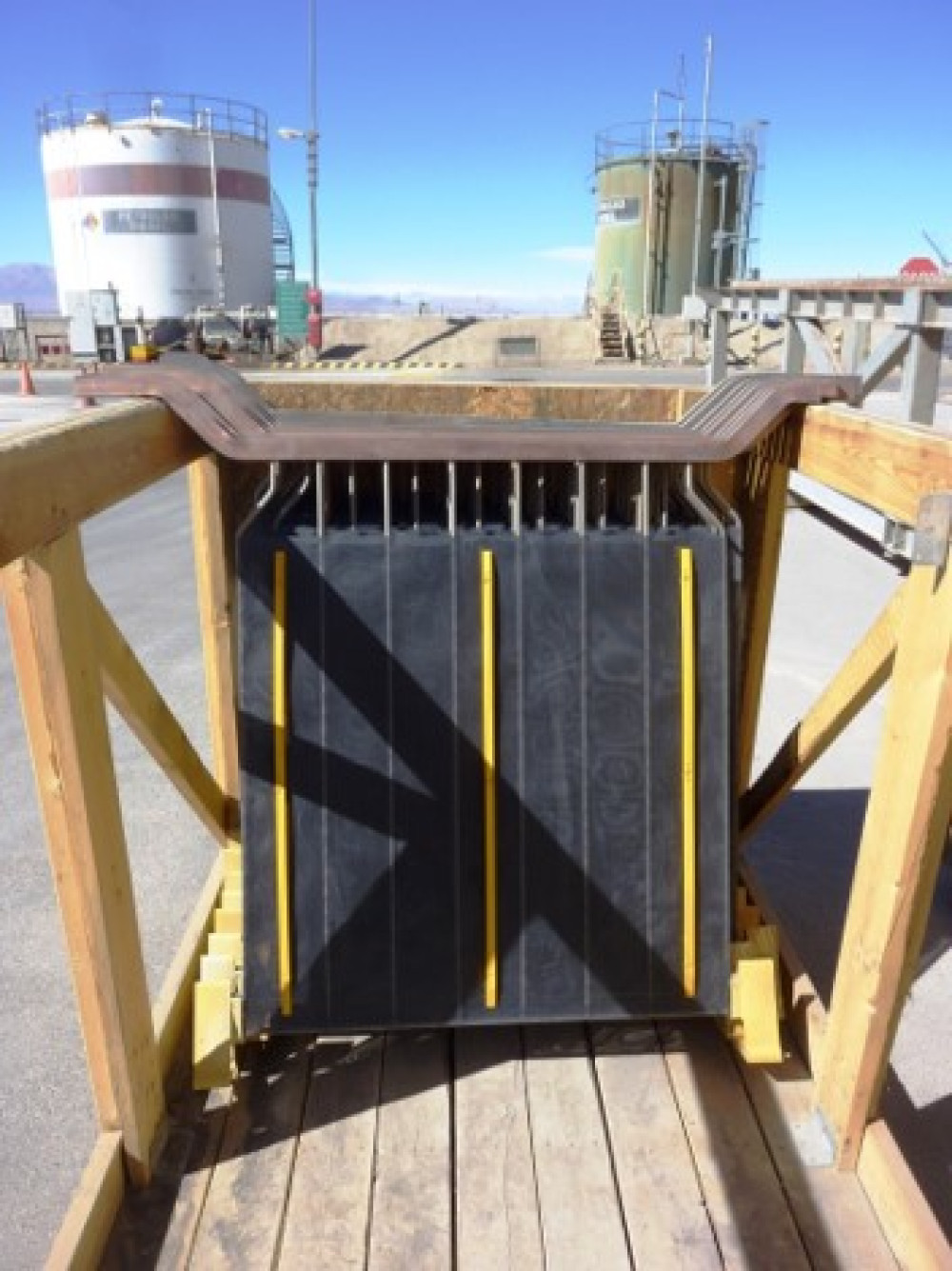
These robotic units often feature dual six-axis arms fitted with protective rollers and full-width stripping wedges. They eliminate hydraulic systems in favour of electric actuation, reducing noise and maintenance complexity while improving worker safety.
One of the key benefits lies in adaptive sequencing:
“In one refinery, robotic CSMs were programmed with specific motions to flex the cathode and break stress points at the bottom, enabling clean separation of difficult-to-strip copper. This would be virtually impossible in a linear CSM.”
Complementing this automation is a new generation of cathode tracking tools. Andrew highlighted the increasing use of RFID technology embedded in stainless steel cathode blades.
“RFID tags enable real-time tracking of plate history and performance as they move through the refinery,” he said. “It automates tracking of cycle counts, maintenance events, and stripping issues.”
Unlike traditional etched serial numbers, RFID tags are resistant to acid mist, wear, and contamination—an important advantage in harsh tankhouse environments. When integrated with enterprise resource planning (ERP) systems, this data supports predictive maintenance and smarter inventory rotation.
The Broader Sustainability Equation
While technological improvements are welcome, they must be understood in the context of broader sustainability pressures facing copper refining.
“We’re seeing declining ore grades, increasing complexity in recycled feedstocks, and elevated levels of impurities like arsenic, bismuth, and antimony,” Andrew said. “These all require more energy-intensive processing and more sophisticated impurity management.”
He also pointed to the tension between rising copper demand and energy availability.
“Refineries in remote areas often face grid instability or limited expansion potential,” he said. “Looking ahead, copper refining may be competing with the energy needs of data centres, green hydrogen production, and AI infrastructure.”
Intermittent renewable energy sources such as solar and wind pose additional complications.
“At the moment, tankhouses need to be continuous from start of plating to harvesting,” Andrew explained. “If it’s interrupted, you can get lamination in the copper, which may entrain electrolyte and compromise cathode quality.”
Operational Discipline Still Matters
Despite the advances in materials and automation, many operational challenges remain. Andrew identified current efficiency as one of the most critical performance metrics, noting that it is often undermined by issues such as poor electrode alignment, anode passivation, and impurity precipitation.
He outlined several practical solutions:
- Alignment Tools: “It’s important to standardise alignment tools and simulate in-cell geometries for accurate electrode positioning.”
- Temperature Control: “Sudden drops in temperature—say, five degrees Celsius in 10 minutes—can trigger widespread precipitation of antimony and bismuth slimes.”
- Passivation Management: “Track total sulphates daily and monitor cell voltage for spikes. Controlled dilution, gentle heating, and lowering current density can help restore solubility.”
The Talent Gap
Beyond the technical, Andrew flagged a significant workforce sustainability issue.
“There’s a persistent shortage of skilled labour across trades and technical roles,” he said. “Electrochemical refining gets minimal visibility in university curricula, making it harder to attract new talent.”
Maintaining continuity of institutional knowledge—especially in highly specialised roles—is essential to ensuring the industry can implement and manage the very technologies being developed to improve performance.
The Bottom Line
From titanium anodes to robotic stripping and RFID tracking, the copper refining sector is undergoing a quiet but significant transformation. The goal is not just cleaner copper, but cleaner, safer, and smarter operations.
Andrew summed it up succinctly:
“Sustainability in refining isn’t just technical. It’s also about energy availability, operational resilience, and the people who run these systems. We need to be agile and collaborative—because the future of copper depends on it.”