
No silver bullets in tailings as experts push for smarter stacking strategies and filtered failures get a reality check


, , , , , , , , , , , , , , , , , , , , , , , , , , , , , , ,
, , , , ,
, , , , , ,
As the mining industry edges closer to a tipping point on tailings management, a panel of global experts at the 2025 Life of Mine | Mine Waste and Tailings Conference in Brisbane issued a clear message: discipline in operations, humility in design, and a more adaptive mindset will be critical to preventing the next tailings disaster.
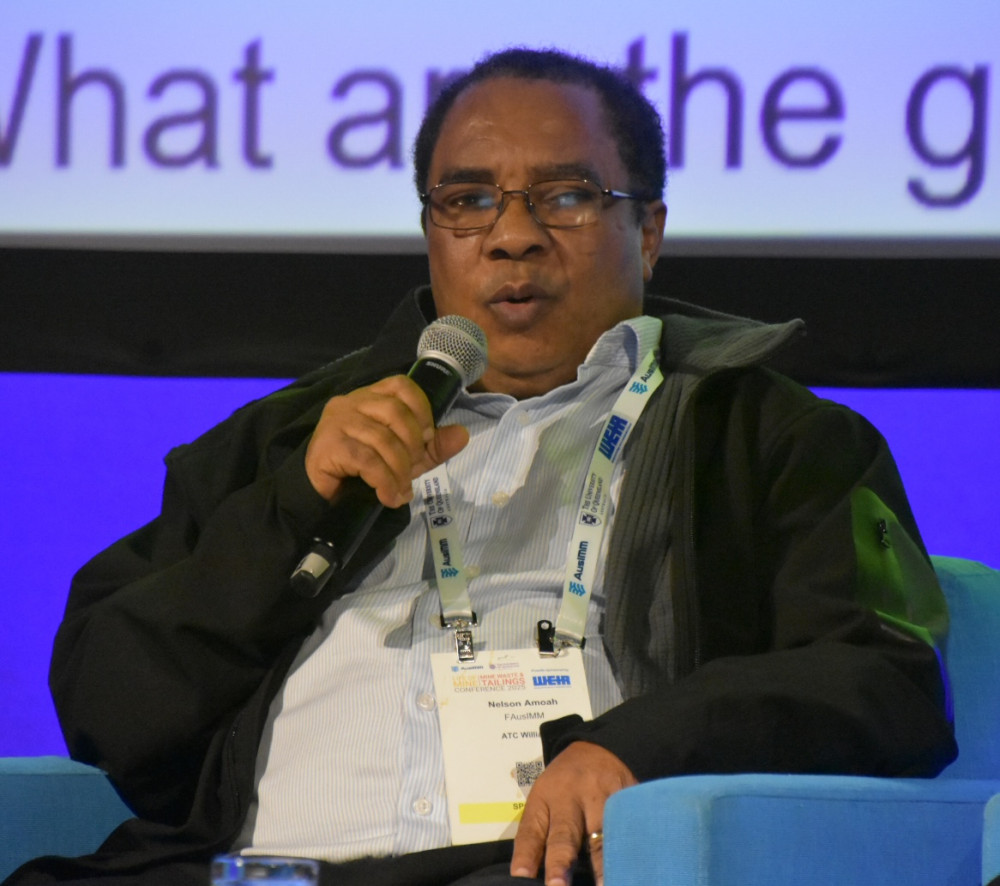
Convened in a packed session facilitated by Professor David Williams, emeritus professor of geotechnical engineering at the University of Queensland, the discussion drew on decades of experience across tailings filtration, geotechnical engineering, minerals processing, and emergency response. The panel included Nelson Amoah (senior principal engineer, ATC Williams), Dr Hernan Cifuentes (principal tailings consultant, Tailings HC), Professor Andy Fourie (civil and mining engineering, University of Western Australia), David McCormack (principal geotechnical engineer, DAS Mining Solutions), Matt Pyle (chief technical officer, Ausenco), and moderator David himself.
Together, they offered a sobering yet constructive look at the challenges and opportunities in filtered tailings stacking - a topic made all the more urgent by recent failures in Indonesia and ongoing regulatory pressure in markets like Brazil.
Design intent is not enough
One of the panel’s most consistent messages was that filtered tailings do not eliminate risk - particularly when there’s a disconnect between design intent and operational reality.
“Everything we design is not fail-proof,” said Nelson. “The failure risk depends heavily on the actions and inactions of people. If the facility is not operated in line with the design intent, it will fail - filtered tailings or not.”
Nelson warned against overconfidence in filtered stacks, noting that many failures can be traced back to operational discipline. “Engineers can design for a certain moisture content, but someone has to actually run the plant to those specifications - and that’s where we often fall short.”
Hernan expanded on this, highlighting how site-specific variability is often underestimated in design. “Filtration performance isn’t static,” he said. “You’ve got changes in the orebody, changes in processing, changes in the rainfall regime. Yet many projects base their designs on a single moisture number from a vendor - and hope for the best.”
Learning from Indonesia
David flagged recent filtered tailings failures in Indonesia as a wake-up call. “These involved laterite nickel tailings, which are already problematic, but the processing introduces sodium that effectively turns them into manufactured Montmorillonite,” he explained. “They’re chemically altered to behave like clays. That’s a risky starting point.”
Crucially, none of the failed Indonesian facilities had been developed under the Global Industry Standard on Tailings Management (GISTM). “That standard hasn’t yet permeated everywhere,” David noted. “And unfortunately, we’re still seeing far too many failures - eight this year alone, all in developing countries.”
Nelson agreed that filtered tailings are no panacea. “We shouldn’t be under the illusion that these facilities can’t fail. It’s about how we operate, how we train people, and whether we’re honest about the limitations.”
Corner conditions and critical triggers
While the panel explored broad strategy, the session also dug into technical insights - particularly on the triggers and mechanics of failure. Hernan pointed to overlooked factors such as rainfall-driven re-saturation, site constraints, and compaction limits in tropical conditions. “The tailings don’t behave like well-graded engineered fill,” he said. “You can’t just assume an airfield-style compaction regime will work.”
Matt, from the processing side, said that achieving filterable material at scale starts well before the filter press. “It’s not just about what comes out of the filter - it’s about what you put in,” he said. “When we de-slimed a −10 µm fraction on a gold project, the remaining −45 µm fraction filtered beautifully. The real problem is the ultra-fines clogging capillaries.”
He argued for smarter flow sheets and up-front mineralogical planning. “We need to stop seeing tailings as an afterthought. Add a little complexity to the plant, and you can save a lot of pain in tailings storage.”
A credible challenge to “non-credible” failure modes
In a particularly compelling presentation earlier in the session, Justin Willis took aim at the mining industry’s growing tendency to declare failure modes as “non-credible.” He warned that such declarations can be dangerously complacent, especially when they rely on assumptions that go unchallenged.
“What does it even mean to call something non-credible?” Justin asked. “There’s no clear definition. If you're relying on monitoring to control it - it’s probably credible. If you need a control to make it safe, you probably need to treat it as credible.”
Referencing the Oroville Dam case in California - where three independent spillways all failed due to overlooked geotechnical weaknesses - Justin made the case for erring on the side of caution. “Declaring something non-credible doesn’t mean it can’t happen. It might just mean you’re not looking hard enough.”
Hybrid approaches over silver bullets
Several panellists called for more adaptive and integrated solutions - blending filtration, thickening, cyclone separation, and co-disposal to tailor outcomes to site conditions.
“We need to stop thinking of tailings management as a one-size-fits-all problem,” said Nelson. “There’s no reason a site can’t use two or three approaches in combination. We just need to design them properly and think holistically.”
Matt supported this view with cost evidence. “If you treat the whole tailings stream with high-pressure filtration, it’s
going to kill the project economics,” he said. “But if you split the stream and treat fines, mids and coarse fractions differently - say, belt filters for mids, screw presses for fines, and dry stack the coarse - you can halve your CAPEX and OPEX.”
David McCormack echoed the point: “Hybridisation is key. Each site has its own challenges and trying to make one technology do everything is just too rigid. You’ve got to stay flexible.”

Stacking: the underestimated challenge
Stacking filtered tailings, particularly at high throughput, presents its own set of challenges. Hernan cautioned against applying airfield-style compaction assumptions to filtered tailings. “The material is poorly graded, moisture is hard to control, and tropical conditions make re-saturation a real risk,” he said. “You’re not always going to get the compaction you think you will.”
Nelson also pushed back on the idea that filtration was the only bottleneck. “The entire system is connected,” he said. “If you struggle to get the moisture content right, it makes transport and stacking harder. The compaction performance of the stack is determined by what’s coming out of the filter - so we need to think from end to end.”
Cost, control, and community pressure
As the discussion wrapped, David noted that cost is not always the primary driver - especially in jurisdictions like Brazil, where filtered tailings have effectively been mandated. “You won’t get a permit for another tailings dam,” he said. “So filtration isn’t optional - it’s a legal and social imperative.”
But that shift comes with risk. “Vale is spending massively to comply - and their share price has halved in the last year,” David added. “That’s partly due to iron ore prices, but also the cost of getting tailings right.”
For jurisdictions not yet under similar pressure, the panel warned against complacency.
“This isn’t just about compliance,” said Andy. “It’s about building facilities that people can trust - and that we can stand behind for decades to come.”
Looking ahead
The session closed with a renewed call for thoughtful, site-specific, and multi-disciplinary approaches to tailings dewatering and stacking. If there was one consensus, it was that the future of tailings will be defined not by technology alone, but by how well we manage its complexity.
Or, as Nelson put it: “We must stop pretending filtered tailings are fail-proof. They’re just another material - and like any other, they demand respect.”