
Australia maps a bold future with AI powered atlas and multibillion plan to unlock critical minerals and lead the global clean energy transition

, , , , , , , , , , , , ,
, , , , , , , , , , , , , , , , , , , ,
It’s not every day that a government geoscience leader talks about AI assistants, rare earth mapping, and century-long prosperity in the same breath – but that’s exactly what Melissa Harris did in Perth.
Melissa Harris PSM, Chief Executive Officer of Geoscience Australia, delivered her keynote presentation “Australian Government Geoscience – Supporting Critical Minerals Exploration and Development” at the Critical Minerals Conference 2025. In her address, Melissa spotlighted how Australia is positioning itself not just to play in the global critical minerals race, but to lead it.
From “rocks and data” to digital intelligence
Melissa noted that Geoscience Australia has evolved far beyond its traditional image.“We are so much more than just rocks and data,” she told the audience. “We map what’s above the land, on the land and below the land – from topography, water and infrastructure to marine jurisdictions and space-based imaging.”

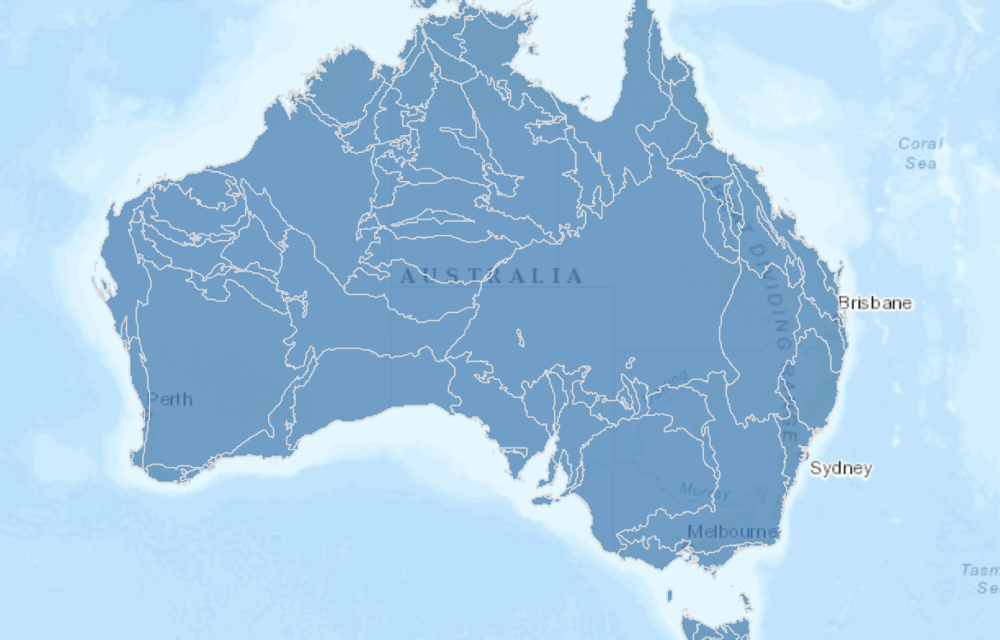
The centrepiece of this transformation is the Digital Atlas of Australia. Launched only 12 months ago, the Atlas already contains more than 330 curated datasets covering minerals, transport, water, environment, and workforce demographics. According to Melissa, this integrated view offers new context for critical minerals exploration and investment.
“You can overlay major mineral deposits with rail lines, highways, rivers or even workforce composition,” she explained. “This makes it possible to answer big questions like: where are the mineral-rich regions, what infrastructure supports them, and what competing land interests exist?”
AI in the Atlas
The real game-changer is what’s coming next: artificial intelligence.
Melissa revealed that Geoscience Australia is preparing to roll out an AI assistant inside the Digital Atlas, making it one of the first national platforms in the world to do so.
“With AI assist, you’ll simply be able to ask: ‘show me all the transport infrastructure within 50 kilometres of lithium deposits,’” she said. “The system will find, combine and visualise the data – no technical skills required.”
For explorers, developers, and investors, this means complex geoscientific data can be turned into actionable intelligence with a few keystrokes. Melissa called it “unlocking the full potential of Australia’s data assets to support integrated, data-driven decision-making.”
Beyond maps: space and precision
Melissa also outlined investments in Earth observation and positioning technologies. Through a $200 million partnership with the United States Geological Survey, Australia will gain priority access to Landsat Next imaging from 2031 – higher resolution, more frequent, and with 26 spectral bands.
At the same time, the Southern Positioning Augmentation Network (SouthPAN) is being rolled out:
“We’re delivering centimetre-level positioning accuracy, even in areas with no mobile coverage,” Melissa said. “This precision underpins everything from autonomous exploration platforms to geophysical surveying.”
The long game: Resourcing Australia’s Prosperity
Perhaps the boldest commitment discussed was the $3.4 billion Resourcing Australia’s Prosperity (RAP) initiative, a 35-year program to map and model the nation’s geological potential.
Melissa described RAP as the “boldest geoscience initiative of our generation,” noting that it will produce continental-scale prospectivity maps for all 36 critical minerals and strategic materials, along with hydrogen, carbon capture and groundwater resources.
Early outputs include national prospectivity maps for rare earths, copper, and battery minerals, with the first national rare earth assessment due in 2026. RAP will also drive 12 regional deep-dive projects, beginning with Western Australia’s Birrindudu region, and extending to Delamerian (NSW/SA/Victoria) and Georgetown–Julia Creek in Queensland.
“This is about lowering exploration risk, accelerating project development, and strengthening our partnerships – from industry to First Nations communities,” Melissa said. “It’s a generational commitment to support Australia’s prosperity well into the second half of this century.”
Why it matters for mining professionals
Melissa’s message was clear: Geoscience Australia is building the infrastructure – digital, spatial, and scientific – to de-risk investment and enable smarter, faster, and more sustainable exploration.
Her keynote reinforced that geoscience is no longer just an academic discipline or government archive. It’s a strategic enabler of the resources sector’s resilience and competitiveness, with AI-driven tools and billion-dollar national initiatives putting Australia at the front of the global critical minerals race.
“The world’s shift to clean energy isn’t a trend – it’s a transformation,” Melissa concluded. “Australia has the geology, the science, the institutions and the people to lead it. And Geoscience Australia will support that transformation every step of the way.”