
How a Queensland flood disaster is reshaping mine levee and diversion drain design to cut maintenance headaches and boost long term performance

, , , , , , , , , , , , , , , , , , , ,
, ,
,
When a Queensland flood swallowed a dragline and left an underground portal 60 metres underwater, Wade Ludlow knew mine levee design had to change.
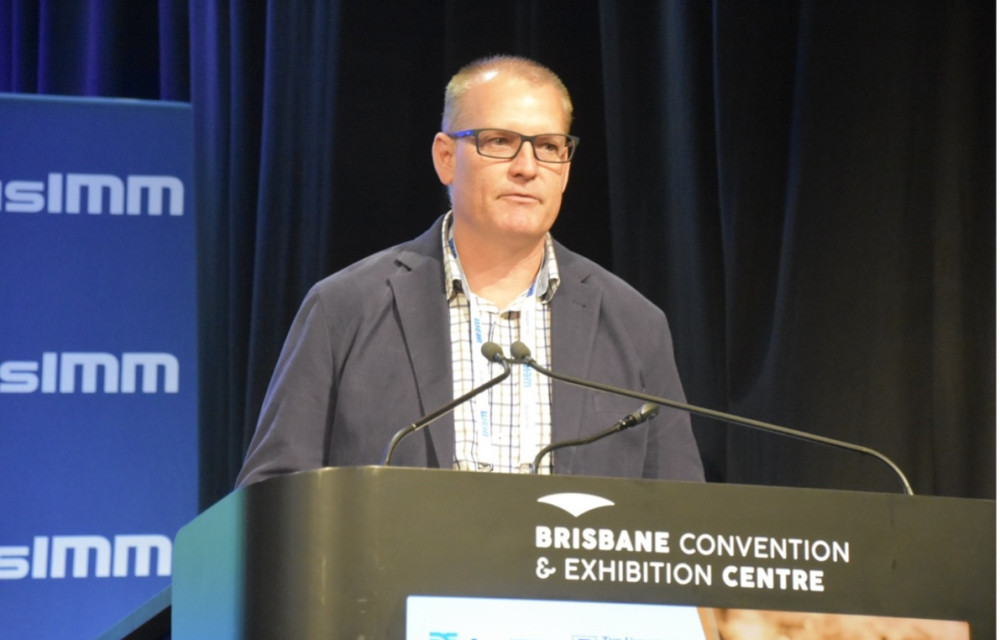
When it comes to in-pit tailings storage facilities (TSFs) and mine infrastructure, protective levees and diversion drains are often the first – and sometimes only – line of defence against floodwaters. But as Wade Ludlow, senior principal at Red Earth Engineering, told delegates at the Life of Mine | Mine Waste and Tailings Conference 2025 in Brisbane, the industry still lacks a comprehensive, mining-specific design guide for Australian conditions.
Presenting the paper Considerations for Design, Construction and Operation of Protective Levees and Diversion Drains for In-Pit TSFs and Mine Infrastructure, co-authored with Nicholas Lumby (Anglo American), Robert Harrington (Red Earth Engineering), and Anna Goto (Red Earth Engineering), Wade said the gap in formal guidance means too many levees and drains are built without due consideration for long-term performance.
“Without proper design and construction, these structures often become a maintenance burden for the rest of the mine life,” Wade explained.
When things go wrong
Wade illustrated the stakes with a sobering example from the Ensham Mine in Queensland. In January 2008, a one-in-100-year flood overtopped 600 metres of levee, flooding pits, submerging a dragline, and leaving 60 metres of water covering the underground portal.
“It’s a good thing no one was underground at the time,” he said. “But it shows just how serious it gets when levees overtop or fail.”
Designing for mining realities
Drawing on lessons from public infrastructure guidelines – and years of project experience – Wade outlined the practical modifications needed for mining environments.
- From zoned to homogeneous embankments – Easier to build when material sources are limited.
- Crest camber and capping – A 3% camber to the water side with quality capping ensures drainage and all-weather access for inspections.
- Flatter batters – Three-to-one batters or gentler for safer construction, better grass cover, and reduced erosion.
- Safety berms with drainage planning – Berms prevent vehicle access to the crest but require designed breakthroughs to manage water without causing erosion.
Tackling dispersive soils
In the Bowen Basin and other mining regions, highly dispersive soils are common – and often unavoidable. “If you’ve got dispersive soils, you’ll have maintenance issues,” Wade said.
Where possible, he recommended avoiding materials with Emerson Class 3 or less. If that’s not feasible, mitigation options include lime or gypsum treatment, tight compaction control, and accepting that more maintenance will be needed over time.
Foundation preparation is equally important. In dispersive soils, opening a foundation trench can reveal large tunnel erosion features that won’t be detected by routine geotechnical investigations. “It’s a bad surprise if you haven’t allowed for it,” Wade warned. Provisional contract items for remedial works are essential.
Don’t get caught out by “caught catchments”
One operational risk unique to levees is the creation of “caught catchments” – low-lying areas trapped between the levee and the asset it’s protecting.
“These can’t drain naturally,” Wade said. “If you don’t plan for them, they’ll fill up in the wet season and could overtop into your pit.” Effective design means understanding where they’ll form, how they’ll behave, and having pumping or drainage strategies ready.
Mimicking nature for diversion drains
For diversion drains, Wade advocated a shift from conventional trapezoidal channels to a geomorphic approach that mimics natural waterways. This includes building in low-flow channels, benches, vegetation, and varied cross-sections from the outset.
“The old way was to cut a trapezoidal drain and let it degrade to something stable over time. The new intent is to start at that stable form – skip the erosion and maintenance headaches and get straight to equilibrium.”
An ACARP review of 60 diversion drains in the Bowen Basin found most were rated poor to moderate in performance, underscoring the need for improvement.
Raising the bar
Wade also addressed design flood criteria. In Queensland, a one-in-1,000-year design flood is typical for levees, but a risk-based approach can tailor this to mine life. For example, a site with four years of remaining life could accept a lower design event than one with 50 years ahead, while maintaining acceptable risk levels.
“Mining resources are often scarcer and sites more remote than public infrastructure,” Wade said. “We need guidelines that reflect that reality – and that move us from minimum compliance toward fit-for-purpose designs that last.”