
How near misses are becoming mining’s most valuable safety lessons

, , , , , , , , ,
Mining companies already hold a wealth of safety intelligence, but the challenge is turning it into knowledge workers can recognise and act on before a near miss becomes an injury.
Mining companies collect vast amounts of safety information through incident investigations, hazard reports, near-miss records and corrective-action processes.
The challenge is not always gathering the information. It is ensuring that the lessons reach workers in a form they can recognise and apply when conditions begin to deteriorate on site.
Too often, the findings from an incident are reduced to a report, a presentation or a safety alert. Workers may be told what happened and which controls failed, but they remain one step removed from the decisions, pressures and warning signs that shaped the event.
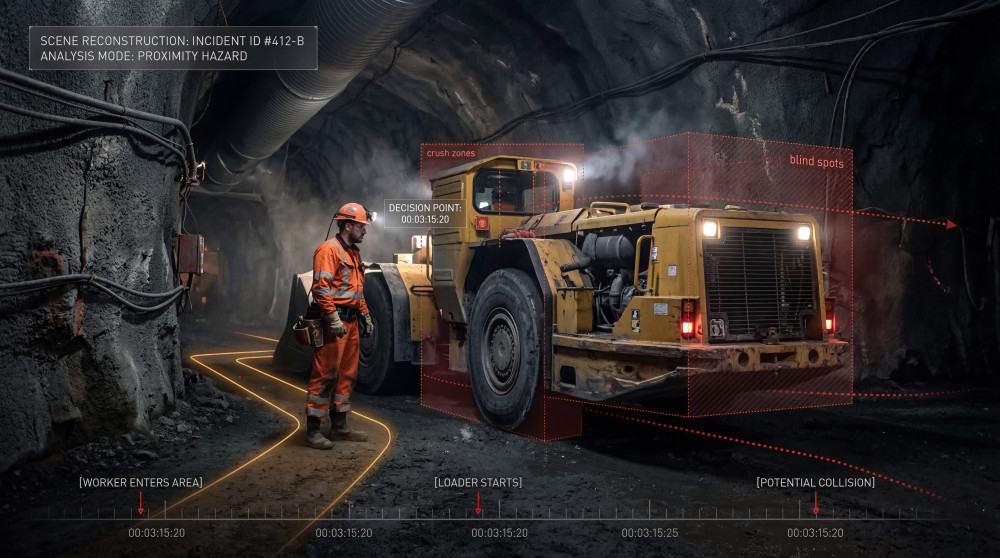
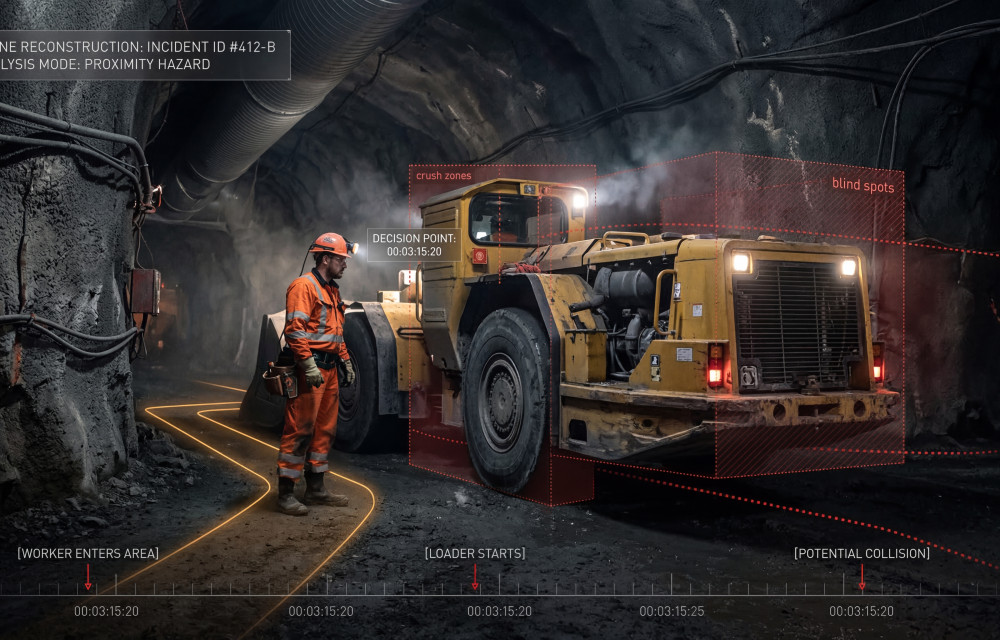
Developed by AGuyIKnow, Near Miss Scenario (NiMS) aims to close that gap by converting real incidents and near misses into immersive, scenario-based safety learning experiences.
Amanda Beresford-Long, principal of strategic partnerships at AGuyIKnow, said the objective was not to promote artificial intelligence for its own sake, but to help workers experience the progression of risk before facing it in the field.
“It’s not about the technology itself,” Amanda said.
“It’s about turning real events into something people can experience before they face it on site.”

Amanda Beresford-Long, principal of strategic partnerships at AGuyIKnow, says the objective is to let workers experience the progression of risk before they meet it in the field. Image: AGuyIKnow.
From investigation to experience
Incident reports are essential for establishing causes, identifying control failures and documenting corrective actions.
However, their value as a frontline learning tool can be limited by the way the information is presented.
A completed investigation often describes the event with the benefit of hindsight. It may identify a series of contributing factors that appear obvious once they have been assembled in one document.
The worker performing a task does not have that advantage.
On site, risks often develop gradually. A change in conditions, an incorrect assumption, a communication breakdown or a decision to continue may not appear critical in isolation. It is the combination of those factors that can create serious exposure.
Amanda said NiMS uses real incident and near-miss information to recreate the event, the decisions leading into it and the potential consequences.
“We take real incident and near-miss data and recreate them as immersive, scenario-based experiences,” Amanda said.
“Using AI, we simulate the event, the decisions that led to it and the consequences.
“It allows workers to step through the scenario and understand what actually happened, not just read about it.”
For mining practitioners, that distinction is important.
The purpose is not simply to tell a worker that a control must be followed. It is to help the worker recognise the circumstances in which the control becomes critical.
A well-designed scenario can prompt a crew to consider what warning signs were present, where the situation could have been interrupted and how a different decision may have changed the outcome.
Near misses as safety assets
Near misses are among the most valuable sources of safety intelligence available to a mining operation.
They expose weaknesses in planning, communication, equipment, supervision and control effectiveness without the human cost of a serious injury or fatality.
Yet near-miss information does not always travel far beyond the investigation process or the work group directly involved.
Amanda said the opportunity was to treat those records as reusable learning assets rather than static documents.
“For every serious incident, there are many more near misses,” Amanda said.
“That’s where the real opportunity to prevent harm sits.”
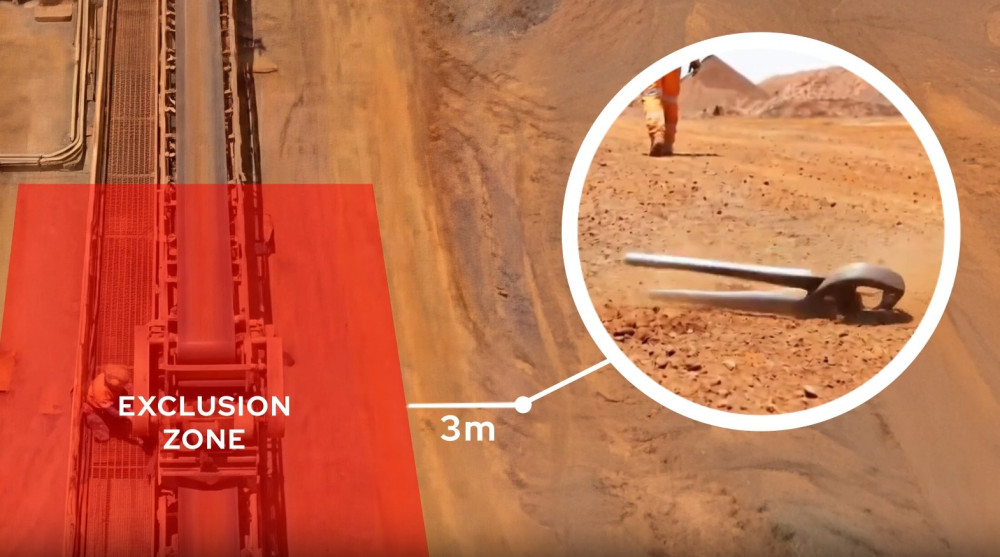
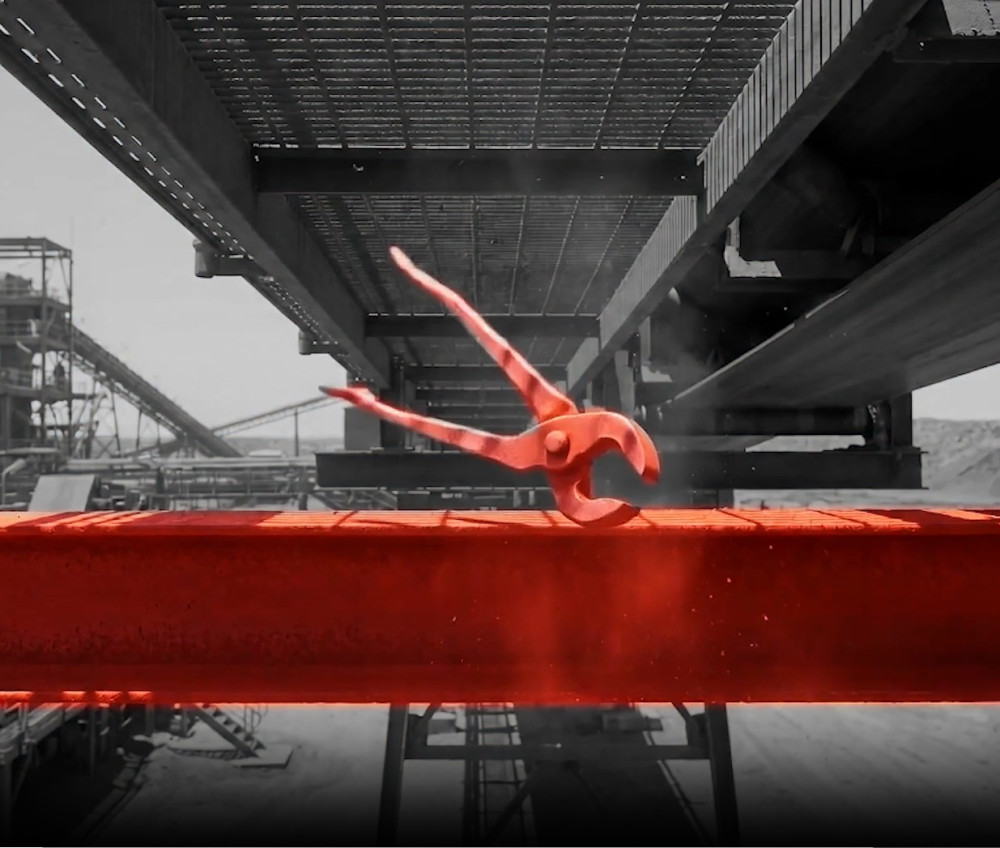
Distance is not a control: a dropped tool comes to rest three metres from the marked exclusion zone. Scenarios built around near misses give crews a shared reference point for asking whether the boundary matches the hazard. Image: AGuyIKnow.
The practical value of this approach is its relevance.
Generic training can explain a hazard in broad terms. A scenario drawn from an actual operation can reflect familiar equipment, tasks, work environments and decision points.
That gives supervisors and workers a basis for discussing whether the same chain of events could develop at their own site.
The conversation can then move beyond what happened to more useful questions.
What would the crew have noticed first?
Which control should have stopped the event?
Was the control absent, misunderstood or ineffective?
At what point did the task become unsafe?
What would have made it easier for someone to intervene?
This type of discussion can help convert organisational knowledge into practical judgement.
Bringing learning closer to the task
NiMS scenarios are designed to be delivered through commonly available platforms and incorporated into existing workforce routines.
Amanda said the material could be accessed through mobile devices and platforms such as Microsoft Teams, and used during onboarding, toolbox talks and pre-start meetings.
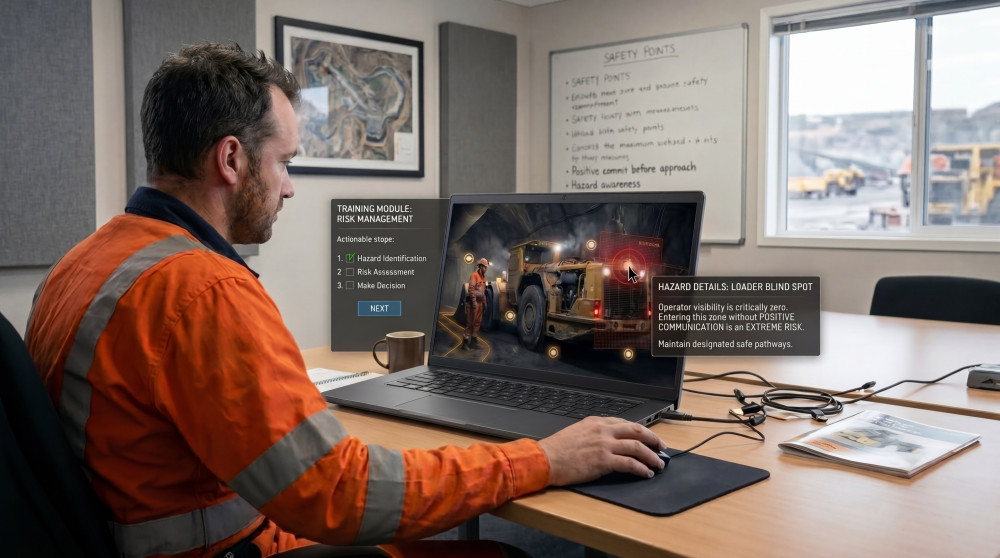
That flexibility may be particularly useful for operations with multiple sites, rotating crews or geographically dispersed workforces.
Rather than relying on a single classroom session, the same scenario can be revisited by different crews and used closer to the work being performed.
It also creates an opportunity for consistent delivery.
A safety lesson communicated verbally may vary between supervisors, shifts and locations. A structured scenario can provide a common starting point while still allowing the crew to discuss the risks in its own operational context.
Amanda said the approach was generating stronger engagement than some traditional formats and helping organisations create a more consistent understanding of how incidents occur.
The important test, however, is not whether workers find the material interesting.
It is whether the experience changes what they recognise and how they respond when similar conditions arise on site.
The role of AI
Artificial intelligence is central to the production process, but it should not become the central message of the training.
Its practical contribution is the ability to create and update realistic content more quickly than would traditionally be possible through full-scale video or simulation production.
“Traditionally, this level of realism would require full production and significant time,” Amanda said.
“Now it can be done more quickly and updated as new risks emerge.”
For mining companies, this could make scenario-based learning more responsive.
A significant incident or near miss may reveal a risk that needs to be communicated rapidly across an organisation. If the event can be converted into a credible learning experience within a useful timeframe, the lessons may reach workers while the issue remains operationally relevant.
The technology could also allow scenarios to be revised as procedures, equipment or operating conditions change.
However, speed does not remove the need for technical rigour.
Any reconstruction based on a real event must accurately distinguish between established facts, reasonable interpretations and assumptions introduced for training purposes.
The people validating the scenario should include those with appropriate operational, safety and technical knowledge.
A visually convincing simulation that misrepresents the event could reinforce the wrong lesson.
Evidence remains essential
The concept behind NiMS is compelling, but mining organisations will want evidence that it delivers more than improved presentation.
Engagement is useful, but it is not the same as a measurable safety outcome.
Operators considering this type of learning should examine whether the scenarios improve hazard recognition, control selection, procedural understanding or intervention behaviour.
Useful measures could include assessments before and after delivery, observed changes in field behaviour, improvements in control compliance and feedback from supervisors and workers.
Longer-term evaluation may also consider whether repeated exposure to scenario-based learning influences the quality of pre-start discussions, hazard reporting or decision-making during abnormal conditions.
Claims of reduced incidents, compensation costs or lost time would require much stronger evidence and careful analysis.
The technology should therefore be viewed as a tool within a broader safety system, not as a replacement for competent supervision, practical instruction, field verification or formal training.
Amanda said NiMS was intended to support existing safety and learning processes by making incident knowledge more accessible and meaningful.
“If people can experience risk before it happens, they’re far better prepared when it does,” Amanda said.
From information to recognition
Mining does not lack incident data.
What it often lacks is an effective way to turn that data into knowledge that remains available to a worker under pressure.
Reports preserve the facts of an event. Procedures define the expected controls. Training explains the required behaviour.
Scenario-based learning may help connect those elements by showing how ordinary decisions, changing conditions and missed warning signs can combine to produce a serious outcome.
That is the broader significance of NiMS for mining professionals.
The innovation is not simply the use of artificial intelligence.
It is the attempt to convert the industry’s accumulated experience into something workers can recognise, discuss and act upon before the next near miss becomes an injury.