
WA mining’s half-trillion-dollar year proves preparation pays when commodity markets turn

, , , , , , , , , , , , , , , , , , , , , , , , , , , , , , , , ,
,
, , , , , , , , , , , , , , , , , , , , , , ,
WA-listed companies added almost A$131 billion in market value during FY26, but the strongest performers did more than catch a commodity upswing. They entered it with lower costs, stronger balance sheets and projects ready to move.
Western Australia's listed companies have delivered the kind of result that makes conference bars louder, broker notes longer and exploration managing directors suddenly much easier to reach.
The collective market capitalisation of WA-listed companies surged 36 per cent during FY26 to a record A$494.3 billion, according to the Diggers & Dealers special edition of the Deloitte WA Index. The ASX All Ordinaries returned just 2.4 per cent over the same period.
That is not simply outperformance. It is the corporate equivalent of arriving in Kalgoorlie by charter while the rest of the market is still waiting at baggage claim.
Yet the useful story for mining professionals is not that WA resources companies enjoyed a good year. It is why some had an extraordinary one.
The strongest performers were not merely fortunate enough to own the right commodity at the right moment. They had spent the difficult part of the cycle sharpening costs, repairing balance sheets, adjusting mine plans, securing capital, buying infrastructure and positioning projects to respond when conditions improved.
This was not just a commodity rally. It was a preparedness premium.
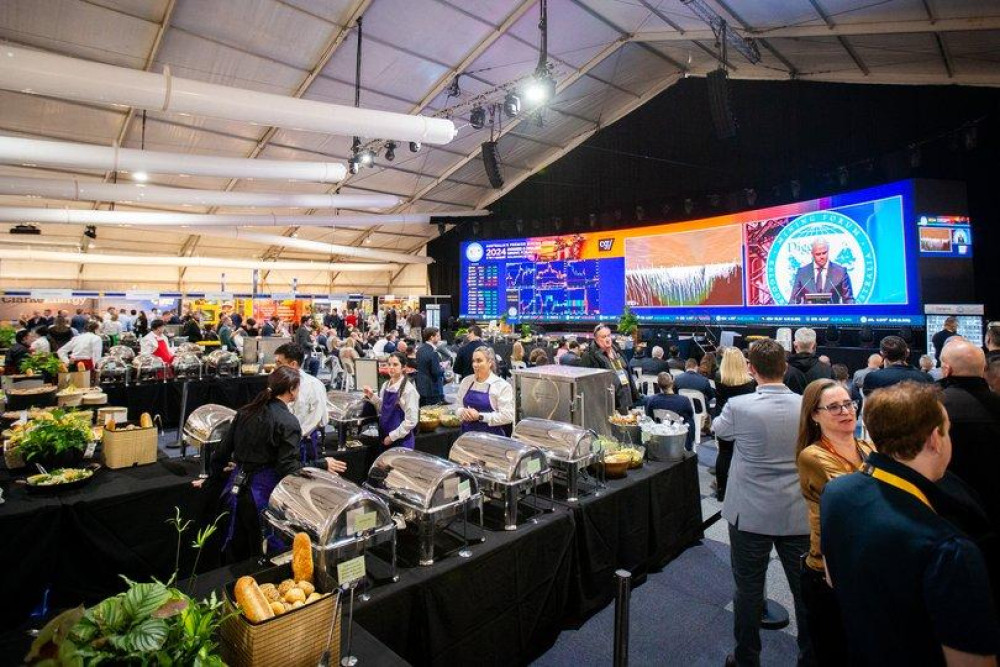
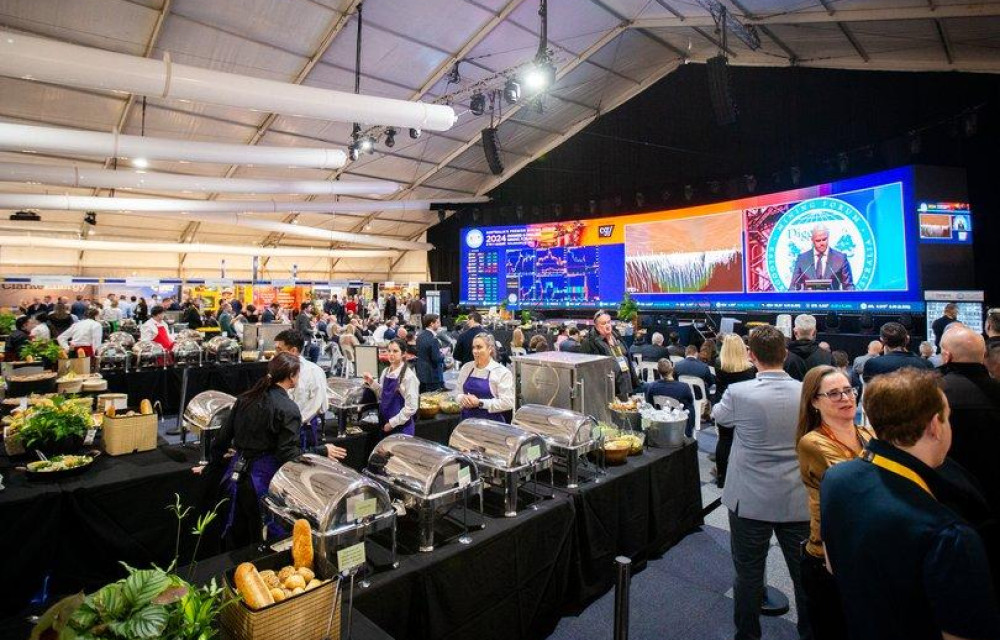
Diggers & Dealers brings capital, projects and mining ambition into the same room. Deloitte's FY26 WA Index suggests the market is rewarding companies that arrive prepared to execute, not merely prepared to present.
The market rewarded readiness
PLS Group increased its market capitalisation by 277 per cent. Liontown rose 215 per cent. Mineral Resources increased by 190 per cent. All three carried substantial lithium exposure, but lithium exposure alone does not explain the scale of the re-rating.
PLS entered the recovery with expanded capacity, falling unit costs, a substantial cash position and new offtake support. It approved the restart of the Ngungaju plant and continued work on the P2000 expansion and its Colina project in Brazil.
Liontown had reset Kathleen Valley around a lower-cost production base, completed its transition to underground mining and strengthened its balance sheet. By the March quarter it had reached its underground run-rate target ahead of schedule and moved into self-funded operations.
Mineral Resources had ramped Onslow Iron, refinanced debt, reduced annual interest costs and brought POSCO into its lithium portfolio through a strategic transaction designed to release capital and reduce leverage.
The rise in spodumene prices mattered enormously. Deloitte reports that spodumene concentrate rose 267 per cent over FY26, from US$635 per tonne in July 2025 to US$2,328 per tonne in June 2026. But the greatest value flowed to businesses that were able to convert that recovery into production, revenue and cash.
Commodity prices create opportunity. Operational preparedness determines who captures it.
The quiet years were not wasted
Mining cycles are often discussed as though companies simply endure a downturn and enjoy the recovery. In practice, the gap between surviving and thriving is usually created during the least glamorous years.
It is created while management teams renegotiate debt, review mine plans, close marginal capacity, rebuild maintenance programmes, change contractors, digitise systems, sweat procurement and answer uncomfortable questions from shareholders.
Those actions rarely produce celebratory headlines at the time. They can look defensive, conservative or painfully dull.
Then the market turns.
Suddenly, the miner with reliable equipment, flexible capacity, secure power, trained people and access to capital is not dull. It is investable.
Deloitte argues that modern cost management is moving beyond blunt expenditure cuts. The focus is shifting towards systematic efficiency through analytics, predictive maintenance, supply-chain optimisation and energy management.
For practitioners, that is a more useful productivity agenda than simply asking crews to do more with less. The next gains will come from reducing variability, eliminating unplanned downtime, improving asset life, strengthening supply visibility and making better decisions faster.
In that environment, discipline becomes a form of leverage.
The supply chain has moved into the boardroom
Some of the report's most important observations concern items that rarely star in investor presentations: diesel, sulphuric acid and PVC pipe.
These materials became serious operational concerns during the year as geopolitical conflict and transport disruption tested supply chains. The commodity reviews show how interrupted sulphur and sulphuric acid flows affected copper and nickel markets, while shipping risk in the Strait of Hormuz drove volatility in oil, LNG and aluminium.
The lesson is difficult to ignore. A miner can have ore, permits, people and equipment and still lose production because a critical consumable is sitting on the wrong side of a geopolitical crisis.
For mine managers and procurement teams, resilience can no longer be treated as a purchasing issue alone. It is an operating issue, a planning issue and increasingly a strategic issue.
That will favour suppliers able to offer local inventory, alternative sourcing, repair capability, technical support, transparent lead times and credible continuity planning.
The lowest quoted price may still win the spreadsheet. It may not win the year.
M&A has become part of the operating model
Another defining feature of FY26 was the pace of acquisitions, mergers, strategic stakes, asset sales and spin-outs.
Deloitte highlights Gold Fields' acquisition of Gold Road Resources, Capricorn's acquisition of Warriedar, strategic investment in the Rhodes Ridge project and POSCO's entry into Mineral Resources' lithium business. It also points to the contested pursuit of Vault Minerals and the growing use of transactions to rationalise portfolios and unlock stranded assets.
The clearest high-growth example is Forrestania Resources. Its market capitalisation increased by more than 2,100 per cent as it assembled processing infrastructure, acquired deposits and pursued district-scale operating hubs across Western Australia's goldfields.
Its strategy suggests the market is willing to value more than ounces in the ground. It is also valuing the ability to combine ore sources, plants, haulage distances and regional scale into a workable production system.
That is important for the junior sector. Discovery remains vital, but the market is also rewarding companies that can solve the less romantic problem of how deposits become businesses.
A standalone resource may struggle to justify infrastructure. Several nearby deposits feeding a central plant may become a mine.
The deal announcement is only the beginning. Engineers, drillers, metallurgists, project managers, environmental specialists, maintenance crews and contractors still have to make the assets function.
Exploration still matters, but proof matters more
Solstice Minerals delivered a different version of the same preparedness story. Its market capitalisation increased by almost 1,500 per cent after major copper-gold exploration success at Nanadie, followed by a capital raising and an accelerated programme of drilling, geophysics, metallurgy and project studies.
Copper itself rose 33 per cent during FY26, supported by constrained mine supply, disruptions at major operations and long-term demand from power networks, renewable energy, electric vehicles, data centres and artificial intelligence infrastructure.
For explorers, the implication is encouraging but demanding. Investors remain willing to reward discovery, particularly in strategically important commodities. But the market increasingly wants evidence of scale, continuity, metallurgy, infrastructure access, funding and a credible path to development.
A magnetic anomaly may open the door. Drill results and technical execution keep it open.
Strategic minerals are becoming strategic businesses
Lindian Resources increased its market capitalisation by more than 1,400 per cent as it advanced the Kangankunde rare earths project in Malawi towards production.
The commodity backdrop helped. NdPr prices recovered strongly, Western governments intensified efforts to secure supply outside China and downstream customers placed greater value on jurisdictional diversity.
But Lindian's rise also reflected project de-risking. Construction advanced, supporting infrastructure was built, production moved closer and the company pursued a pathway towards downstream integration.
This is where geopolitics and mining economics are becoming inseparable. Critical minerals projects are no longer valued only on grade, recovery and operating cost. Governments and customers increasingly care where material comes from, who processes it, who controls the technology and whether supply can be relied upon during political tension.
That can create premiums, strategic investment and government support. It can also create additional expectations around traceability, environmental performance and dependable delivery.
Being outside a dominant supply chain is not enough. A project still has to work.
The services sector is sharing the uplift
The index also shows the strength flowing into mining services. NRW Holdings, Monadelphous and SRG Global sat just outside the Top 20. IMDEX, Macmahon, Perenti, Mader, GR Engineering Services, Southern Cross Electrical Engineering, Lycopodium and Duratec also featured strongly in the Top 100.
A mining upswing is rarely confined to commodity producers. Higher output, project restarts, expansions, acquisitions and stronger balance sheets generally translate into more drilling, construction, maintenance, engineering, contract mining, electrical work and equipment demand.
Contractors should not assume that rising markets mean easy margins. Miners emerging from downturns do not forget cost discipline simply because prices improve. Investors now expect them to preserve the efficiencies gained during hard periods.
Service providers will therefore be pressed to demonstrate value, not merely availability. The strongest will help clients lift utilisation, reduce failures, improve safety, shorten schedules and manage labour constraints.
The boom may return. Blank cheques will not.
Digitalisation is becoming an operating requirement
Deloitte identifies autonomous haulage, AI-driven predictive maintenance, digital twins and remote operations centres as technologies shaping the smart mine.
None is new. What is changing is their position within the operating model. Digitalisation is moving from a futuristic add-on to part of how companies manage cost, reliability, energy use and workforce shortages.
The danger is confusing technology acquisition with transformation.
A mine does not become smart because it bought a dashboard.
Value appears when data is accurate, systems are integrated, frontline people trust the outputs and managers change decisions as a result.
The same applies to artificial intelligence. It can identify maintenance patterns, improve schedules, assist geological interpretation and speed planning. It can also produce expensive nonsense at industrial speed when fed poor data and implemented without operational context.
The companies that benefit will treat digital capability as a combination of technology, process and people, not a software subscription.
Decarbonisation is becoming mine design
The report argues that decarbonisation is shifting from a compliance obligation to an operating principle.
Electrification, renewable power and carbon management are increasingly being considered during mine design, particularly for new developments. Hybrid systems combining solar, wind and storage can reduce fuel exposure and improve resilience at remote sites.
The economics remain complex. Electrification requires capital, renewable systems must manage intermittency and existing mines face different constraints from greenfield developments. Fleet replacement cycles also have an inconvenient habit of ignoring corporate targets.
Even so, the direction is clear. Energy strategy now affects operating cost, emissions, reliability, customer expectations and access to capital.
That makes decarbonisation less about public relations and more about engineering.
A record year brings a higher bar
The Deloitte WA Index contains a warning beneath the celebration.
The market capitalisation cut-off for entry into the WA Top 100 rose from A$183 million to A$310 million, an increase of about 73 per cent. That reflects stronger sentiment, but it also means expectations have climbed.
Companies carrying larger valuations into FY27 will be required to deliver against them. Projects must advance. Production must perform. Cost guidance must hold. Acquisitions must integrate. Capital must be allocated sensibly.
Lithium provides the obvious reminder of how quickly the mood can change. The restart of CATL's Jianxiawo mine late in the financial year contributed to a pullback across lithium equities. A single supply-side development helped cool the market that its earlier suspension had helped ignite.
That is the nature of commodities. Confidence can take months to build and days to evaporate.
Preparedness is the competitive advantage
WA mining's record year will rightly be celebrated as evidence of the state's resources strength.
For practitioners, however, the more useful conclusion is practical rather than triumphant.
The market did not reward exposure alone. It rewarded readiness.
It rewarded disciplined costs, reliable operations, finance in place, strategic infrastructure, capable people and credible plans. It rewarded explorers that converted geological promise into evidence and producers that used difficult years to prepare for better ones.
It also rewarded businesses that understood technology, energy, supply chains and workforce capability are no longer peripheral to mining operations.
They are the operation.
The next commodity rally will arrive, although nobody knows precisely when, why or in which mineral. When it does, the biggest winners may not be those with the loudest story or the highest spot-price exposure.
They will be the companies already prepared to turn favourable conditions into safe production, stronger margins and durable value.
In mining, luck still matters. Preparation decides what happens next.