
Gold fever, tin whispers and rare earth reality checks

, , , , , , , , , , , , , , , , , , , , , , , ,
, , , , ,
, , , , , , , , ,
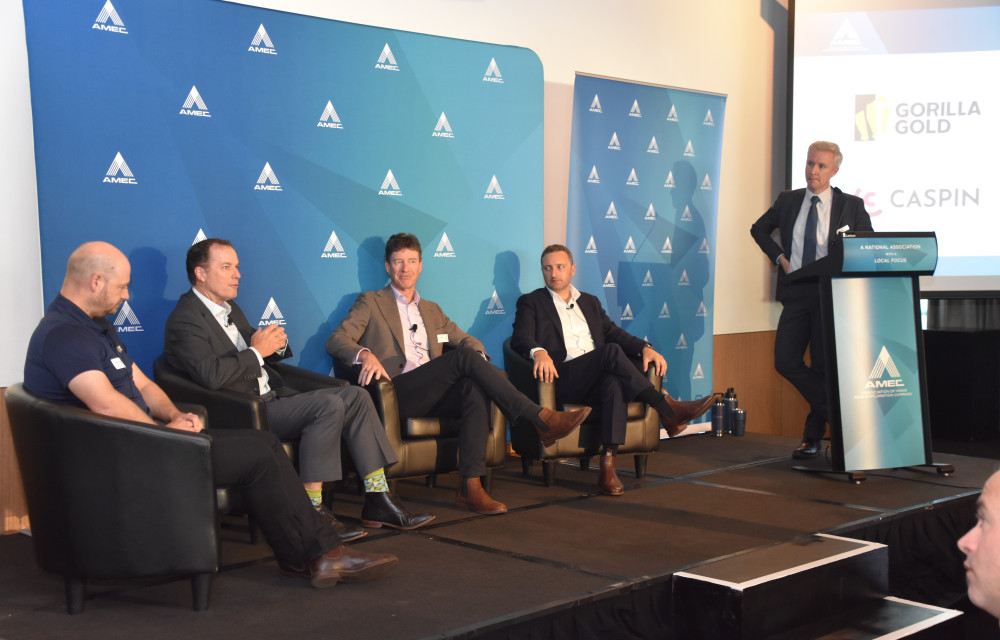
If you wanted a temperature check on Western Australia’s exploration sector last week, you didn’t need a feasibility study. You just needed a seat at the AMEC Meet the Explorers Breakfast.
Over coffee and pastries, four seasoned operators delivered something more valuable than a slide deck: candour.
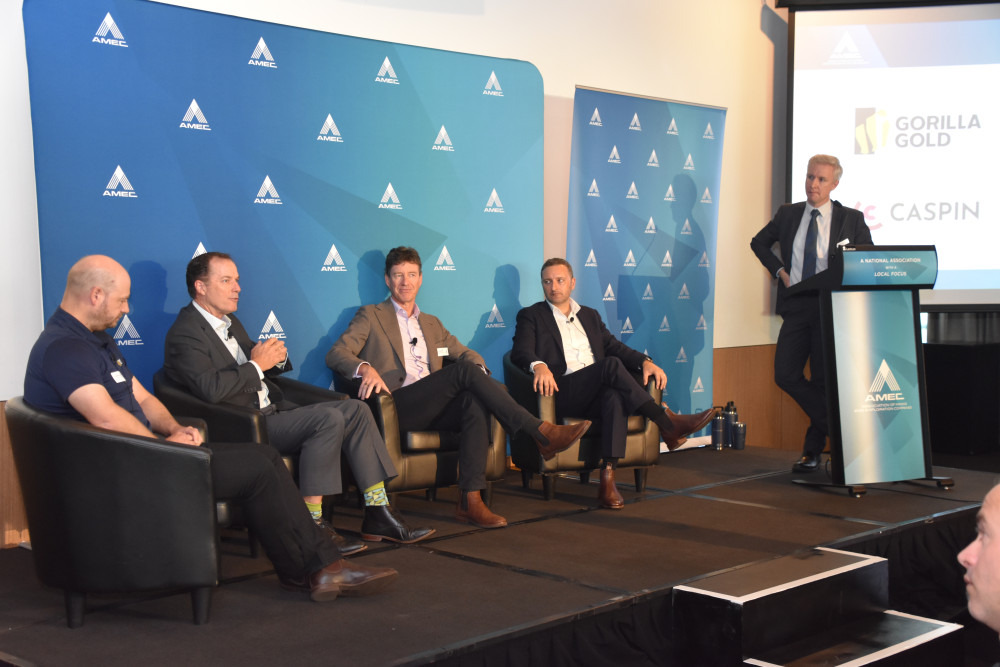
On stage were Charles Hughes of Gorilla Gold Limited, Vince Catania of Hastings Technology Metals Ltd, Greg Miles of Caspin Resources Limited, and Peter Bewick of Hamelin Gold Limited.
Different commodities. Different corporate journeys. One common theme: this cycle is moving fast, and the rules of engagement are tightening.
Move Fast or Miss the Window
Charles did not dress it up.
“When the price is high and the demand is there, you’ve got to move quickly.”
That is not marketing language. It is operational reality. Gorilla Gold has expanded from two staff to more than 30 within months. Drilling, permitting and development work are progressing in parallel rather than in sequence.
This is the new tempo.
In a strong gold market, delay becomes a strategic risk. Capital markets reward momentum. They are less forgiving of hesitation. The companies that can scale teams, build systems and maintain discipline while accelerating will attract attention.
However, speed introduces its own pressures. Growing headcount rapidly, maintaining culture, embedding governance frameworks and keeping stakeholders aligned requires leadership depth. Moving quickly without losing control is the real test.
The Economics Have Quietly Reset
Peter, drawing on decades of industry experience, framed the moment succinctly.
“The economics of what juniors can find, what we can do, what we can build, what makes money, has just completely changed.”
That observation goes beyond price charts. It reflects a structural shift in viability thresholds.
Deposits that once struggled to clear economic hurdles are being reassessed. Satellite pits, toll treatment arrangements and smaller-scale developments are back in the conversation. For boards, this expands optionality. For management teams, it increases the complexity of capital allocation decisions.
The market may reward growth, but it also scrutinises execution risk. Viable is not the same as optimal. The reset in economics demands sharper portfolio management, not just faster drilling.
Tin’s Quiet Comeback
If gold dominated the energy in the room, tin provided a reminder that opportunity often hides in plain sight.
Greg pointed out that tin has delivered strong price performance yet remains underrepresented on the ASX. Only a handful of listed companies currently report tin resources.
“Most people haven’t gone looking for tin for decades.”
In a world focused on electrification, solder remains essential. Tin may not command the same headlines as lithium or rare earths, but it sits quietly in the supply chain of every modern device.
For exploration executives, this presents both differentiation and challenge. A credible tin strategy can stand out in a crowded gold market. Yet the technical and commercial expertise required to build a modern tin operation is not as widely available. Building capability becomes part of the value proposition.
Opportunity is there, but it is not plug-and-play.
Rare Earths and the Downstream Reality
Vince offered a grounded perspective on rare earths. Mining and producing a concentrate is achievable. Converting that concentrate into high-value downstream products is far more complex.
“You have to be able to build a project that can survive.”
Survive commodity volatility. Survive capital scrutiny. Survive geopolitical shifts.
Rare earth prices have swung significantly in recent years. While governments speak confidently about supply chain resilience, projects must ultimately stand on commercial foundations. Processing flowsheets, operating costs and capital structures must be robust.
For executives in the critical minerals space, resource size is only part of the equation. Processing strategy must be integrated early and realistically. Ambition without technical clarity invites risk.
Trust and Alignment
One of the more revealing discussions centred on incentives.
Greg noted that staff and directors are often equity-incentivised, whereas contractors and consultants are not. That difference matters.
Alignment across the value chain does not happen automatically. It requires deliberate effort. Long-term partnerships, shared milestones and transparent communication can narrow the gap between service provider and strategic partner.
In a high-pressure cycle, friction slows progress. Trust reduces friction. Companies that cultivate trusted relationships across drilling, consulting and processing partners gain resilience.
The Process Challenge
Despite strong commodity fundamentals, frustration with permitting and regulatory processes was evident.
Approval timelines can vary widely. Heritage frameworks and environmental requirements add complexity. While regulation is necessary, inconsistency creates uncertainty.
Western Australia remains a premier jurisdiction. However, jurisdictional strength cannot be taken for granted. Other regions are actively competing for exploration capital.
For executives, predictability is almost as valuable as price. When timelines become uncertain, capital planning becomes more difficult. The competitive position of a region is shaped not only by geology but by the clarity of its processes.
Where the Cycle Stands
The mood at the breakfast was not pessimistic. Gold remains strong. Tin is attracting renewed interest. Rare earths hold strategic importance.
But this is not a carefree bull market. It is a disciplined cycle.
Speed must be balanced with governance. Resource growth must align with processing strategy. Partnerships must be cultivated intentionally. Regulatory frameworks must be navigated with sophistication.
The explorers on stage were not chasing headlines. They were outlining a market that rewards execution.
Opportunity is present. The ground remains prospective. Capital is available for credible stories.
The difference this time may be that discovery alone is not enough.
Delivery will separate the leaders from the rest.