
Tailings are forever so let’s talk about the people who live with them and why mining needs memory systems as enduring as the waste it leaves behind

, , , , , , , , , , , , , , , , ,
,
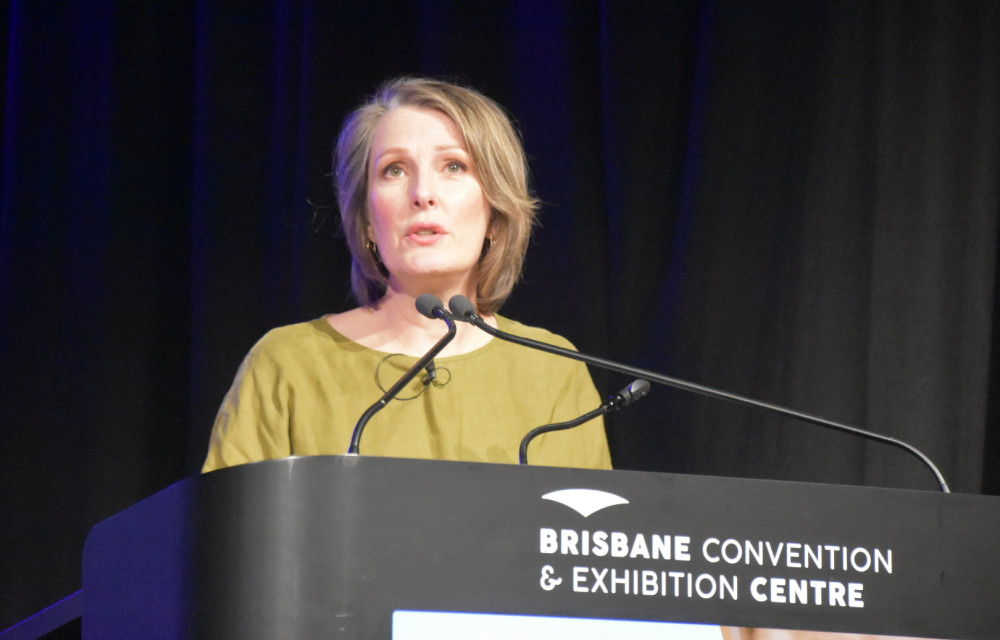
At the AusIMM Life of Mine - Mine Waste and Tailings 2025 conference in Brisbane, Professor Deanna Kemp delivered a keynote address that cut to the core of one of mining’s most pressing and under-examined challenges: how tailings governance is - and isn’t - working when it comes to people.
As director of the Centre for Social Responsibility in Mining (CSRM) at the University of Queensland’s Sustainable Minerals Institute, Deanna is uniquely positioned at the intersection of mining’s technical, social and institutional dimensions. Drawing on a body of research spanning global disaster studies, post-failure casework, and confidential peer reviews, she issued a rallying call for the industry to rethink how it defines risk, vulnerability and success in tailings management.
Tailings as a social problem
For many in the industry, the Global Industry Standard on Tailings Management (GISTM), launched in 2020 in the wake of the Brumadinho disaster, was a landmark development. But as Deanna sees it, the standard’s most transformative - yet still under-implemented - feature is its reframing of tailings governance as a matter of social consequence.
“One of the things that defines the standard,” she told delegates, “is its framing of tailings governance as not just engineering control. It set a new benchmark by deeply integrating social performance into this highly technical area - and in this respect, it’s still without precedent.”
Out of 77 GISTM requirements, 14 are explicitly social, and another 18 embed social performance within interdisciplinary provisions. Yet according to Deanna, many of these elements remain either misunderstood or underutilised across the sector.
Five pillars of social performance
Deanna unpacked five foundational social performance dimensions within the GISTM that she believes demand far greater attention. First was the standard’s aspiration of “zero harm” - a concept extending beyond workforce safety to include surrounding communities and local environments.
“It rejects the idea that some harm is acceptable in exchange for the broader benefits that mining brings,” she explained. “But a stronger commitment would have included engaging with past harms, which the GISTM does not require.”
This omission is significant, given that Deanna’s own research is deeply concerned with legacy issues - the unresolved impacts of prior mining activities that continue to shape community relationships and trust.
The second pillar centred on human vulnerability. She called Requirement 2.4 “the social performance linchpin” of the standard, as it mandates assessment of human exposure and vulnerability to credible failure scenarios.
“The people most exposed - and the least able to cope - are often those overlooked entirely in risk assessments,” she said. “This requirement reflects a fundamental principle from disaster studies, yet it’s one of the least implemented aspects of the standard.”
Third, Deanna stressed that credible failure scenarios must be built with real knowledge of people and place - not just inundation maps or modelling. Operators need to understand settlement patterns, local livelihood systems, demographic change, and how prior disasters shape risk perception and response. But many operators still rely on purely technical modelling, failing to incorporate this human context.
Her fourth point - requirement 1.3 - called for meaningful engagement with project-affected people, particularly those exposed to tailings risk. “The field of disaster studies is unambiguous on this point,” she said. “The active participation of affected people can reduce risk. But we still see very high levels of hesitancy from operators to engage.”
Finally, Deanna argued that none of the above can happen without integrated knowledge systems. Social performance teams, she said, must have access to technical data - yet in most cases, that information is not shared outside engineering teams.
“The Responsible Tailings Facility Engineer plays a pivotal role in knowledge building,” she explained. “But they need more support to incorporate social data, and Accountable Executives must assure themselves that this knowledge is being used.”
Lost momentum and systemic constraints
Deanna’s assessment of how the GISTM has played out over its first five years was candid. She noted that an initial burst of energy - especially leading up to the 2023 conformance deadline - has since tapered off.
“Social specialists were brought in, and there were encouraging signs of progress,” she said. “But many of those roles have since been redeployed. That early momentum has waned.”
By contrast, she noted that technical innovation has accelerated, with substantial investment in waste reprocessing, circular economy initiatives, and mine waste characterisation. “What’s missing,” she added, “is a parallel ambition to interrogate the social dynamics of mine waste - how waste-related risks are produced, distributed, and contested.”
Another emerging issue is the rise of a consultancy market offering GISTM services - but not always with the right expertise. Deanna cited cases where firms offered assessments of social requirements without credible social science capability, leading to superficial engagement processes being passed off as meaningful.
“This not only undermines the intent of the standard - it also undermines the credibility of the industry’s efforts,” she said.
Who owns social memory?
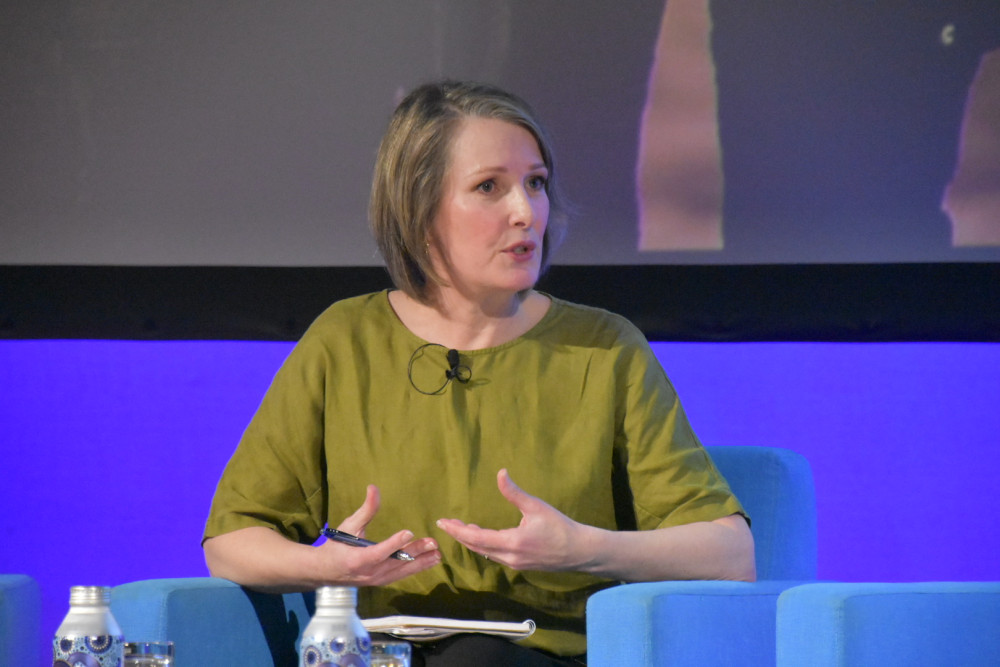
One of Deanna’s most provocative questions was deceptively simple: if waste is permanent, shouldn’t our knowledge systems be too?
Tailings facilities, she pointed out, are among the largest human-made structures on earth. And yet, there is no systematic preservation of knowledge about local communities, land use, cultural values, or prior disaster experience.
“The GISTM requires an Engineer of Record to maintain technical records,” she said. “But who safeguards the social knowledge? Should there be an equivalent role for that?”
In jurisdictions where institutions are weak or fragmented, she argued, the industry must take greater responsibility for building and sustaining durable systems of memory and accountability.
Listening to disaster
The second half of Deanna’s address turned to fieldwork - small, qualitative studies that offer critical insight into the lived experience of tailings disasters.
She cited her team’s recent interviews with survivors of the 1965 El Cobre tailings collapse in Chile and the 2022 Jagersfontein failure in South Africa. In both cases, she and her colleagues reconstructed disaster scenes based on survivor testimonies and spatial data, providing a ground-level view of how people perceive risk, improvise responses, and survive large-scale industrial failures.
“These scenes could be used as a pre-read for scenario planning,” she suggested. “Ground emergency preparedness in lived experience - not just models.”
She also stressed that tailings risk must be understood not only as a technical challenge, but as an embedded institutional and social problem. “If we want to sustain long-term tailings and disaster risk reduction,” she said, “we need professional knowledge systems that help us share lessons over time - not just tick boxes for certification.”
Honest questions, difficult conversations
In the Q&A that followed, Deanna maintained a mix of candour and pragmatism.
Asked how she reconciles GISTM certification claims with her on-the-ground observations, she responded, “There’s often a disconnect between what’s disclosed in sustainability reports and what’s actually happening. The disclosures often aren’t comparable - just company-specific narratives.”
She also reflected on her own early career at BHP, crediting it with giving her space to observe, ask “dumb questions,” and learn across disciplines. That kind of professional development, she lamented, is increasingly rare - and it’s contributing to the discipline silos that make interdisciplinary collaboration so difficult.
Above all, she encouraged the industry to expand its frame of reference.
“We need to stop thinking of tailings as just an engineering issue,” she concluded. “It’s a disaster risk issue, a memory issue, a trust issue. And to manage it effectively, we need more voices, more fields of knowledge, and a deeper commitment to the people who live with the consequences.”