
Critical minerals get political as tariffs tighten supply chains and China plays hardball with the West’s electrification ambitions

, , , , , , , , , , , , , , , , , , , , , ,
, , , , , , , , , , , , , ,
, , , , , , , , , , , , , , , , , ,
As global demand for clean energy technology intensifies and geopolitical tensions rise, the importance of critical minerals has reached new heights. That was the central theme of S&P Global’s recent webinar, “Critical Minerals at a Crossroads”. Hosted by Mark Ferguson, Research Director at S&P Global Commodity Insights, the session featured expert commentary from Alice Yu, Principal Analyst of Future Energy Metals Research, and Eric Oak, Senior Supply Chain Analyst at S&P Global Market Intelligence.
What emerged was a vivid portrait of a reshuffling global order - one where minerals like lithium, graphite, and rare earth elements are no longer mere commodities, but tools of policy, leverage, and long-term industrial strategy.
Critical minerals: beyond tariffs and trade
Opening the session, Eric provided a broad geopolitical backdrop, noting that recent US tariff announcements under the International Emergency Economic Powers Act (IEEPA) and Section 232 have deepened the complexity of global mineral flows.
“Critical minerals aren't the largest products targeted under Section 232 - that honour still goes to steel, aluminium, and autos - but their role is far more strategic,” Eric explained. “If a manufacturer can’t secure one mineral, it may have to halt an entire supply chain.”
He noted that the overlapping network of tariff regimes and trade deals - currently encompassing negotiations with seven countries that cover nearly three-quarters of US imports - has created uncertainty around which minerals will ultimately be classified as “critical” under evolving policy frameworks.
Crucially, Eric warned that blanket assumptions about critical minerals miss the mark.
“Each mineral is its own story. You can’t just lump them all together,” he said. “For instance, while China dominates the global supply of rare earths, antimony, and graphite, the same isn’t true for cobalt or uranium. So any policy response has to be tailored.”
China’s dual-use squeeze
Alice’s remarks zeroed in on China’s expanding role as both producer and gatekeeper. Since 2010, China has restricted rare earth exports in response to geopolitical disputes, and its list of controlled minerals has steadily grown.
“China’s strategy is clear,” Alice said. “It imposes export controls on minerals where it dominates global mining - typically over 60 percent - and where the minerals have dual-use potential in both civilian and military applications.”
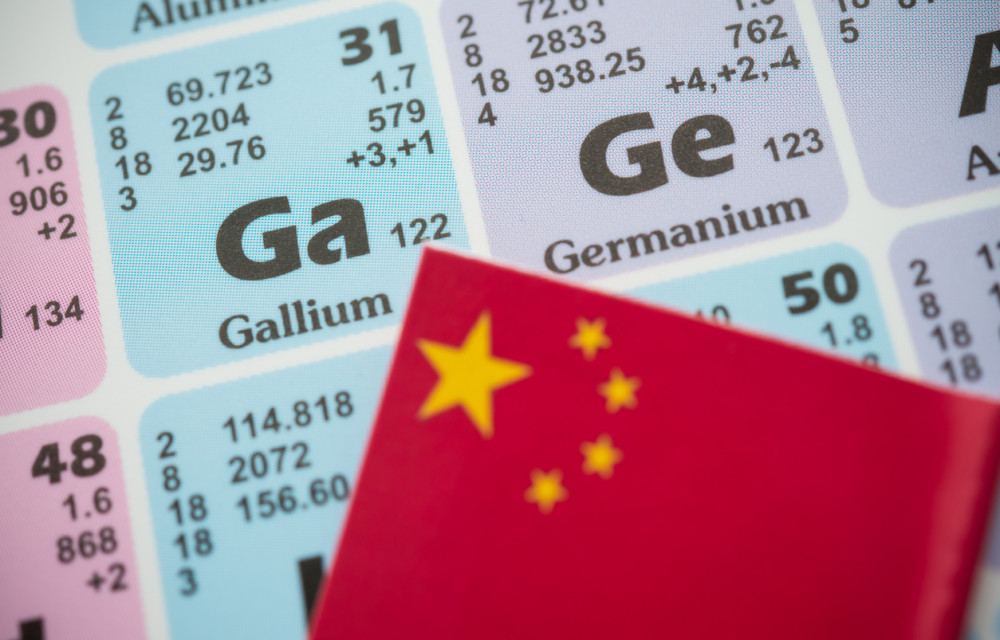
She pointed to gallium, germanium, graphite, and antimony - essential for semiconductors, EV batteries, drones, and defence technologies - as minerals China is leveraging for maximum geopolitical effect.
“This isn’t just about tariffs anymore. It’s about precision control,” she added. “Export licensing gives Beijing the ability to direct flows at will, and recently we’ve seen targeted exclusions aimed specifically at the US.”
One striking case is antimony. Following export restrictions by China in late 2024, US-bound shipments collapsed. Yet US import data still reflects a trickle of China-origin antimony entering through third countries such as Belgium, Vietnam, and Turkey.
“It’s a case study in how fast supply chains can adapt,” Eric said. “We’ve seen Chinese exports to intermediary nations increase, suggesting material is being processed and rerouted. But this is risky - any policy shift from Beijing could shut it down overnight.”
The limits of onshoring
While the US has taken bold steps to re-shore parts of its critical mineral supply chain, the panellists agreed the challenges remain steep.
Alice highlighted that the US ranks third globally for lithium exploration spending, behind Canada and Australia, with major investment flows aiming to expand domestic capacity for both lithium and copper.
“But mining alone isn’t enough,” she cautioned. “To build a resilient battery metals supply chain, you need alignment across upstream and midstream - refining, cathode, precursor, and cell manufacturing.”
As of 2024, she said, 90 percent of US lithium demand is met through indirect imports, primarily via batteries and cathodes from Japan and South Korea - who themselves rely on Chinese-refined lithium. China, meanwhile, commands a dominant share of global refining capacity for lithium, copper, and graphite.
So while direct imports from China account for a mere 1.2 percent of US lithium needs, its role is far more significant than headline figures suggest.
“This web of dependencies is what makes full onshoring so complex,” Alice said. “Even where the US can boost mining, refining is a bottleneck. And that’s where China still leads.”
Policy swings and investment hesitation
Compounding the challenge is what Alice described as “policy whiplash.” Recent budget decisions from Washington have cut federal EV and battery subsidies while tariffs on imported minerals and components have pushed prices higher.
The result? A downgraded outlook for US plug-in electric vehicle (PEV) sales - by as much as 26 percent in 2035 - and waning urgency for private sector investment.
“Defence applications alone can’t offset the lost demand from EVs,” Alice noted. “And without scale, EV producers can’t drive costs down. It’s a vicious cycle.”
Even as tariffs raise domestic price premiums - making local production more attractive on paper - the long timelines, low lithium prices, and permitting delays cast doubt over new project feasibility.
“Forty percent of lithium production globally is loss-making this year,” she said. “With the market in surplus until 2033, investors are understandably cautious.”
Rare earths and the price of sovereignty
One of the few bright spots for US development is in rare earth magnets. Alice pointed to a recent multibillion-dollar deal between the US Department of Defense and MP Materials to build out magnet production capacity domestically.
As part of that deal, the Pentagon committed to a 10-year floor price - nearly double China’s prevailing rate.
“It’s a signal that the US is willing to pay a premium for strategic autonomy,” Alice said. “But it still leaves open the question of feedstock. Without sufficient reserves, the US will need to import raw material, which brings us right back to trade policy and exemptions.”
She also warned that China’s technical expertise in rare earth separation remains unmatched and unlikely to be shared.
Resource nationalism reshaping supply routes
Beyond the US-China dynamic, the panel explored how other countries are reconfiguring their own policies.
In the Democratic Republic of Congo, cobalt export bans are shifting trade from raw ores to higher-value powders. Indonesia has successfully leveraged its nickel reserves by banning raw exports and growing its refining capacity. And Chile has enacted new rules requiring government ownership in lithium projects, though exports continue to rise.
Guinea, meanwhile, has introduced shipping restrictions on bauxite, mandating that 50 percent be carried on Guinea-flagged vessels - even though few such ships currently exist.
“These are all examples of what we call ‘climbing the development ladder’,” Eric said. “Countries want to move beyond extraction and capture more value locally.”
He predicted this trend will intensify as nations with critical mineral reserves seek greater control over their economic destiny.
Mapping resilience
The session closed with a practical reminder for companies navigating this shifting terrain: map your supply chain.
“You can’t mitigate what you don’t understand,” Eric said. “Know where your goods come from, not just at the tier-one level, but all the way down to raw inputs. That’s especially critical for high-tech or defence-related products.”
He acknowledged that redundancy is expensive, and inventory buffers tie up capital - but the alternative could be operational paralysis.
“Resilience is a luxury,” he concluded. “But in this environment, it’s also a necessity.”
Final thoughts
For mining professionals, investors, and suppliers alike, the message was clear: critical minerals are no longer just about extraction and trade. They are instruments of policy, nodes in geopolitical fault lines, and the foundation for industrial transformation.
Whether the US can scale its domestic supply chain fast enough - or whether global players can adapt to a fragmented, nationalised minerals market - remains to be seen. But one thing is certain: the crossroads is real, and the stakes are high.